The Birth of Quantum Light in a Semiconductor express
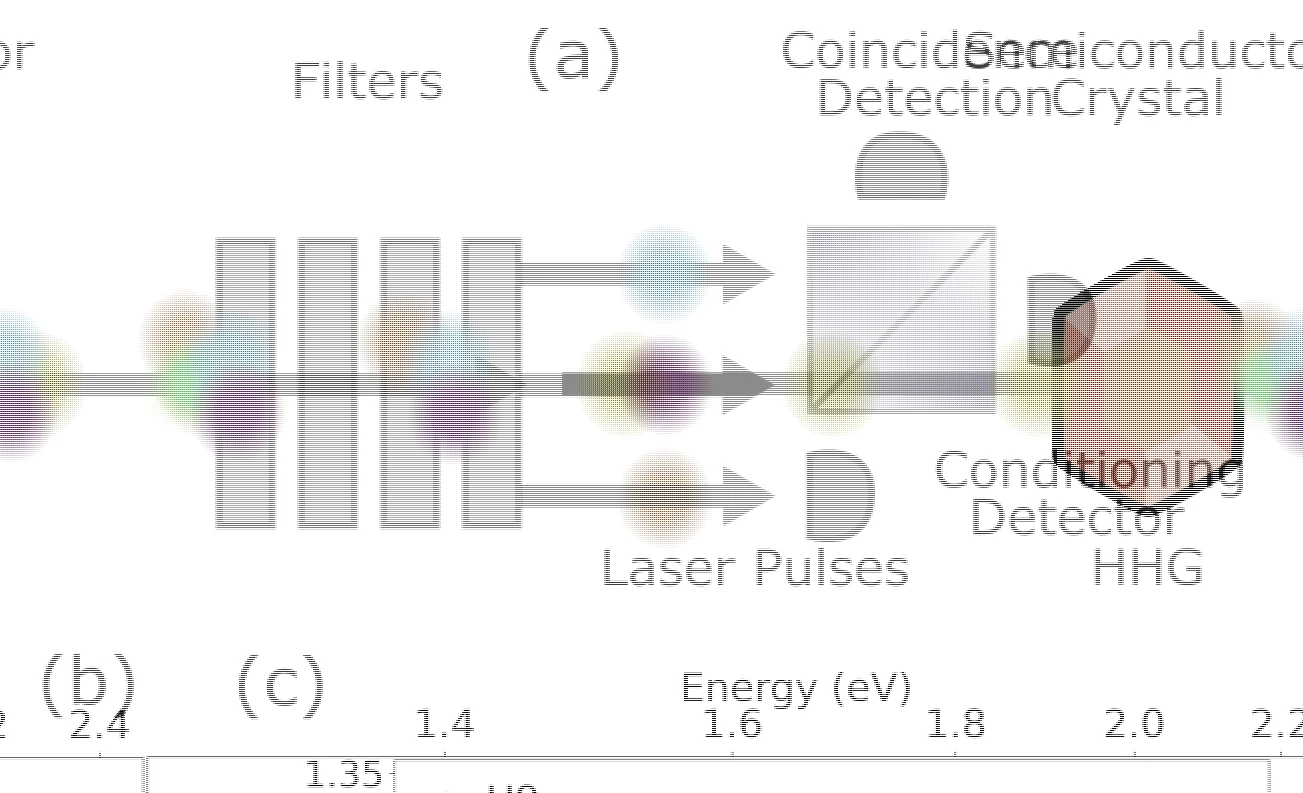
A powerful laser strikes a semiconductor, and it responds with light at many frequencies, like a string sounding a chorus of overtones. Previously, this was used in spectroscopy to observe ultrafast processes. But now physicists have noticed: the overtones are not independent; they behave as if connected by invisible threads.
By measuring detector clicks with the precision of photometric instruments, the scientists proved that this light is quantum, and moreover, squeezed and entangled. Squeezed light is like a pencil that wobbles only in one direction while drawing perfectly in the other — quantum entropy redistributes, making the signal more precise. Entanglement links photons in different harmonics: a change in one instantly echoes in another. It's as if the overtones share a common remote control.
Thus, an ordinary crystal becomes a factory of quantum light for secure communication and computation. The work builds upon the contributions of Roy Glauber and Alain Aspect. And the fastest harmonic blinks at a frequency that, in one second, exceeds the number of years since the Big Bang — opening a window into the world of instants.
The highest-frequency harmonic flickers so fast that in one second it manages to blink more times than the universe has lived years.
In science fiction, entangled particles have long served as a bridge for instantaneous communication across galaxies, and this experiment takes a step toward such technology.