Dark Matter Opens Its Arms express
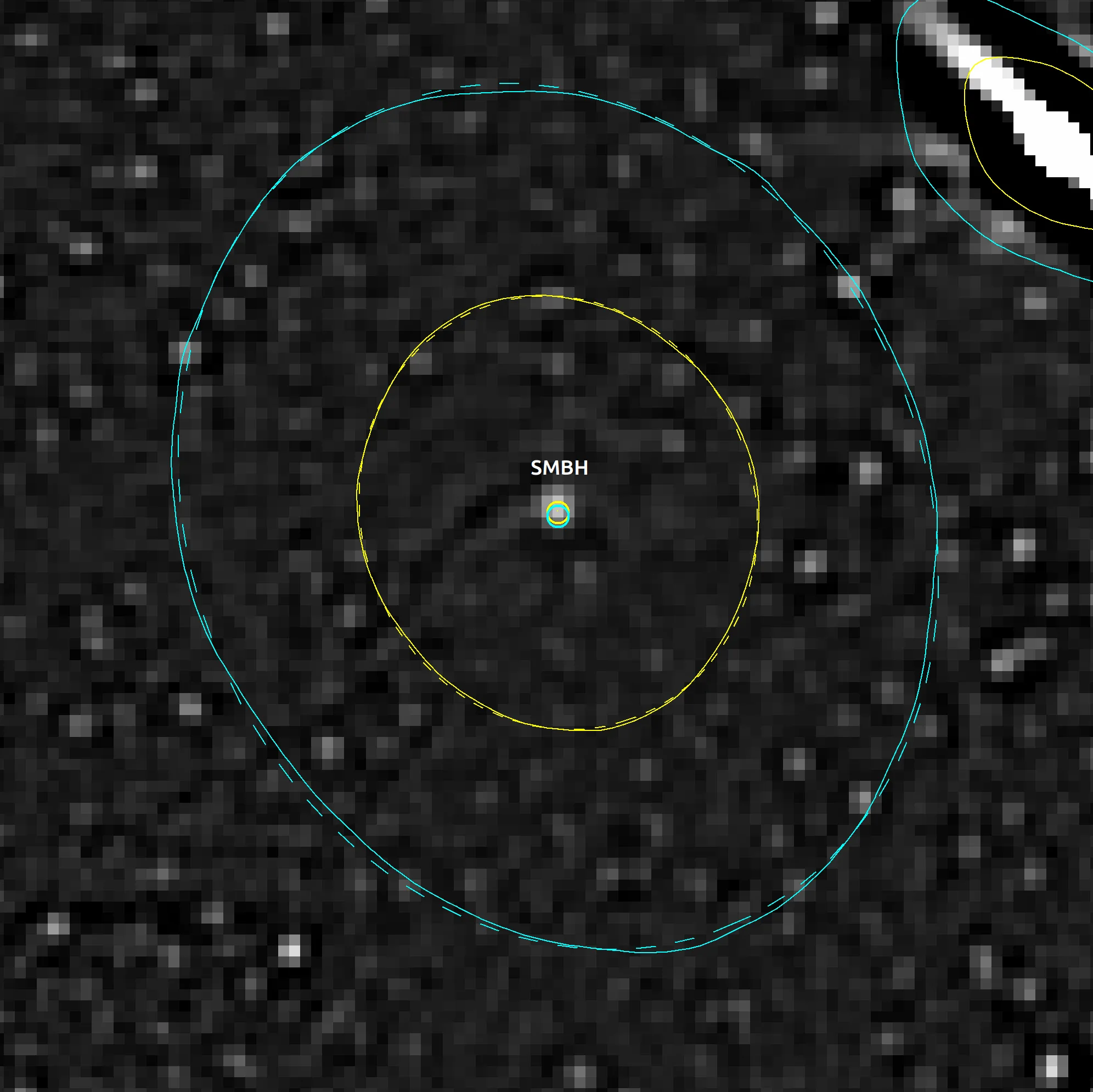
The James Webb Space Telescope peered into the galaxy cluster AS1063 and spotted tens of thousands of globular clusters — dense stellar "knots" scattered throughout the cluster. Their positions matched the map of invisible mass, which is constructed from the bending of light from distant galaxies. This invisible mass is dark matter — a substance that doesn't shine but holds galaxies together with its gravity.
It turns out that both dark matter and globular clusters have an extensive "core" at the cluster's center — a region where density barely increases toward the middle. This core is twice as large for dark matter as for the clusters. Standard models, where dark matter doesn't collide with itself, cannot explain such a large core. But if dark matter particles occasionally interact with each other, the core emerges naturally.
What's missing are computer simulations that simultaneously reproduce both dark matter and globular clusters on the scale of an entire galaxy cluster. Calculations with trillions of particles are needed. If they confirm the picture, dark matter will cease to be just a hypothesis and will acquire concrete properties.
Globular clusters are among the oldest objects in the universe, often more than 10 billion years old.