Dead Galaxies That Still Breathe express
Five galaxies that long ago stopped igniting new stars look like houses with darkened windows. But the ALMA radio telescope and the James Webb Space Telescope peered inside and saw that in these 'sleeping' houses, a fire still smolders.
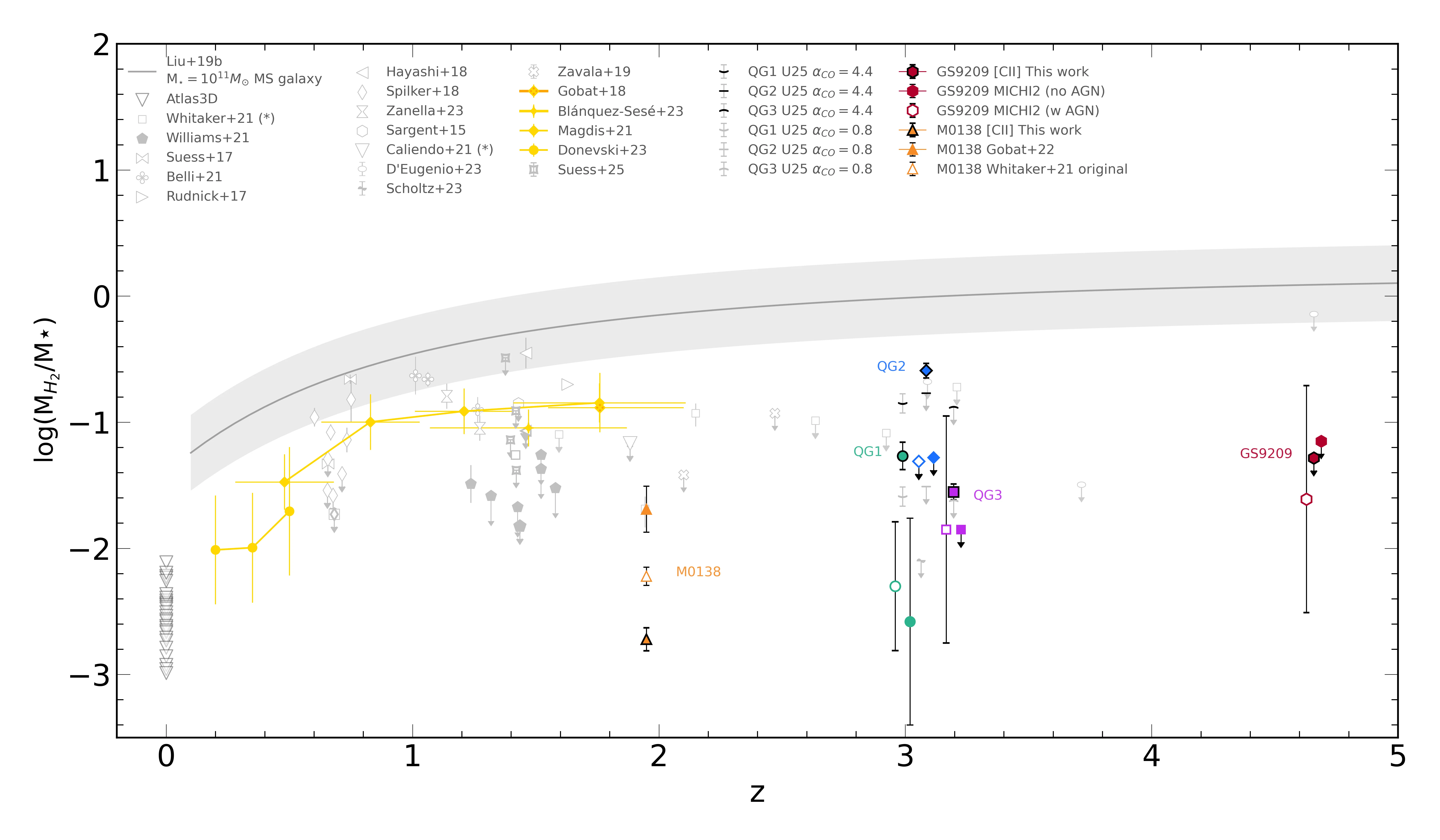
Astronomers measured the glow of carbon monoxide and warm dust in five such galaxies, billions of light-years away. The fraction of gas from which stars could form varied widely — from a tiny drop in a bucket to a quarter of the galaxy's total mass. Dust in two of them is heated to 40–50 kelvins: that's like a frosty night in Antarctica, but for cosmic dust, which is usually colder, it's a real heatwave.
The images show that the galaxies' shapes are distorted, with tails of gas and dust stretching out. They appear to be colliding with neighbors, and these collisions shake them like an earthquake shakes a house. Shock waves and turbulence in the gas release energy that heats the dust and prevents the galaxies from fully freezing.
The same signs (hot dust, tails, distorted shapes) astronomers see in local galaxies that have recently undergone a merger. Perhaps in the distant universe, too, collisions cause galaxies to 'fall asleep,' but not completely: inside them, slow tremors continue for a long time, like in a building cooling after a fire.
A dust temperature of 40–50 kelvins is about minus 230 degrees Celsius. But for interstellar dust, which usually cools to 20 kelvins, that's like +40 in the shade for us.