Where Aluminum Stops Being a Liquid express
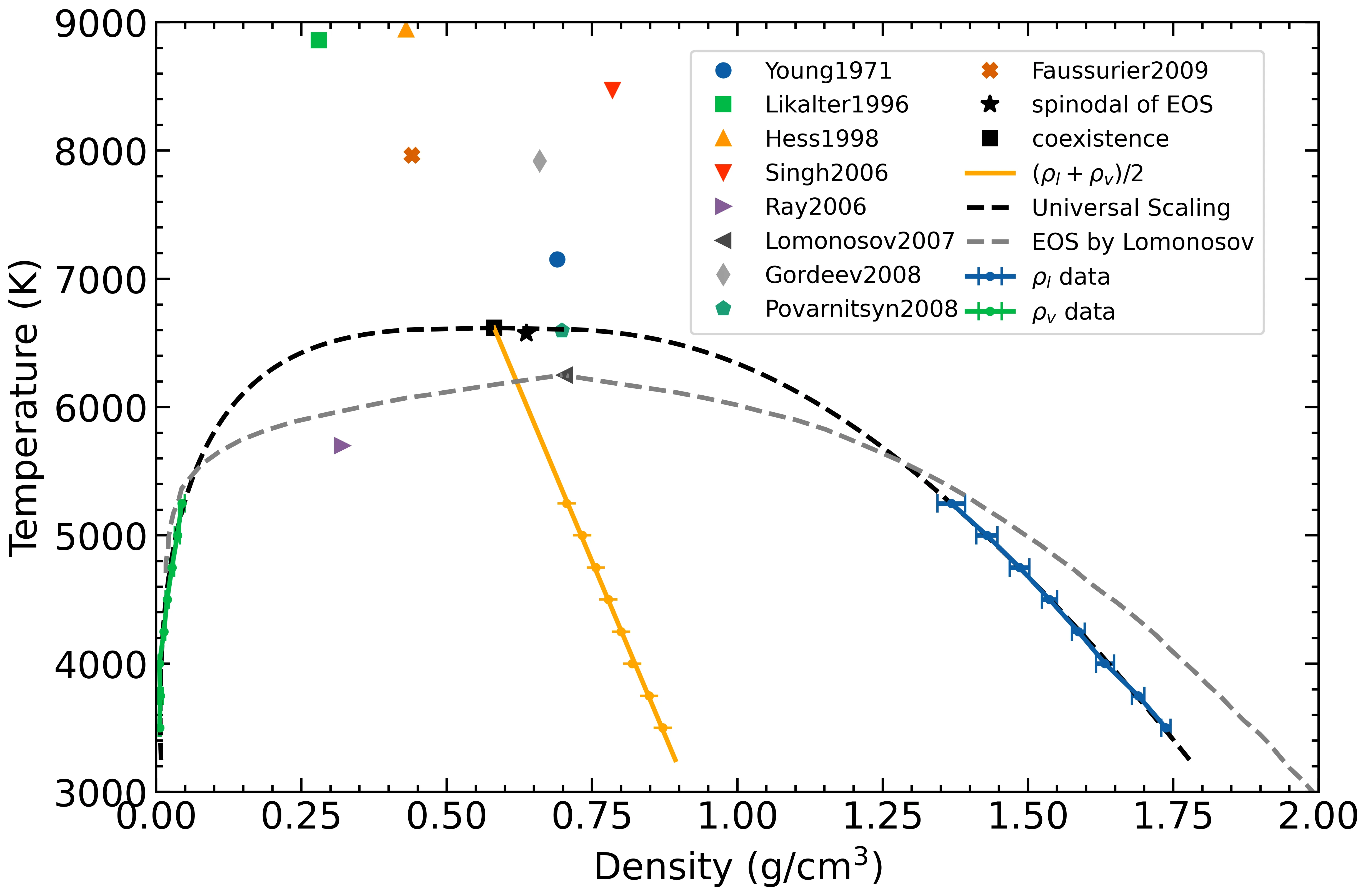
An aluminum pot on the stove melts at 660 degrees Celsius — everyone knows that. But what happens if you heat aluminum a hundred times hotter? The liquid starts to boil, and here's the puzzle: at what exact temperature does that happen? Answers in scientific papers have varied by nearly 4000 degrees, as if arguing whether water boils at 50 or 350 degrees.
A group of researchers decided to put an end to the discrepancy. They built a computer model in which a neural network, trained on precise quantum calculations, tracks the motion of millions of aluminum atoms. Such a model is like an experienced pastry chef who can tell from the look of the dough when it will turn into a fluffy sponge cake. First, they tested several recipes (in science, these are called density functionals) and chose the one that best reproduces the known density of liquid aluminum.
Then they "heated" the aluminum in simulations in two ways. The first was to watch at what temperature the liquid loses stability and begins to spontaneously break apart into droplets and bubbles. The second was to place liquid and vapor in the same virtual box and see at what temperature the boundary between them disappears. Both paths led to the same result: a critical temperature of 6531–6576 kelvins (about 6260–6300 °C), a density of 0.637 grams per cubic centimeter, four times lighter than water, and a pressure of 1.6 kilobars, like at a depth of 16 kilometers underground.
Now that the critical point is known to within 50 degrees, engineers can more accurately calculate laser cutting and welding of metals, and planetary scientists can model how metals behave in the interiors of distant worlds, where pressure and temperature reach extreme values.
Aluminum's critical temperature is about six times higher than the surface temperature of the Sun.
In Arthur C. Clarke's novel "Rendezvous with Rama," an alien spacecraft has a metallic hull capable of withstanding extreme temperatures — calculations of metal critical points would help assess how realistic that is.