Catching a Sunset on a Distant Planet express
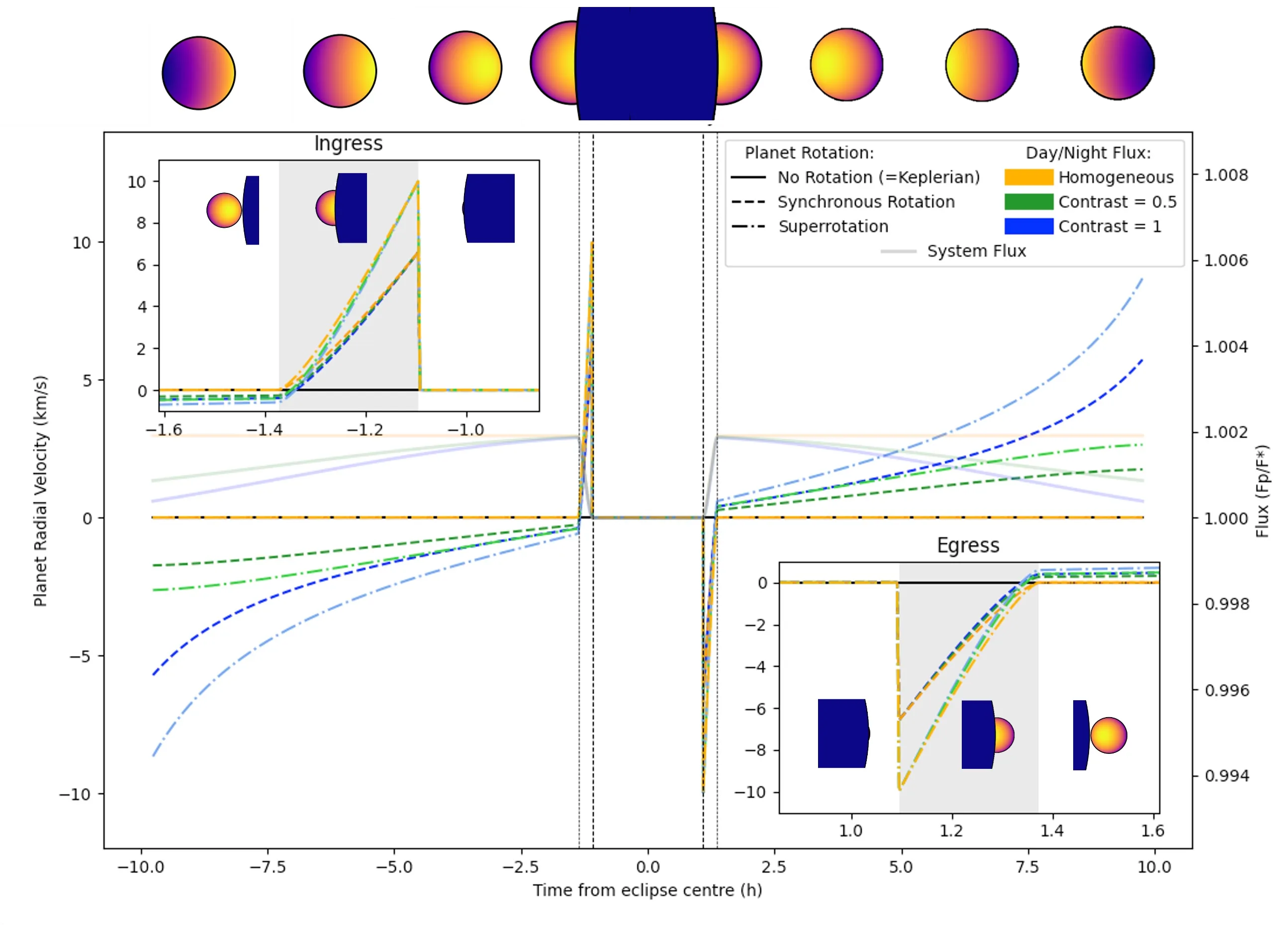
When a planet slips behind the edge of its star, the star backlights the planet's atmosphere, just as a setting sun illuminates clouds on the horizon. This brief moment, lasting only minutes, carries the imprint of the gases through which the starlight has passed. Astronomers pointed the SPIRou telescope at the WASP-33 system, where a scorching hot Jupiter completes an orbit in just 1.2 Earth days. To catch a faint hint of carbon monoxide (CO) in the spectrum, the star's light split into its component colors, they patiently waited through eight sunsets and sunrises.
Previously, such tricks were only possible with space observatories that look through broad color windows. Here, a ground-based instrument with high resolution did the job: it distinguishes shades as sharply as an artist distinguishes brushstrokes on a canvas. The price of detail is a weak signal. To amplify it, eight brief moments of ingress and egress were stacked together, like overlaying translucent images. And CO emerged. For the first time, from eclipse data alone, without hours of observing the full dayside.
This success is like a first tentative step toward three-dimensional atmospheric maps. So far, they've only managed to slightly better estimate the planet's rotation speed, but tests show that another fifteen or so such sunsets will yield a reliable number. And when next-generation telescopes come online, the method will allow us to peer into the cloud layers of dozens of hot Jupiters. The winds and chemical compositions of these worlds will be read from the edge of a dying star's light.
Carbon monoxide (CO) on Earth is a dangerous poison, colorless and odorless, but on scorching planets like WASP-33b, it becomes a handy marker: its signal in the star's spectrum is easy to distinguish and use to measure temperatures and atmospheric motions.