Waves That Slip Past Obstacles express
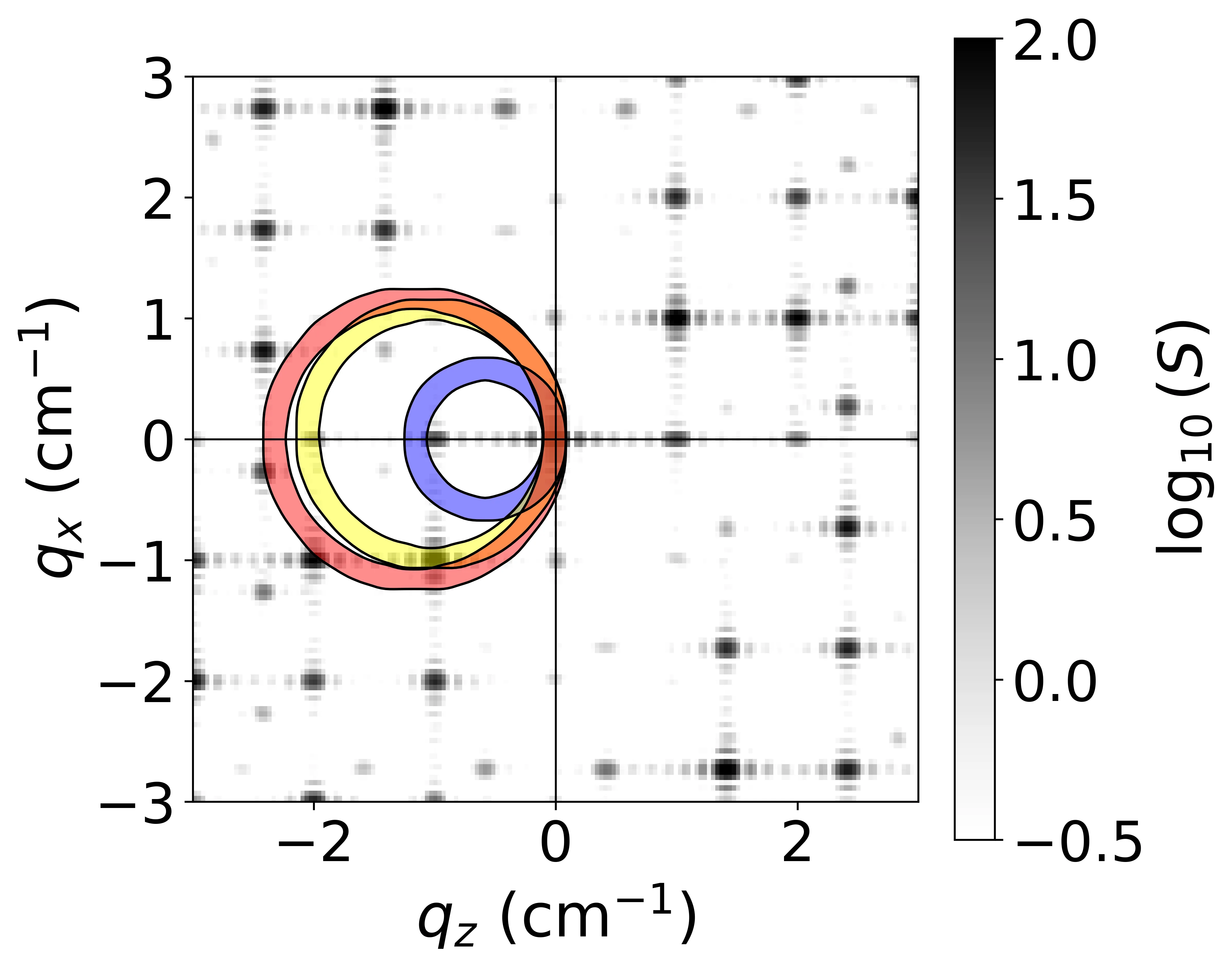
Waves on the water's surface usually break against any obstacle — a rock, a piling, an island. But what if you arrange obstacles so cleverly that the wave barely notices them? In a new study, scientists assembled a pattern of many points on the water, arranged according to special mathematical rules, and sent waves through them. It turned out that at some wavelengths the water passes almost as if it were a clear surface, while at others it scatters sharply.
The pattern is called a Fourier quasicrystal. Ordinary crystals are like parquet flooring made of identical tiles; their atoms repeat at regular intervals. Quasicrystals are like mosaics where the pattern doesn't repeat but is still ordered. In a Fourier quasicrystal, the order is even rarer: it has only isolated points in frequency space where waves reflect. Between them is silence. So a wave whose length doesn't match those points travels through the pattern as if through mist.
In the experiment, waves were sent across water where vertical pins stood on the bottom — those were the pattern's points. By varying the wave frequency, the scientists saw three pictures. At low frequencies, the wave passed almost without loss — transparency. At medium frequencies, it scattered only in a few directions, as if someone switched on spotlights. At high frequencies, everything mixed together like in a dense forest. From the wave measurements, they reconstructed that rare set of points in frequency space and confirmed: it's all about their arrangement.
Such a pattern is not just a curiosity. If we can learn to control waves with Fourier quasicrystals, we could make acoustic lenses that focus sound to a single point, or coatings that dampen bridge vibrations. It's also a path to optical chips where light follows desired paths without loss.
Quasicrystals have even been found in the Khatyrka meteorite that fell in Chukotka — nature created them long before humans did.
In Greg Egan's novel Schild's Ladder, physicists create a new vacuum with different laws — Fourier quasicrystals are somewhat like an attempt to reweave space itself.