Ji-Xin Cheng

4 articles · 25 co-authors · latest: 2026-04-15
117 citations · h-index 4 · 15 papersData: Semantic Scholar

We have retold 4 papers by this author. most often about: laser, optical microscopy, spectroscopy. 25 co-authors across our retellings.

Links in the knowledge graph
Optics2026-03-021 minarXiv:2603.01386express
One Pulse Instead of a Thousand
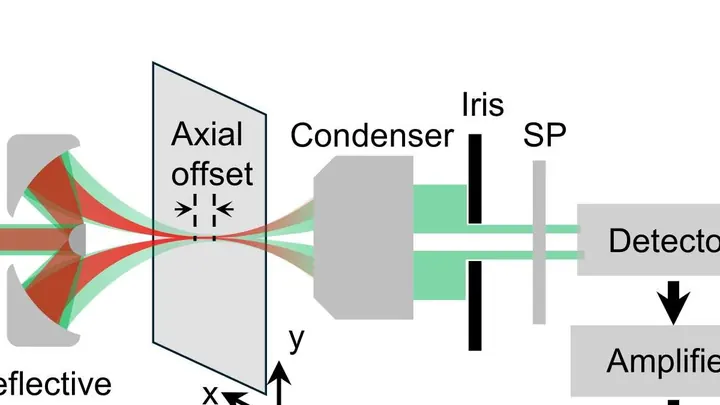
A laser hits the sample, and molecules inside start to vibrate. This vibration heats the material by tiny fractions of a degree. Previously, such heating was considered a nuisance, but now it's used to read chemical composition, like guessing who's coming down the hallway by the sound of footsteps.
Optics2026-03-061 minarXiv:2603.05785express
A Microscope That Sees Deep Inside Tumors
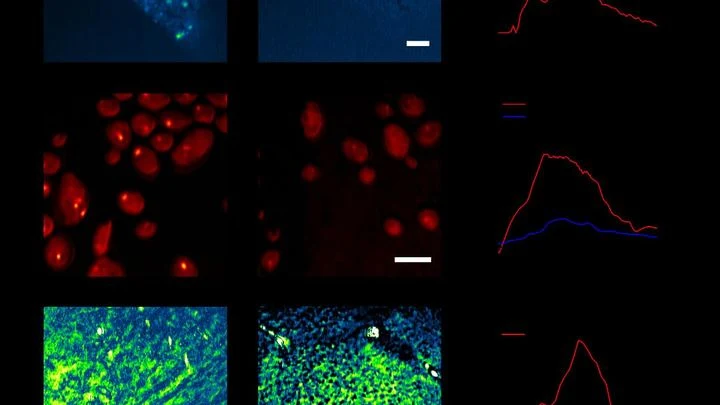
Light we can't see but feel as heat turns out to be the key to cellular life. A new type of microscope uses waves 2000–2500 nanometers long, three times longer than red light, and such waves barely scatter in tissue. Thanks to this, the device peers into a tumor spheroid like a flashlight through frosted glass, illuminating individual molecules.
Biological Physics2026-03-262 minarXiv:2603.25534express
Invisible Proteins Start to Talk
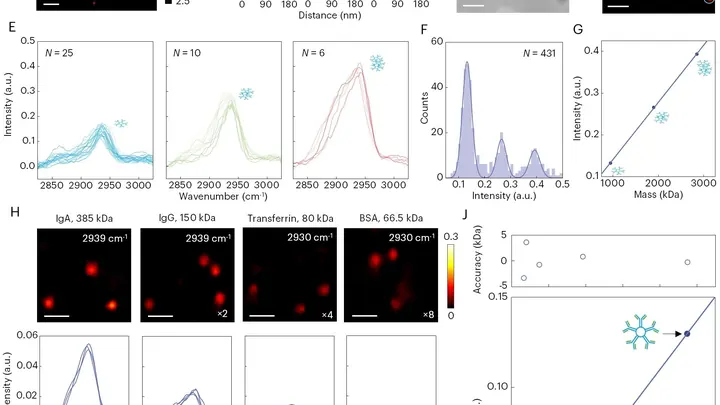
A protein in a cell is like a tightly coiled spring. Its shape determines what it does, but seeing that shape in a single molecule without disturbing it was nearly impossible. The new microscope works differently: it sends a short laser pulse that slightly heats the molecule.
Optics2026-04-151 minarXiv:2604.14120express
Mitochondria Under the Microscope Without Labels
Inside every cell, there are tiny power stations — mitochondria. They burn nutrients and store energy. Two helper molecules, NADH and FAD, oversee this process. Previously, they were detected by their faint glow, but it was dim, and signals from different molecules overlapped. The new microscope works differently.