Cosmic Hide-and-Seek: Webb Spots a Planet Near a Neighboring Star ✛
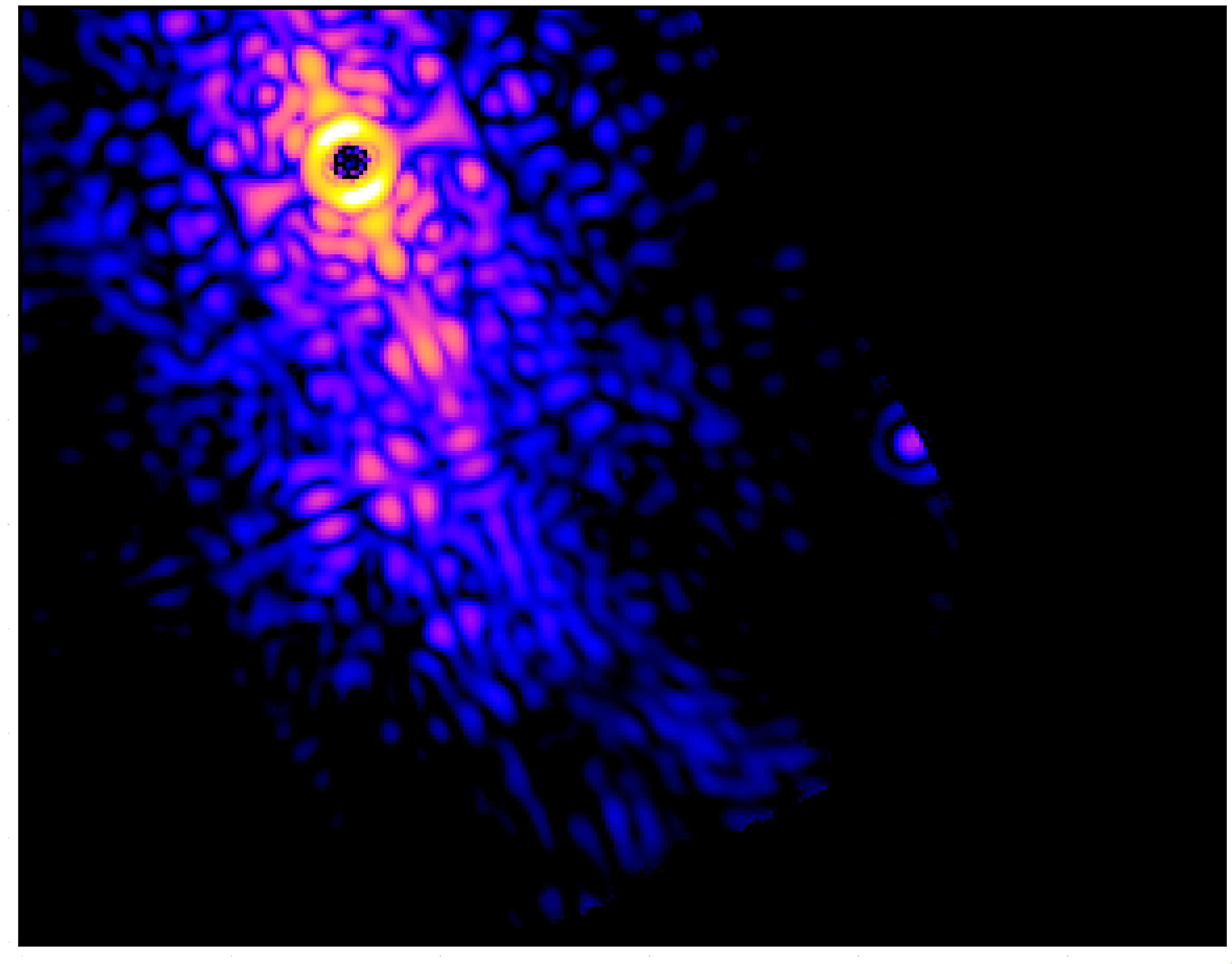
The nearest Sun-like star, Alpha Centauri A, shines just four light-years away. The James Webb Space Telescope stared at it, blocking the star with a coronagraph — like holding a hand up to spot the Sun’s satellites. This is how it searched for planets and dust. It found almost no dust: remarkably clean, as if someone swept away the cosmic debris. But in August 2024, a dot called S1 appeared: an object the size of Jupiter, but surprisingly not icy — around –20°C (based on brightness). Then it vanished. Probably, its orbit is so stretched that it hides behind the star every 2–3 years, plunging from cold to warmth. If S1 is the same planet spotted in 2019 as C1, this is one of the lightest worlds directly imaged around a Sun-like star: 90–150 Earth masses.
The same system has Proxima b — an Earth-sized planet where a year lasts just 11 days.
In ‘Avatar,’ the planet Polyphemus and its moon Pandora orbit Alpha Centauri A — our searches make that world a little more real.