Wind for the swift: how turbulence heats the solar corona express
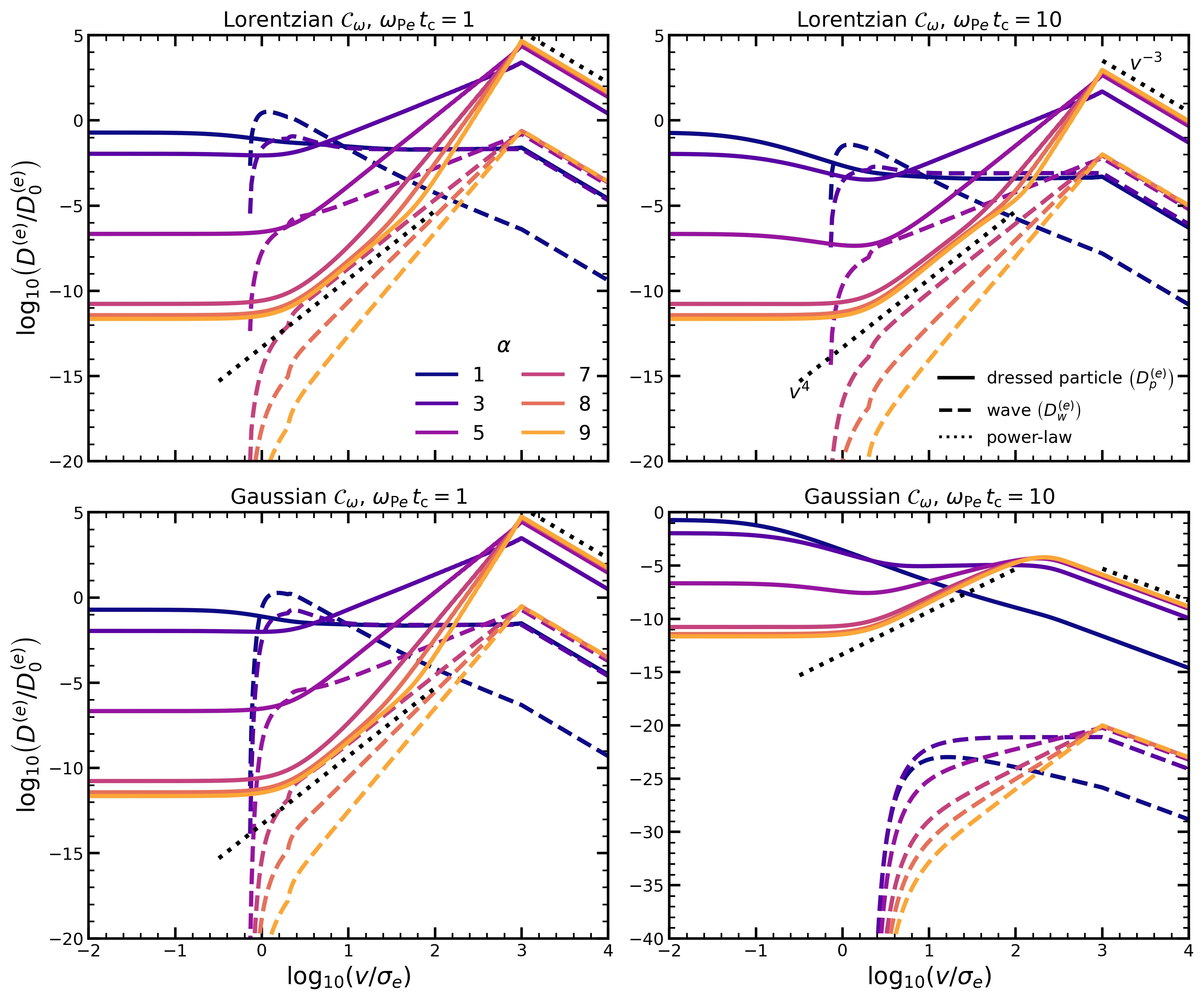
In a hot gas of charged particles — plasma — chaotic electric fields work like a sieve. A slow particle gets surrounded by a cloud of opposite charges, which cancels the external field. A fast one sheds this armor and gets accelerated.
Physicists proved: if the energy of the fields decreases with frequency according to a certain law, almost any initial state collapses to a universal velocity distribution. The probability of finding a particle with speed v drops as 1/v⁵. The system tends toward this 'tailed' portrait — an entropic attractor — rather than the bell curve of Maxwell and Boltzmann, where fast particles are almost absent. The resulting tail exactly matched the κ-distribution at κ=1.5 — a formula astrophysicists used blindly.
This unveils the riddle of the solar corona. The Sun's surface is heated to 5800 K, while the corona blazes at millions of degrees. Electric fields born in the boiling chromosphere filter ions: they accelerate only the fastest — hydrogen and helium — hurling them into the corona. There they create a monstrous heat. This same mechanism of speed filtration causes electrons in tokamaks to suddenly accelerate to dangerous energies, threatening the reactor walls.
The solar corona's temperature reaches 1–2 million kelvins, while the surface is about 5800 K. A kettle that heats the air around it more than its own handle.
Someday satellites might 'bathe' in the solar corona, filtering out fast particles to charge their batteries.