Quantum Entanglement: Born in Collisions express
In the quantum world, a collision between particles doesn't destroy their individuality but ties them into an inseparable knot: internal states and motions become intertwined like threads in an intricate tapestry. Researchers have developed a universal method to measure this entanglement — a phenomenon Albert Einstein called 'spooky action at a distance'—directly from collision data.
Entanglement can manifest in various forms. In its discrete form, it is like distinct knots on a rope: the states of a quantum system take only certain, separated values. Continuous entanglement resembles smooth loops without sharp boundaries. There is also a hybrid type — a multi-layered tangle that metaphorically resembles Schrödinger's cat placed not in one but in a dozen entangled boxes. To mathematically describe such a complex structure, scientists applied an approach originally proposed by John Wheeler for analyzing nuclear reactions, adapting it to quantum collision theory.
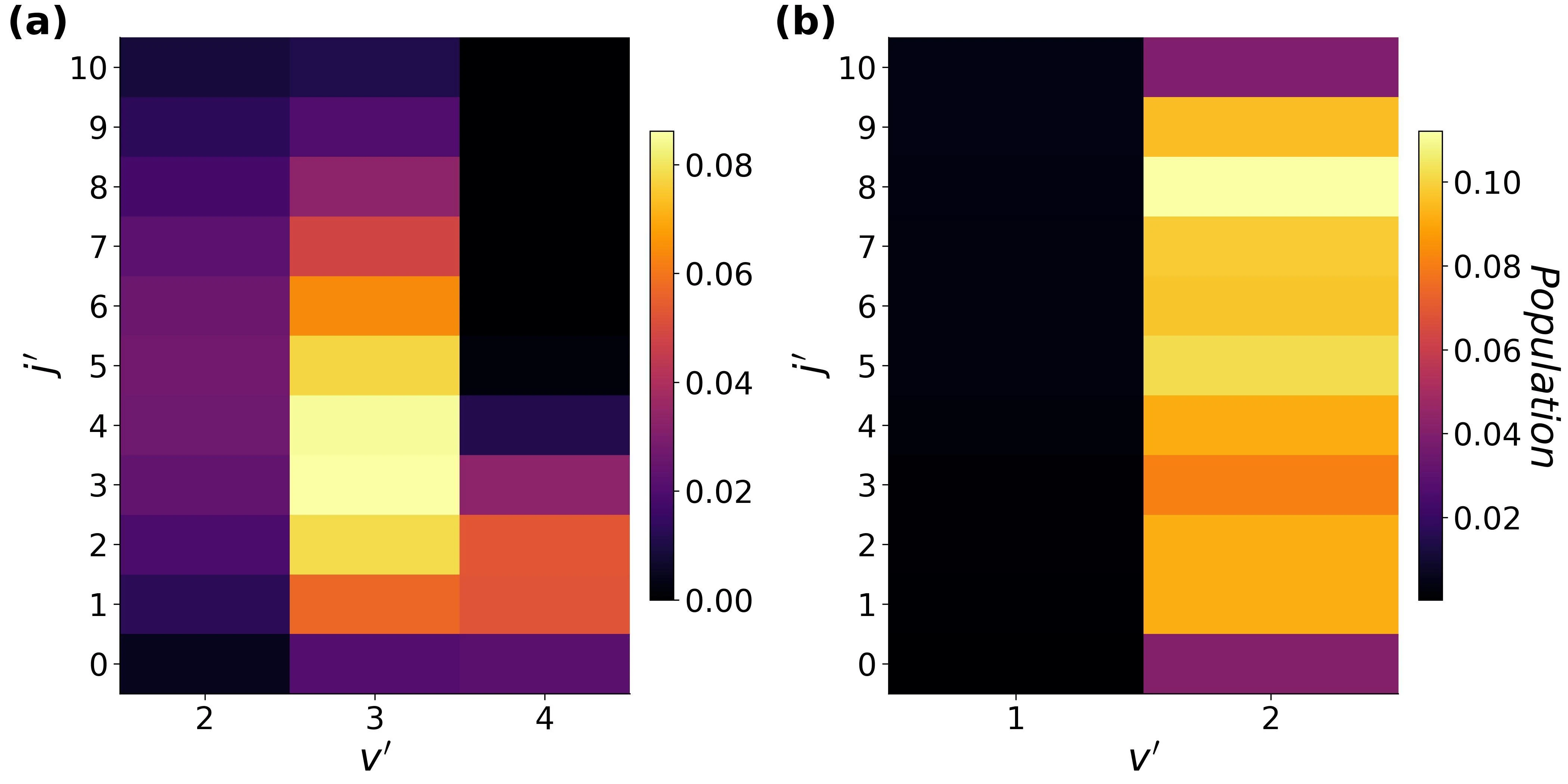
Using spectroscopy of magnetic resonances, a method that allows studying the energy levels of particles in a magnetic field, researchers demonstrated that a weak magnetic field can switch entanglement on and off in ultracold collisions. In experiments where rubidium atoms and strontium fluoride molecules, cooled to temperatures near absolute zero, collided, varying the field controlled quantum correlations. Moreover, even in an ordinary chemical reaction of fluorine with hydrogen, the products are born entangled. This turns familiar chemical reactions into a factory for producing quantum knots — a resource critically important for quantum computing, cryptography, and sensing.
At ultra-low temperatures, molecules move slower than a pedestrian, and a collision that gives birth to a quantum knot stretches over milliseconds, an eternity in the microworld.
Controlled quantum knots are the basis for fantastic technologies: from instantaneous communication to teleportation, as in 'Star Trek'.