Solar Eruptions: Neutral Helium Reveals the Magnetic Field express
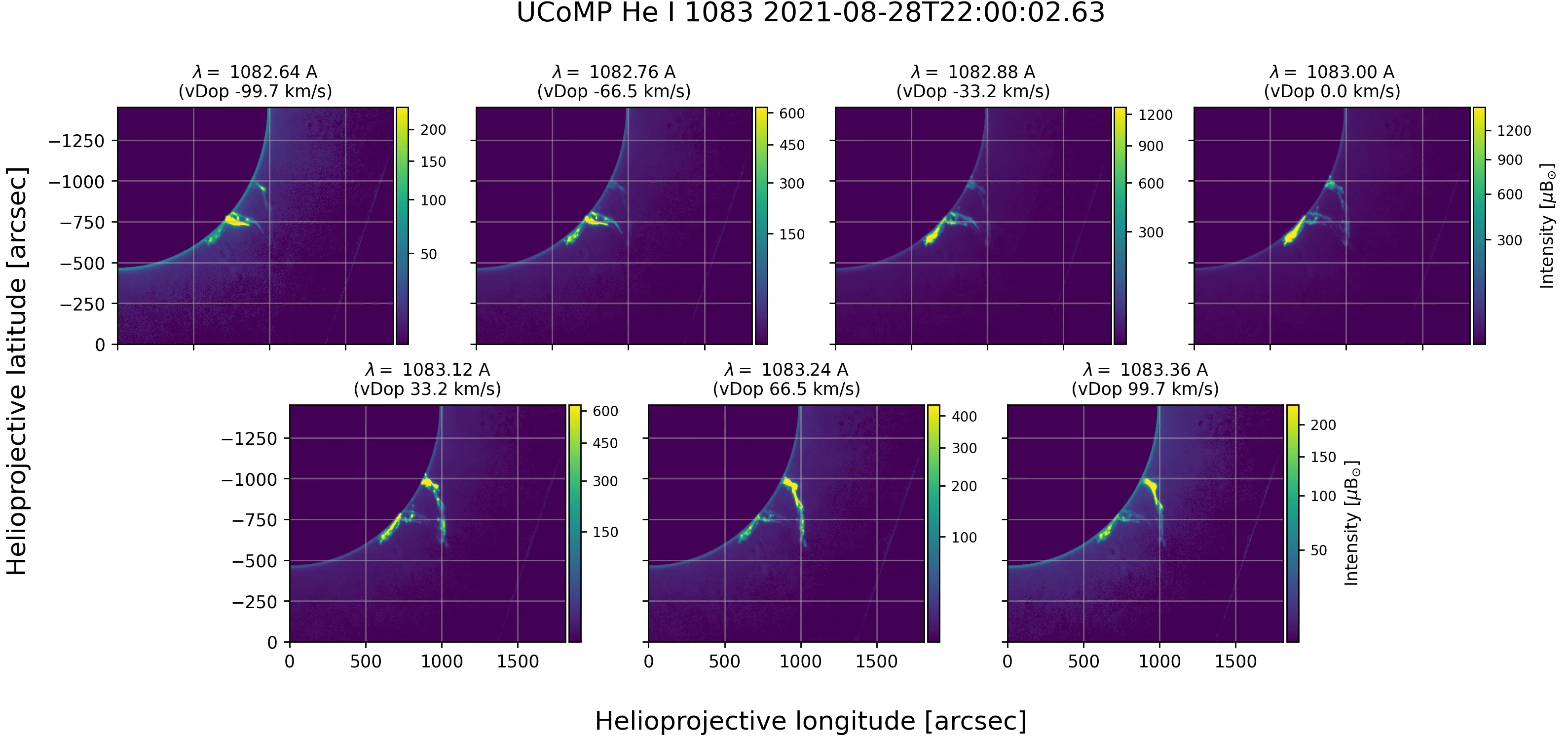
The Sun occasionally hurls enormous clouds of plasma into space — coronal mass ejections. Often tangled within these clouds are prominences: cooler, denser clumps of material. These contain plenty of neutral atoms that shine brightly in specific spectral lines.
Astronomers used the UCoMP instrument, which measures the polarization of light in the infrared helium line at a wavelength of 1083 nanometers. They found that neutral helium is clearly visible in erupting prominences as they pass through the lower and middle solar corona — up to two solar radii from the surface.
Such observations provide valuable data on the line-of-sight velocity of the ejection. This complements the picture obtained from ultraviolet telescopes and white-light coronagraphs. The earlier we can spot an ejection headed toward Earth, the more accurately we can predict magnetic storms and protect satellites, communications, and power grids.
The helium line at 1083 nm lies in the near-infrared — invisible to the eye, but easily detected by specialized instruments.