Laser Printing of Electron Bunches express
A typical accelerator is like an assembly line where electrons are the workpieces. To get the desired X-ray pulse, the workpiece is fine-tuned after it's already on the line: squeezed, filtered, corrected. In the new work, engineers decided to take a different approach — shaping the workpiece before it even hits the conveyor.
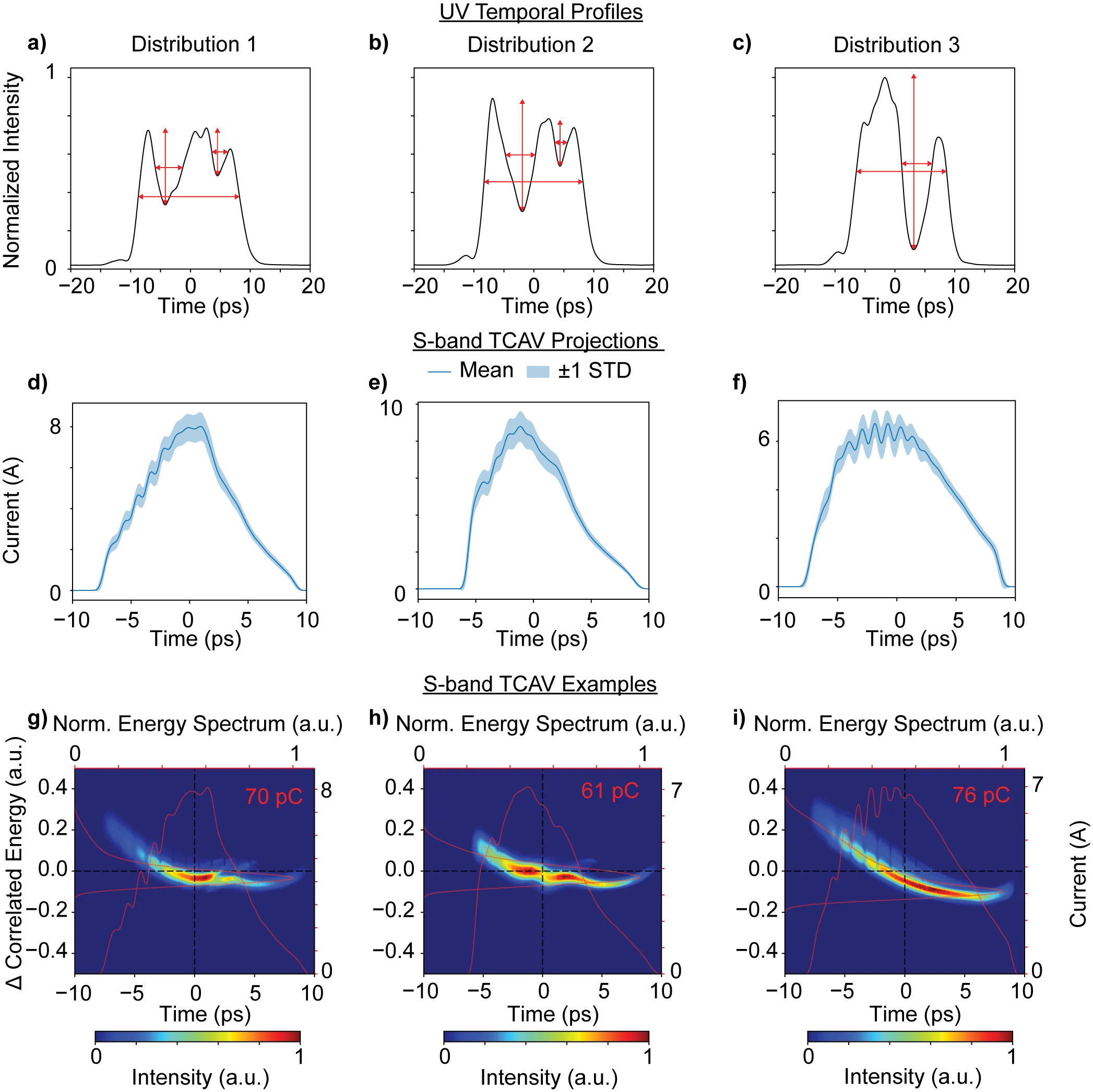
At LCLS-II, electrons are knocked out of a metal by a short laser pulse. Previously, this pulse had a simple shape, like a stamp with a fixed pattern. Now, the researchers have built a system that can draw arbitrary patterns on the laser pulse: multiple peaks, steps, complex profiles. This pattern is transferred to the electron bunch, and it persists through acceleration and compression.
This approach turns the electron source into a programmable tool. Instead of manually tuning the accelerator for each new task, an operator can simply load the desired laser pulse 'pattern.' This paves the way for automatic optimization and even autonomous operation of X-ray lasers.
An electron bunch in an accelerator is so short that its length is measured in femtoseconds — quadrillionths of a second. In one femtosecond, light travels a distance hundreds of times smaller than the thickness of a human hair.
This technology is reminiscent of the replicator from Star Trek, but instead of matter, the shape of a particle beam is programmed.