Current Heats a Magnet to Room Temperature express
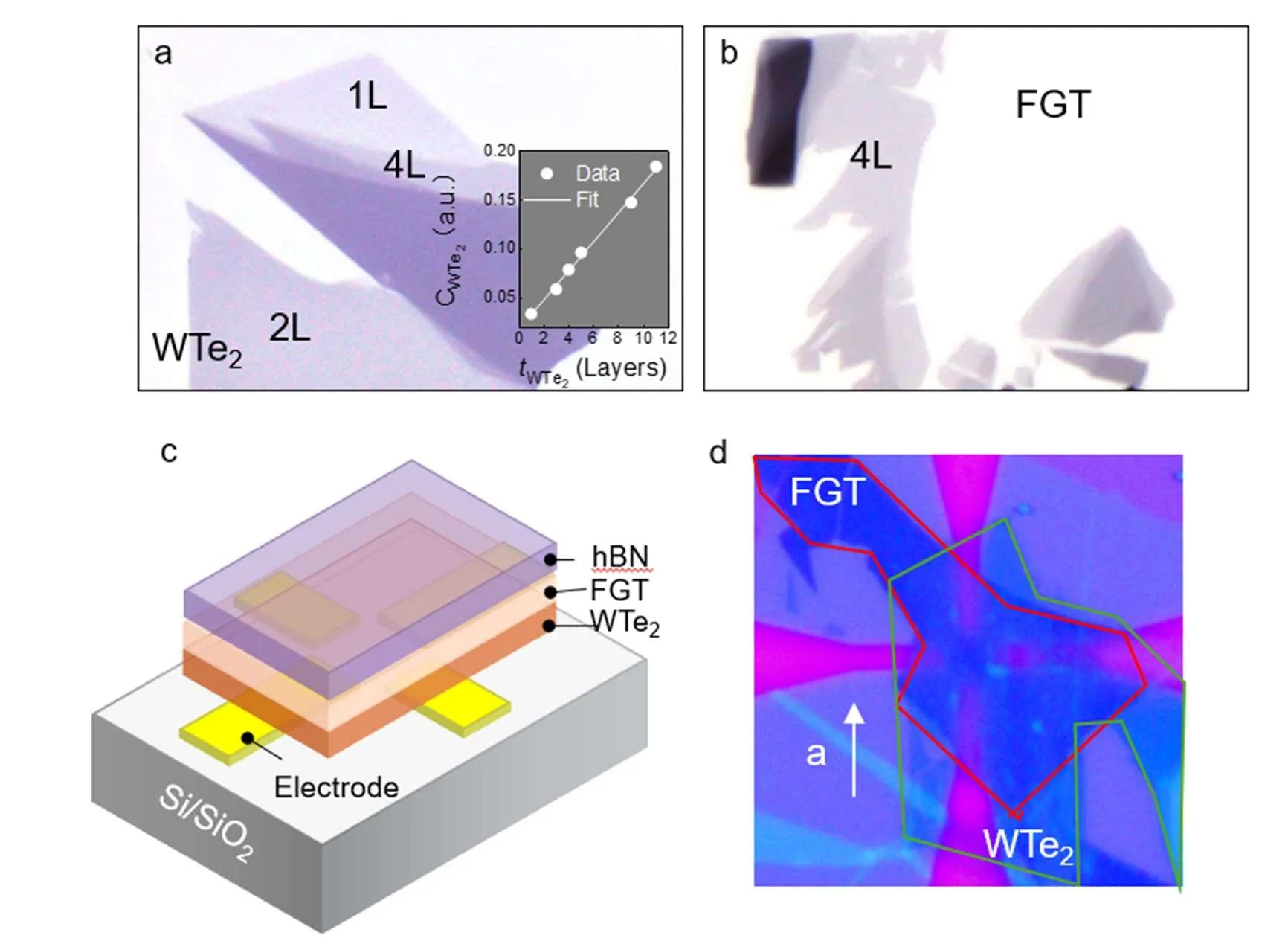
Usually, current in a metal acts like boiling water on ice: it heats the material and destroys magnetic order. But in a layered structure of tungsten ditelluride and the ferromagnet Fe3GeTe2, current behaves differently. Instead of heating, it induces an additional magnetic field inside the neighboring layer, as if you weren't melting the ice but freezing it even harder.
This field arises from the orbital motion of electrons in tungsten ditelluride. When current flows through this material, electrons move in orbits, creating tiny magnetic moments. These moments add up and act on the adjacent Fe3GeTe2 layer, aligning its atoms in one direction. As a result, the temperature at which the material loses its magnetic properties (the Curie temperature) rises above room temperature — from about 220 K to more than 300 K.
This effect allows precise tuning of the phase transition between magnetic and non-magnetic states simply by changing the current strength. Such controllability paves the way for spintronic devices — electronics that use not only the electron's charge but also its spin (intrinsic magnetic moment). Two-dimensional magnets can now be integrated into chips operating at ordinary temperatures, without bulky cooling systems.
Current, once considered the enemy of magnetic order, turns out to be its ally. The ice doesn't melt: it gets stronger.
Fe3GeTe2 is one of the few two-dimensional materials that remains magnetic at just one atomic layer thick, but its Curie temperature was too low for practical use. Now it can be raised simply by passing a current.
In Arthur C. Clarke's novel 'Childhood's End,' aliens control magnetic fields for levitation, such control of magnetic order by current could be a step toward such technologies.