Light That Makes Current Out of Nothing express
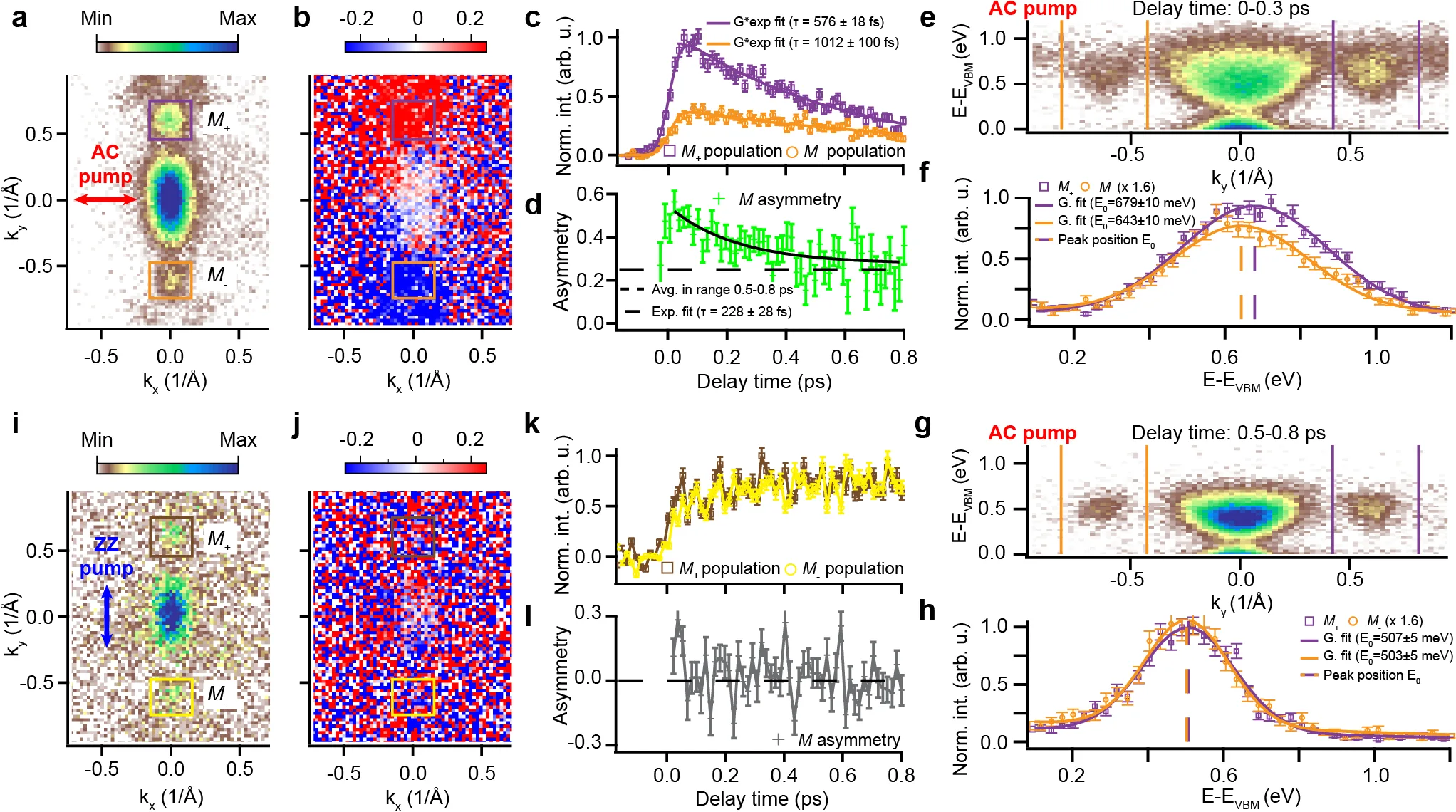
An ordinary sheet of black phosphorus looks like a layered cake of atoms. If you shine a regular lamp on it, nothing special happens: the electrons sit still, like spectators in a dark theater. But a short laser flash lasting millionths of a billionth of a second shakes up that theater. Light polarized along the "armchair"—as one of the crystal directions is called — briefly shifts the electron clouds. Charges begin to flow in one direction, even though there is no magnet nearby and the material itself is symmetric.
This effect is known as the nonlinear Hall effect. The ordinary Hall effect is familiar from sensors in cars and phones: there, a magnet deflects the current. The nonlinear version works differently: it needs no magnet, but previously required a crystal without a center of symmetry, like table salt. Black phosphorus is symmetric, and at rest it shows no effect. However, a flash of light lasting 300 femtoseconds (that's like stretching one second over a hundred million years) breaks the symmetry on the fly. Electrons manage to accelerate and create a measurable voltage.
The authors of the study illuminated black phosphorus with laser pulses and watched where and how fast electrons moved, using a setup that knocks them out of the material and catches them on a detector. It turned out that current arises only when the light polarization matches the "armchair" axis. Rotate the light — the effect disappears. This means the material can be controlled like a switch: one pulse (current flows, another) it doesn't.
The practical benefit lies in speed. Ordinary semiconductor switches operate in nanoseconds, whereas here the switching takes femtoseconds, that is, a million times faster. Such devices could be used for ultrafast electronics, single-photon detectors, and possibly for converting light into current in a new type of solar cell. The black phosphorus crystal remains cool and undamaged — the light acts like an invisible hand that briefly rearranges electrons and then lets go.
Black phosphorus can be made from ordinary white phosphorus by heating it under pressure. The result is layered crystals that can be peeled off with tape, like graphite for graphene.
In Arthur C. Clarke's novel "The Light of Other Days," light pulses control particle flows to see through walls. Here, light controls current in a crystal, a step toward that same flexible electronics.