A Hot Cocktail in the Heart of Perseus express
A giant cauldron of simmering soup stretches across millions of light-years. This is the atmosphere of the Perseus galaxy cluster — a cloud of scorching gas held together by gravity. Until recently, astronomers thought that in the center of this cauldron, the gas was calmly cooling, ready to condense into new stars. But a fresh look from Japan's XRISM telescope XRISM revealed that things are far more interesting.
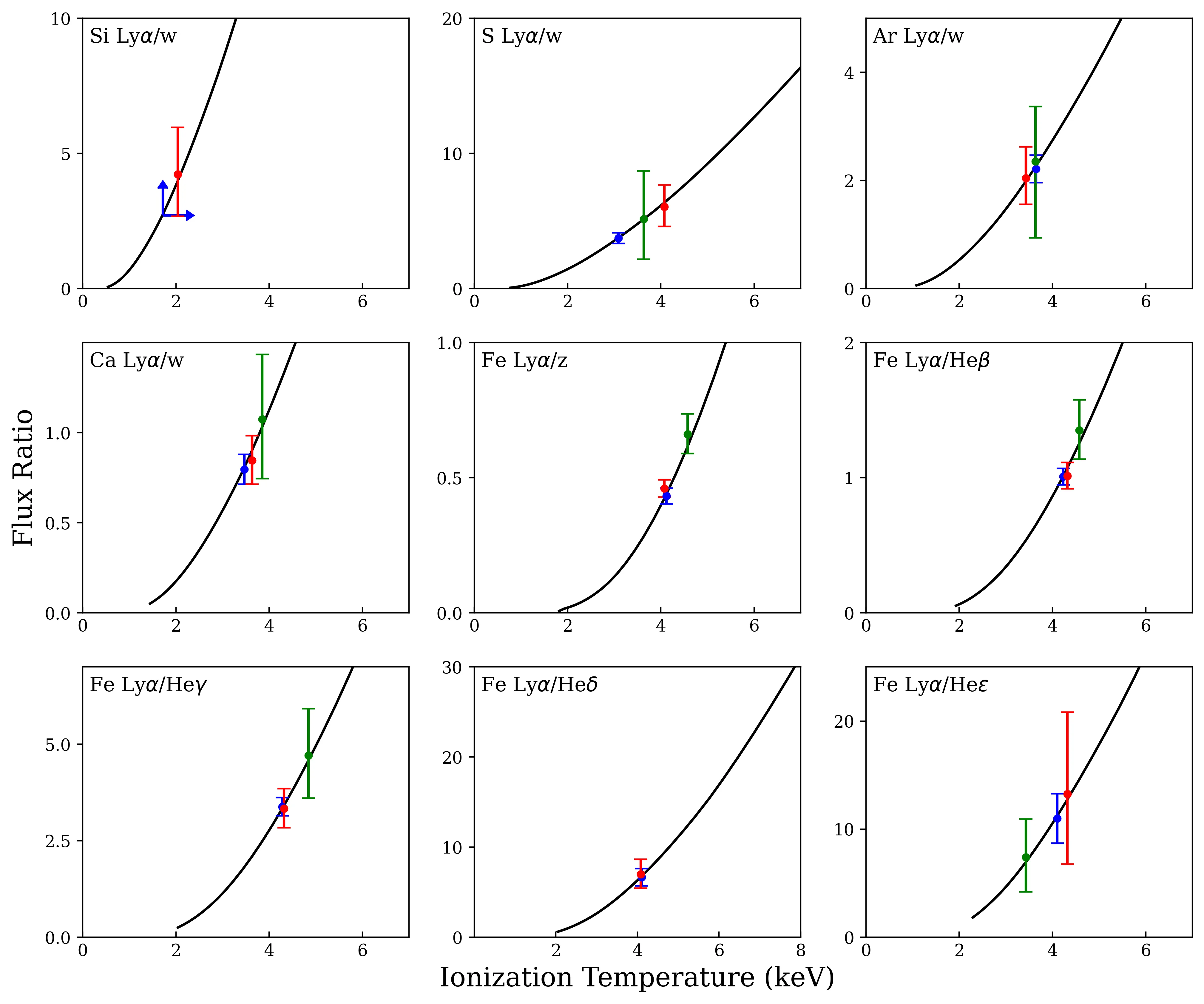
The gas at the heart of Perseus is not a homogeneous broth. The telescope discerned two distinct layers. The main one, extremely hot (about 40 million degrees), behaves relatively quietly: its particles move at about 140 km/s. But hidden within this vapor is a second layer, roughly half as cool (about 20 million degrees). This gas churns and dashes about: its velocity relative to the central galaxy reaches 200 km/s, and the velocity dispersion is nearly 400 km/s. In a calm sea, a swift underwater current suddenly appears.
What stirs this cosmic cocktail? Scientists propose two scenarios that may act together. The first is gravitational 'whirlpools' from mergers with other galaxy clusters. Such collisions create giant spiral waves that mix the gas. The second is the activity of the central black hole. It ejects powerful jets of plasma that, like a giant mixer, froth the surrounding medium, preventing it from cooling uniformly.
This discovery is important because it explains a long-standing puzzle: why gas in the centers of many clusters doesn't cool completely and form stars at the predicted rate. It turns out that the turbulent motion of the cooler gas, accelerated to nearly the speed of sound (Mach number about 0.8), acts as an additional source of pressure that impedes compression. Roughly a quarter of the gas's total energy is the energy of its chaotic motion. Thus, nature, unintentionally, puts a powerful brake on star formation. And in the giant cauldron of the Perseus cluster, stellar fuel never quite reaches readiness.
A temperature of 40 million degrees is nearly three times hotter than the center of our Sun. But this gas is so tenuous that a space probe would fly through it without even heating up.
A similar image of 'living' and inhomogeneous cosmic gas, churning around black holes, often appears in Alastair Reynolds's novels set in the 'Revelation Space' universe.