Quantum Cocktail: How Light Creates Order from Chaos express
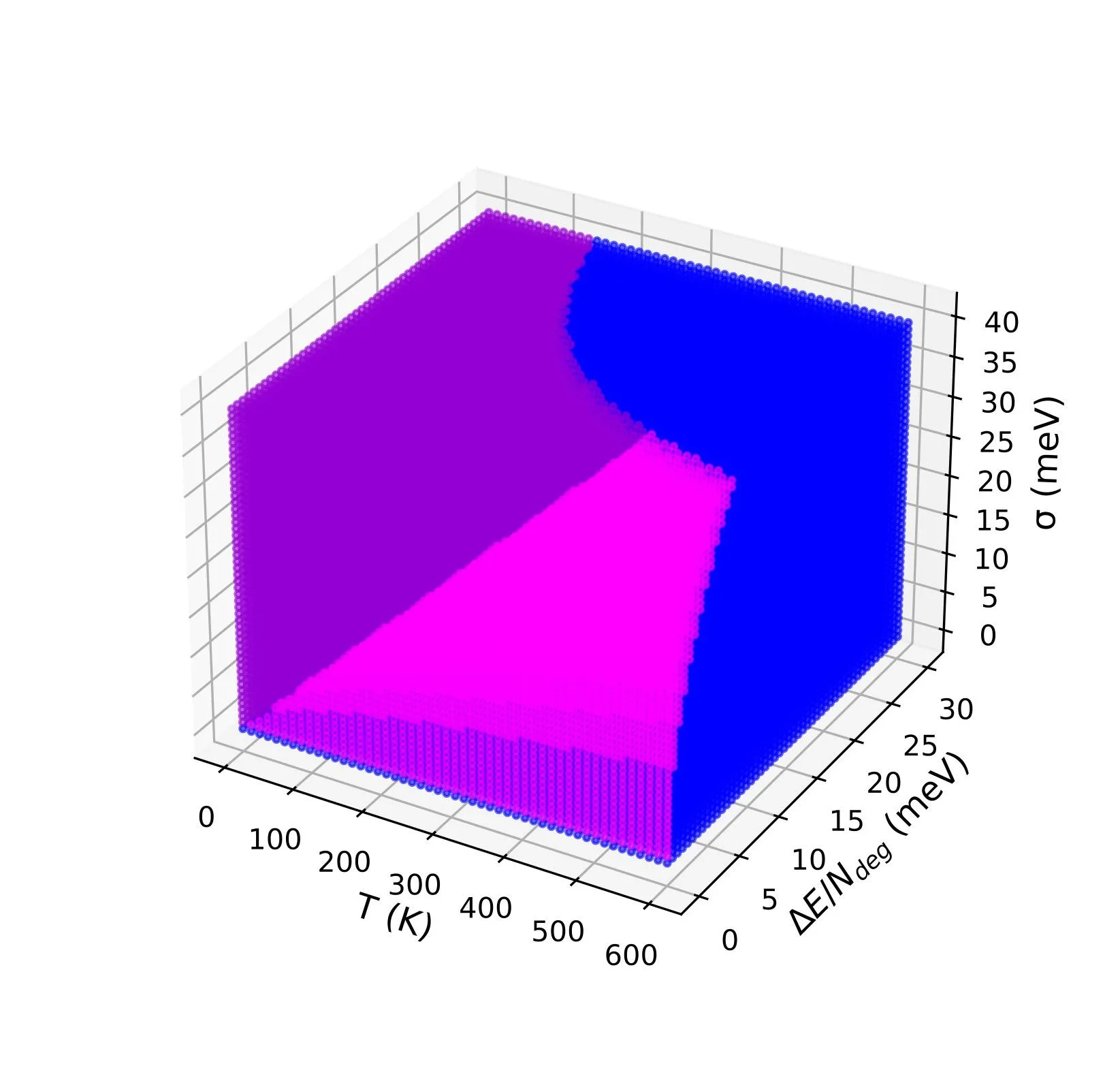
Picture a crowded hall where each person is a molecule, and their private conversation is the motion of electrons within it. Normally, everyone talks to themselves, and the overall buzz is chaotic. But if a bright spotlight is turned on in the center, it begins to conduct the crowd: people synchronize their movements, even though the light merely reflects off the walls. This is roughly how the effect described in the new work operates: light trapped between two mirrors makes electrons in molecules behave as a single ensemble.
Previously, scientists could only describe weak collective effects where each molecule remains nearly independent. But when the coupling through light becomes strong, a genuine tangle of correlations emerges that standard methods cannot unravel. The authors turned to an unexpected tool — spin glass theory (a branch of physics studying disordered magnetic systems). They applied a model similar to one describing the freezing of molten glass: many particles get stuck in random positions while still influencing each other. This approach allowed them to find two new collective states, which they named "paracorrelated" and "spin-glass."
In the first state, molecules already sense each other through light, but each still retains its electronic individuality, like dancers holding hands but moving to their own rhythms. In the second, full entanglement emerges: electrons lose their attachment to specific molecules and form a common "cloud"—like a crowd moving as a single organism. Remarkably, the transition between these phases is governed not by energy but by entropy — a measure of disorder. Under certain conditions, the system itself chooses a more ordered state to maximize its freedom.
This effect resembles the functioning of ion channels in cell membranes, where the flow of charged particles is regulated by external signals. Here, however, light plays the role of the gate, and artificial molecular ensembles replace biological membranes. The practical significance is hard to overstate: it opens the possibility of creating materials that change their electrical properties from dielectric to metal on command. Such switches could form the basis for ultrafast electronics or sensors sensitive to single photons.
And so we return to that hall: the spotlight does not merely illuminate the crowd: it turns disparate individuals into a well-coordinated orchestra where every instrument sounds in unison. Light between mirrors does the same for molecules, paving the way for materials with unprecedented properties.
Spin glasses got their name from an analogy with ordinary glass: in both cases, atoms freeze in disordered positions, but in spin glasses it is the magnetic moments of atoms that "freeze," not their coordinates.
In Stanislaw Lem's novel "Solaris," the ocean-planet exhibits collective behavior that cannot be reduced to the sum of its parts — much like light in the experiment gives rise to a unified electron cloud from many molecules.