The Universe May Have Switched to a New Energy State express
A compressed spring can sit for years without moving. It seems frozen forever, but inside the metal, atoms slowly rearrange, and one day the spring clicks, settling into a new, more relaxed position. Physicists think of the vacuum in a similar way: it might not be truly empty and unchanging, but rather a temporarily frozen state that could suddenly switch to another — with a different energy density.
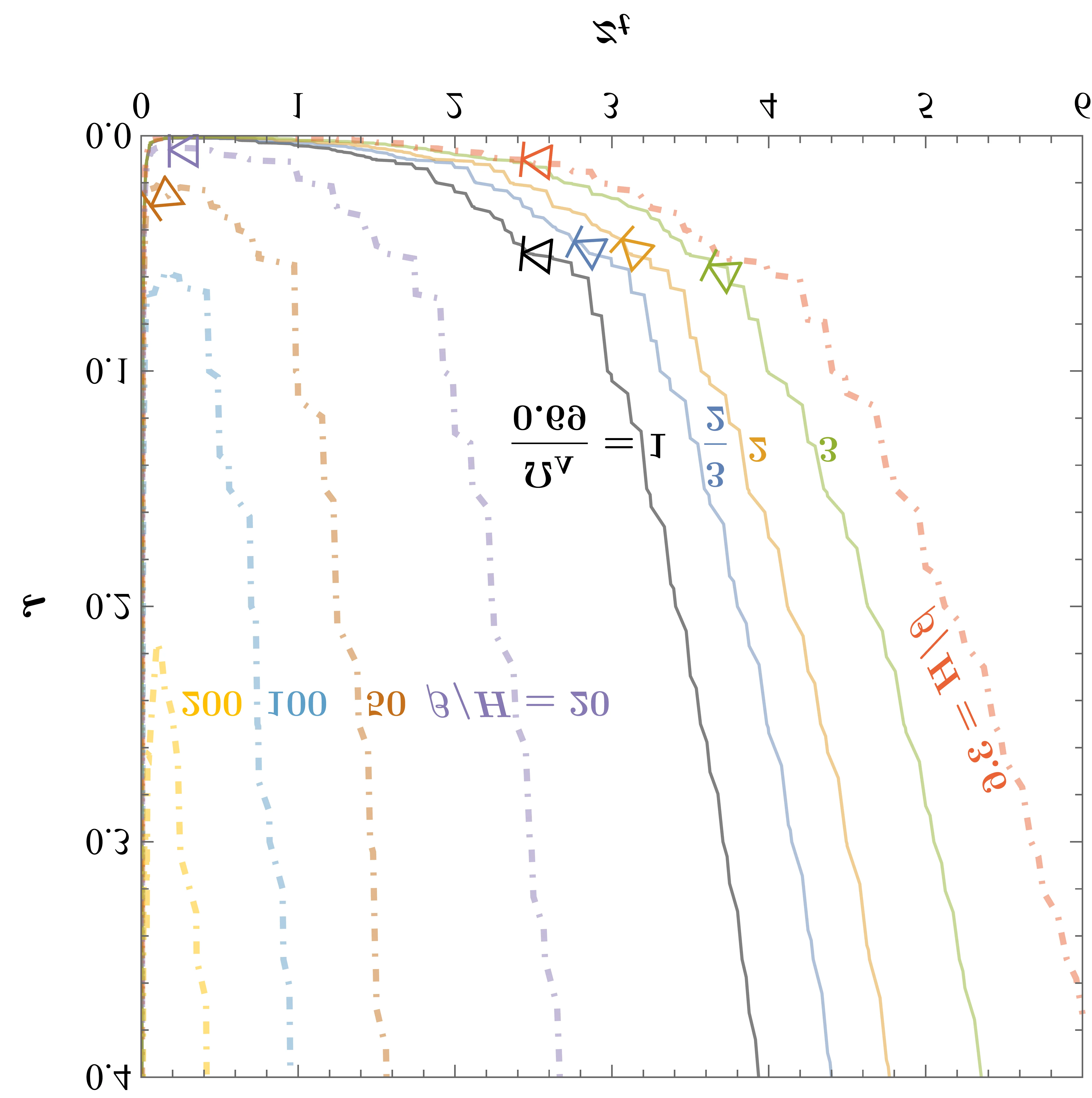
The authors of the new study built several models of such a late transition. In some scenarios, only the energy of the vacuum changes: that mysterious dark energy that pushes galaxies apart. In others, part of the dark matter turns into radiation, and domain walls (thin layers where vacuum properties change abruptly) appear in space. They then compared these scenarios with three sets of real data: distances to distant galaxies measured via baryon acoustic oscillations (sound waves from the early Universe frozen in the distribution of matter), supernova brightness, and the cosmic microwave background map — ancient light that preserves the imprint of the first moments.
The most interesting result: a model where about 10% of dark matter participates in the transition, and domain walls are born in space, agrees remarkably well with observations. It favors a transition time around redshift 7—that is, roughly 800 million years after the big bang. A pure drop in vacuum energy without additional effects is more tightly constrained: if the transition happened later than when the Universe was half its current age, the vacuum energy could have dropped by at most half. Otherwise, the cosmic microwave background map would look different — bubbles of new vacuum would have left noticeable distortions.
Thus, the hypothesis of vacuum instability transforms from a philosophical speculation into a testable part of cosmology. Just as the click of a spring reveals hidden tension, future cosmic microwave background maps and new distance measurements will either capture the traces of such a transition or rule it out definitively.
Vacuum energy is not an empty abstraction: if you gathered it from a cubic centimeter of empty space, it would be enough to boil a kettle, but by current estimates its density is $10^{120}$ times smaller than theory predicts.
In Greg Egan's novel Schild's Ladder, the vacuum suddenly transitions to a lower energy state, and the boundary of the new vacuum expands at the speed of light, destroying everything in its path.