Vacuum Tide: How Cosmic Emptiness Conducts the Universe ✛ ✎ ✦
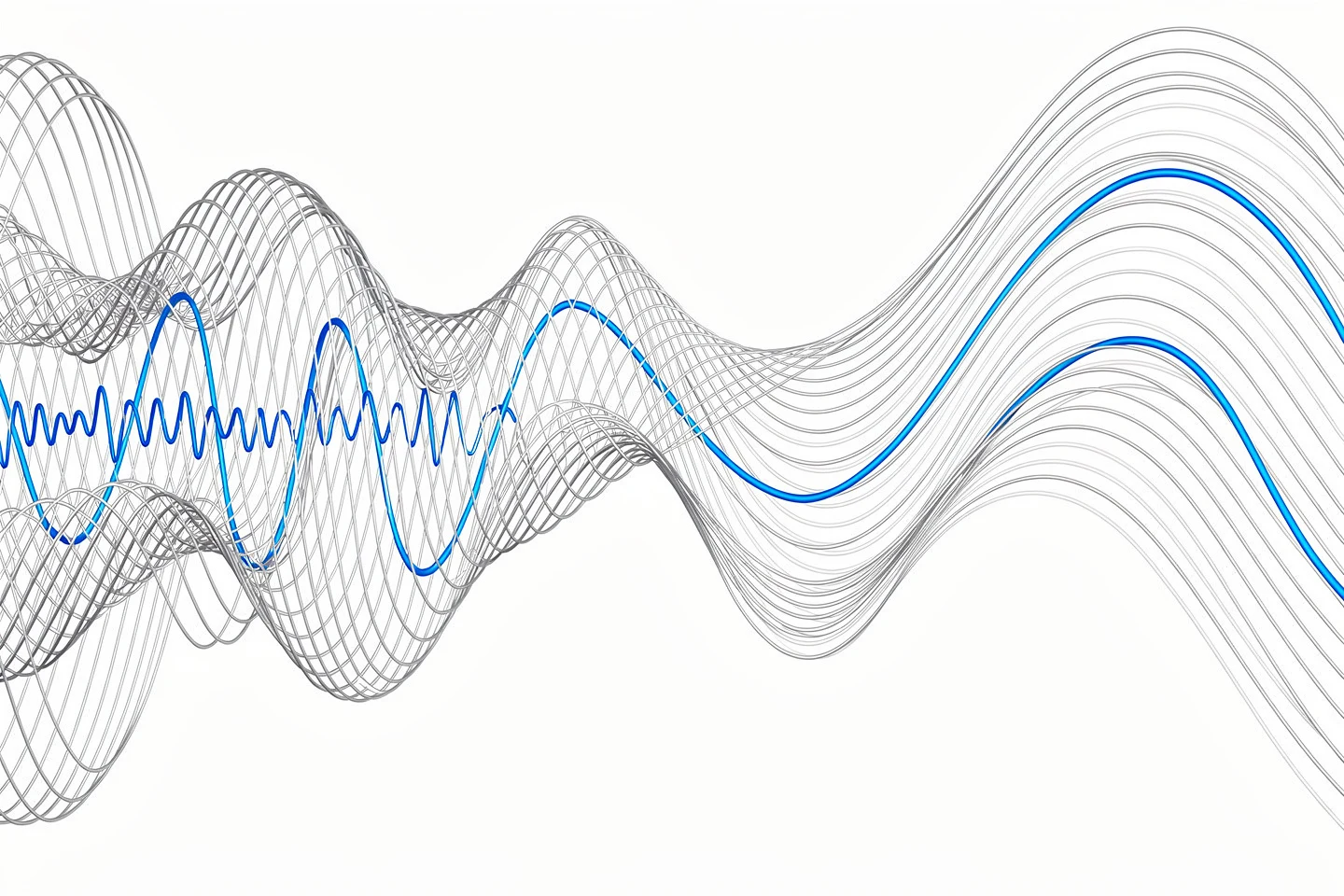
The cosmic vacuum is not emptiness but a living ocean: its energy swells and subsides, echoing the expansion. Like a lunar tide, vacuum density sensitively responds to Hubble’s tempo — the conductor’s baton of the universe. This “running vacuum” is not frozen: within it pulse quantum fluctuations of all fields — from electronic to hypothetical vortices of Grand Unification.
Classical physics hit a wall: summing zero-point oscillations of fields in flat space yields a terrifying $10^{120}$—many times more than observed dark energy. Pioneers sought a way out. Georges Lemaître in the 1930s linked the cosmological constant to vacuum energy, and after Edwin Hubble’s discovery, it became clear: spacetime breathes. The running vacuum model goes further: it demands calculations in a curved and expanding continuum. Adiabatic renormalization ties the scale to the parameter H, and infinities miraculously cancel, leaving neat H², H⁴ terms... The vacuum ceases to be a catastrophe: it becomes an evolutionary flywheel.
In the first milliseconds after the Big Bang, when Hubble roared, H⁴ dominated. It became an inflationary hurricane — without any inflaton, it inflated the universe 10²⁶ times, smoothing the horizon and diluting entropy. Today, in the calm of slow expansion, H² rules the dance. It sets the density of dark energy — almost constant, but with a barely perceptible breath. Fresh maps from DESI and the cosmic microwave background catch this rhythm. The vacuum doesn’t just exist: it conducts.
RVM is no elegant abstraction. It is palpable: the gravitational constant G might be drifting — by 10⁻¹³ per year, in harmony with Paul Dirac’s vision. Catching the drift with hyper-precise clocks would rewrite the laws of gravity. A dynamic vacuum also reconciles disputes: where standard ΛCDM cracks in large-scale structure and dark matter data, it sews the edges together. Ahead lie stringy corrections, loops of quantum gravity, with Euclid and Nancy Grace Roman already taking aim.
30 years before the discovery of acceleration, Paul Dirac suspected G is not constant. The running vacuum model dresses his hunch in rigorous quantum field theory, predicting a drift of about 10⁻¹³ per year — at the edge of sensitivity of modern atomic clocks.
In Greg Egan’s novel “Quarantine,” the cosmological constant obeys observers — a hint of a living vacuum that responds to the very fabric of reality.