Ultraviolet Deception: How Starlight Mimics Life ✛ ✎ ✦
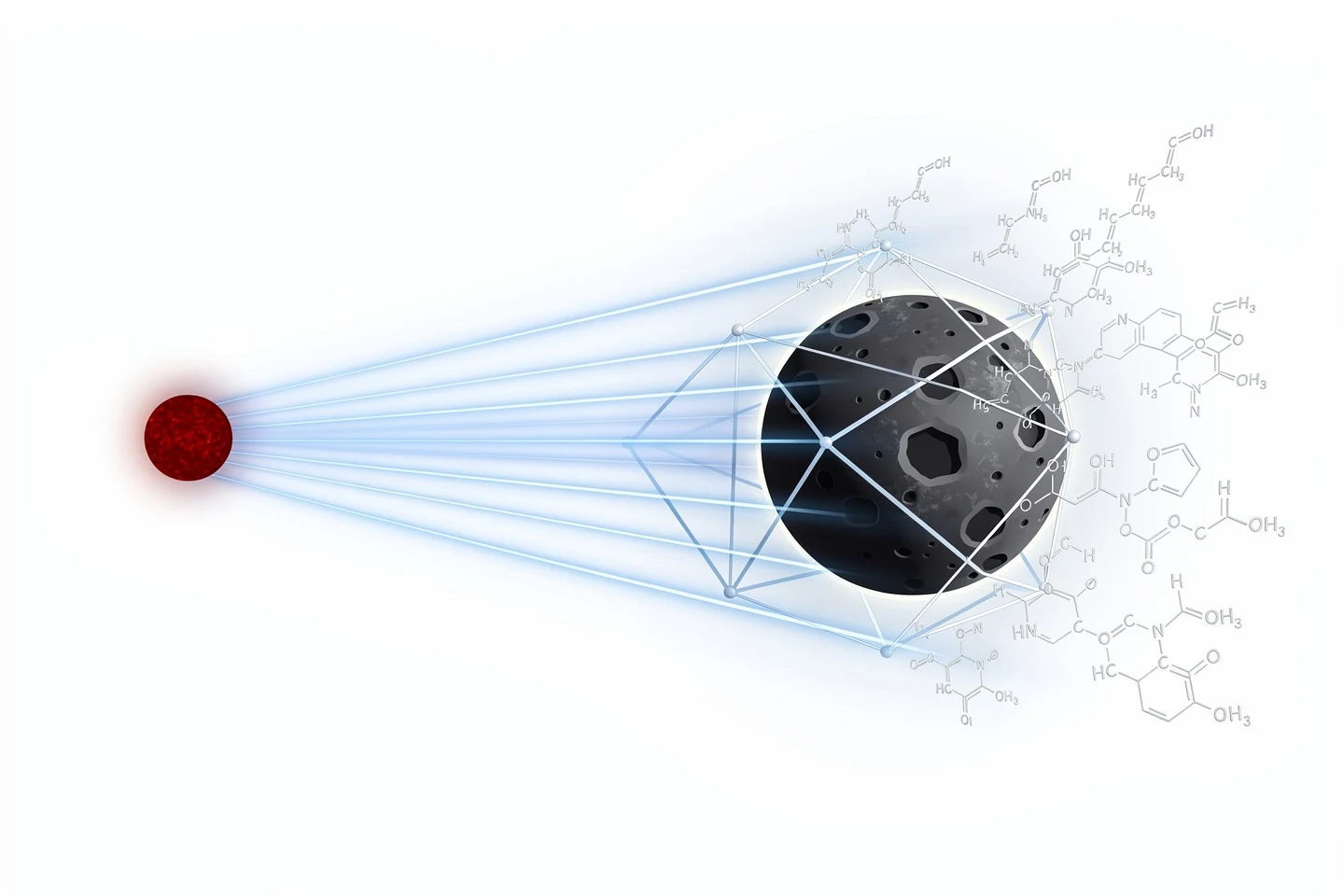
The atmosphere of a distant exoplanet is like a recipe guessed from the scent drifting out of a kitchen vent. Around the star red dwarf TRAPPIST-1, planet e might host life, but how much ultraviolet the star emits is unclear. And this light is the key ingredient.
Simulating conditions like those on ancient Earth, scientists tested five ultraviolet scenarios. The planet turned out to be capable of accumulating 5% oxygen, an ozone layer, and methane, classic signs of organisms, without any life. Surprise: it's all the result of ordinary chemical reactions triggered by light from carbon dioxide and water vapor. The balance is easily shifted by changing the ultraviolet, and then hydrogen appears. An unexpected twist: a year on TRAPPIST-1 e lasts six Earth days, and the planet always faces its star with the same side, yet the chemical camouflage works.
The JWST telescope will be able to catch this deception using spectroscopy (splitting light into colors) during a transit — when the planet passes in front of the star. But without precise ultraviolet photometry (brightness measurement) of the star, any sign of life will turn out to be a mirage, and the search will be like guessing by smells.
The TRAPPIST-1 system is located 40 light-years away from us — a cosmic next-door neighborhood where one planet skillfully pretends to be inhabited.