The Mystery of Eclipse Shadow Bands Solved express
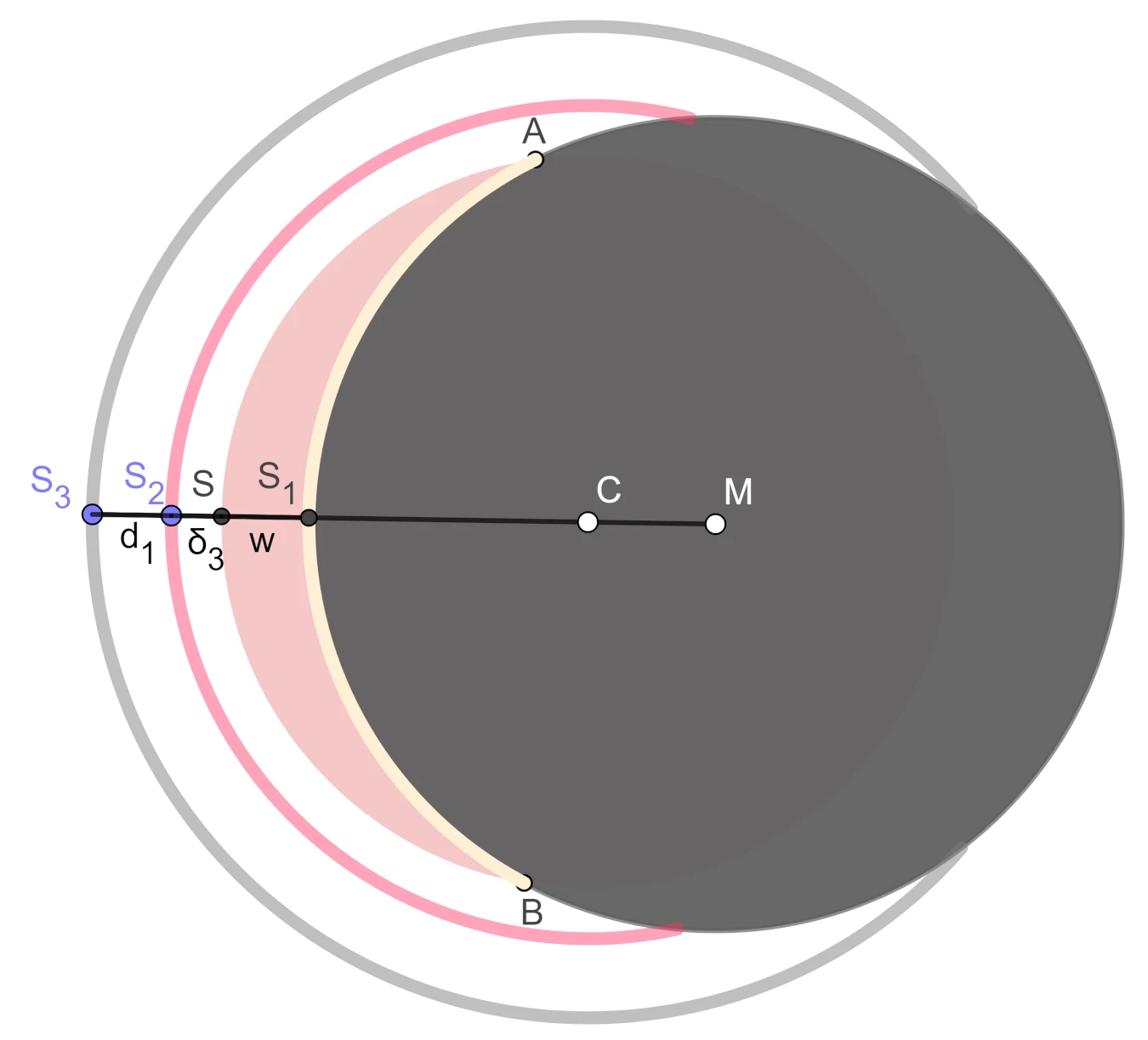
Moments before totality, swift shadow bands glide across the ground, like ripples from pebbles tossed into water. For centuries, this phenomenon baffled scientists. It turns out the key is that light is a wave.
The Sun isn't a pinpoint lamp but a vast disk. When the Moon nearly covers it, a thin glowing crescent remains. Its two opposite edges behave like independent sources: the waves they emit overlap, like ripples on water. Where crests coincide, brightness doubles; where a crest meets a trough, shadow appears. This is how the striped pattern is born. The same idea once proved light's wave nature in the lab; now celestial mechanics has repeated the experiment on a cosmic scale.
The earliest descriptions of shadow bands are found in Chinese chronicles from 2000 BCE, yet the explanation didn't come until the 21st century.