Thorium-229: The Atomic Quantum Battery express
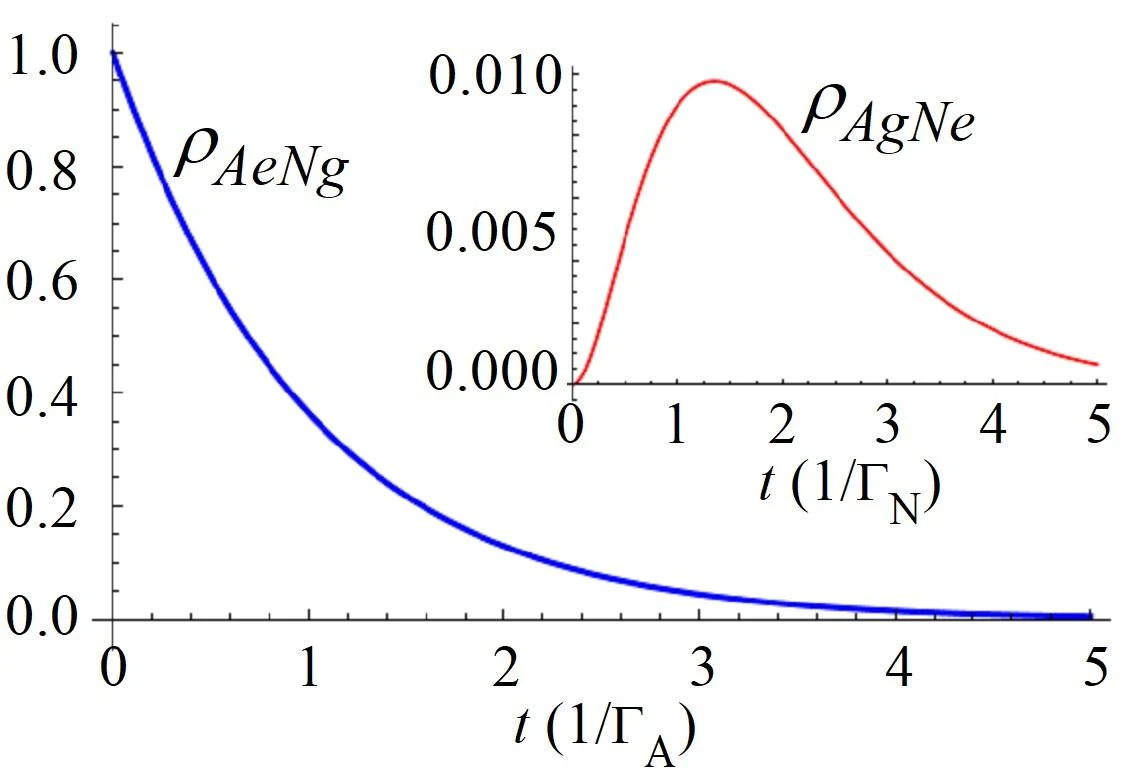
Two pendulums on a shared string trade motion: push one, and the second starts swinging, and a moment later the first gets a push back. In a thorium-229 atom, energy flows nearly loss-free between the electron shell and the nucleus.
This rhythm can be seen in an atom trap: analyzing the light (spectroscopy) and measuring brightness (photometry) reveal the shell's oscillations. A laser charges it, and the energy dives into the nucleus — creating a wireless nuclear battery recharged by light. It all rests on the laws of the Standard Model, which describes matter. Niels Bohr deciphered the layered structure of the atom, and Ernest Rutherford discovered its massive nucleus.
Nuclei usually demand harsh gamma radiation. But thorium-229 is unique: its nucleus is excited by soft ultraviolet light with an energy of just 8.4 electronvolts: that’s electron-level energy, not nuclear. The energy is a million times smaller than typical nuclear energy, so this battery can be built right now.
The thorium-229 nucleus can be 'charged' not with gamma rays but with ordinary ultraviolet light: its excitation energy is only 8.4 electronvolts, like an electron jump in an atom, not a nuclear reaction.