Pengfei Zhang

5 articles · 30 co-authors · latest: 2026-09-01
466 citations · h-index 12 · 28 papersData: Semantic Scholar

We have retold 5 papers by this author. 4 of them with a full read. most often about: quantum error correction, quantum algorithm, dissipative_quantum_chaos. 30 co-authors across our retellings.

Links in the knowledge graph
Noise as the Conductor of Chaos: Quantum Chaos in an Open System
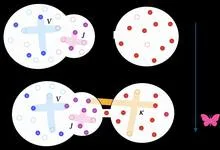
Five superconducting qubits on a chip: the stage for a performance of quantum chaos. Four qubits form the system, and the fifth acts as the environment, introducing dissipation. After a short evolution, the environment is discarded, leaving the system with an open quantum map, an operator that transforms the system's state.

Quantum Climber: Leaping Across Optimization Canyons
Three thousand meters above sea level, a sheer cliff face. A classical climber picks a single route and crawls up step by step, often getting stuck in a local minimum: a small niche with no upward path. A quantum climber acts differently: it can leap across a canyon and land in a neighboring energy basin where the route is better.
General Relativity2026-05-082 minarXiv:2605.07216express
Laser Clocks in Orbit Put Einstein to the Test
A stone falls into a well, and the splash reaches your ears with a delay. Something similar happens to light as it leaves Earth: its oscillations become less frequent, the beam seems to 'tire.' This is gravitational redshift — a phenomenon Einstein spoke of a century ago.
Entropy as Fuel for Chaos: How an Environment Speeds Up Quantum Mixing
A translator is working in a hall where an important meeting is taking place. He translates every sentence, but the hall is noisy: nearby conversations distract him, words get mixed up, and the meaning is lost. That is what a quantum system coupled to an environment looks like: quantum chaos usually dies out because information leaks away.
Double Echo from the Depths of the Atmosphere: How SKA-Low Will Catch Rare Showers
A storm in the upper atmosphere lasts a few millionths of a second. A cosmic ray, a proton or a helium nucleus, strikes air molecules, sending a swarm of particles downward. Most of them stay together, but occasionally one particle gains so much energy that it surges ahead.