Laser Clocks in Orbit Put Einstein to the Test express
A stone falls into a well, and the splash reaches your ears with a delay. Something similar happens to light as it leaves Earth: its oscillations become less frequent, the beam seems to 'tire.' This is gravitational redshift — a phenomenon Einstein spoke of a century ago. A massive planet slows time itself, and light feels it.
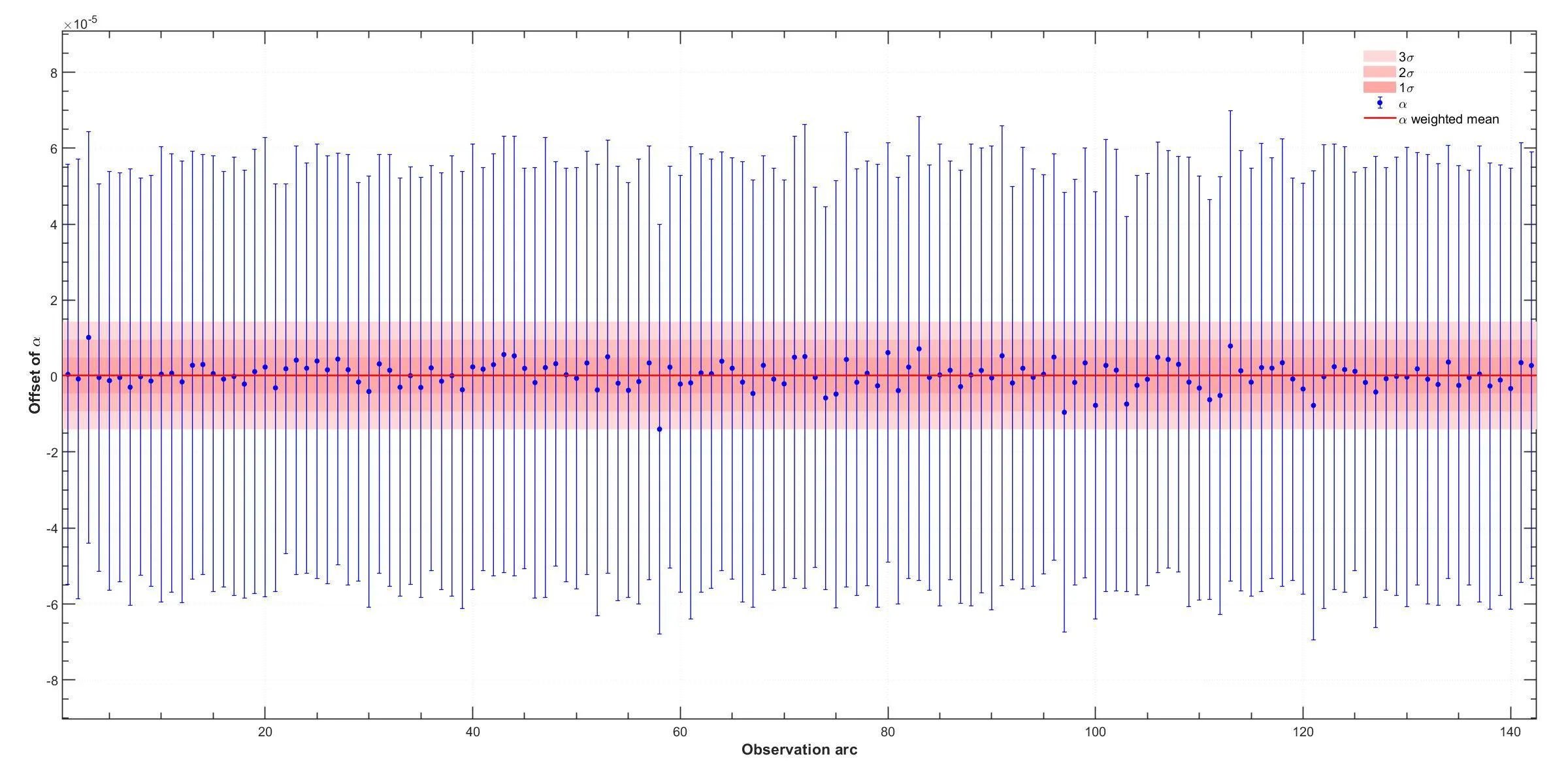
Now this effect has been measured with unprecedented clarity. On the Chinese Space Station (CSS), the CLT laser link is up and running. It sends ultra-short pulses to ground clocks and catches them on the return. From the delay and frequency shift, scientists calculate how much Earth's gravity has distorted the passage of time. A laser beam is more convenient here than radio waves: it doesn't get tangled in the upper atmosphere or suffer from extra interference. The picture comes out cleaner. While the station's optical clocks are still being calibrated, researchers took real orbital data and simulated the experiment. The verification accuracy reached (1.8 ± 47) × 10⁻⁷ — about ten times better than previous attempts.
The main nuisances remain the turbulent troposphere and air shimmer. But even with these, the method can detect a difference in gravitational potential (a measure of how strongly the gravity field affects time) of just 0.1 m²/s². In practice, this means you can measure the elevation difference between Europe and Asia to within a centimeter — simply by tracking the ticking of clocks in space. This trick is useful not only for physicists but also for geodesists who reconcile elevation maps across continents.
So a cosmic beam sent from orbit becomes a delicate probe for testing the laws of the universe. And at the same time, a bridge between continents built not of steel, but of light and time.
Original abstract
as written by the authors arXiv:2605.07216
This paper presents a high-precision gravitational redshift test using the China Space Station (CSS) Laser Time Transfer (CLT) system. We develop a comprehensive observation equation based on a c^{-3} order relativistic model for space-ground clock comparison. While the CSS optical clock system is currently in the orbital debugging phase, our simulation using actual CSS orbit data achieves a gravitational redshift verification precision of (1.8 \pm 47)*10^{-7} -- approximately one order of magnitude improvement over previous experiments. Our work represents the first application of laser-based time transfer for gravitational redshift verification at such precision, and the first use of the CSS CLT link for testing this fundamental aspect of General Relativity. Unlike microwave-based methods, our laser approach avoids ionospheric effects and first-order Doppler shifts. Residual analysis identifies tropospheric delay variations and atmospheric turbulence as the primary remaining uncertainty contributors. The achieved precision enables gravitational potential difference measurements with 0.1 m^2/s^2 precision -- offering new capabilities for both fundamental physics investigations and geodetic applications including intercontinental height transfer. This work establishes a new benchmark for high-precision tests of relativistic physics and demonstrates the transformative potential of space-based optical time transfer.
Gravitational redshift was first measured in 1959 in a Harvard laboratory using a tower 22 meters tall. Light 'fell' in Earth's gravity field, and its frequency changed by a minuscule fraction.
In Greg Bear's novel 'Eon,' laser communication between different eras allows detecting time shifts — much like in this experiment, but on a cosmic scale.