A quantum neural network (QNN) is a computational model that combines principles of quantum computing with artificial neural networks. Unlike classical neural networks that process information using bits (0 or 1), QNNs use quantum bits (qubits), which can exist in superpositions of states, allowing them to represent and process information in ways that are exponentially richer. This potential enables QNNs to handle certain computational tasks, such as pattern recognition and optimization, more efficiently than classical counterparts, though practical advantages are still under active research.
History
The concept emerged in the late 1990s and early 2000s, with theoretical proposals by researchers like E. Farhi and S. Lloyd. However, practical implementations only became possible in the 2010s with the advent of noisy intermediate-scale quantum (NISQ) devices, leading to a surge in experimental demonstrations.
How it works
QNNs typically consist of layers of quantum gates that act on qubits, analogous to the weighted connections in classical neural networks. The network is trained by adjusting parameters (like gate angles) to minimize a cost function, often using hybrid classical-quantum algorithms. During training, the quantum computer evaluates the network's output, and a classical optimizer updates the parameters. The key advantage is that quantum superposition and entanglement allow the network to explore many possible solutions simultaneously, potentially leading to faster convergence or the ability to model complex correlations that are intractable classically.
Some QNN models can be trained to recognize patterns in data that are impossible for classical neural networks to distinguish, due to the exponential dimensionality of quantum state space.
Strike a bell, and it rings at its own pitch. A black hole, after being disturbed, also rings — except instead of sound, it's the fabric of space itself that shivers. The frequencies of this ring can tell you a lot about the hole: how fast it spins, what its mass is.
A quantum computer is like an orchestra where each musician, a qubit, plays their part but keeps hitting wrong notes. To keep the music from turning into cacophony, you need a conductor who instantly hears the off-key notes and corrects them.
A bee-sized quadcopter autonomously charts its route indoors, like a space probe through an asteroid field. Its camera works as a photometry instrument, capturing reflected light, while the processor decides where to turn at the speed of light.
The classical neuron is a chamber musician, drawing only one note from each string: it takes a weighted sum of inputs, adds a bias, and passes it through a nonlinearity.
Once Richard Feynman saw in quantum systems a challenge for classical computers. Now we face the inverse problem: understanding what exactly the quantum processor has simulated. Among the states it births are veritable 'black boxes'—topological phases of matter.
The atomic nucleus rarely sits still: it often trembles, rotates, or pulses like a plucked string. Each such motion is an excited state, and describing it usually requires extremely complex calculations. Now neural networks come to the rescue: they shape the nucleus the way a musician identifies a note in a chord by ear.
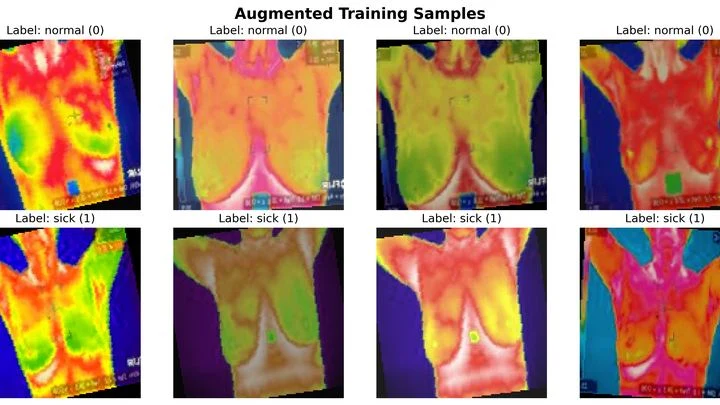
The hot air above asphalt shimmers, betraying the heated surface. Medical thermography works in a similar way: the skin over a tumor is often slightly warmer than healthy skin — by just fractions of a degree. Computer programs try to catch this difference and determine whether it's dangerous.
A city map: intersections are nodes, streets are connections. For an algorithm to understand the structure, each node needs a label. The classical approach — standard model — assigns simple tags, like house numbers.
Hot massive stars are the kitchens of the Universe, where heavy elements are cooked up. They end their lives in supernova explosions. To understand their recipe, astronomers use spectroscopy — the analysis of the rainbow band of light passed through a prism. Previously, deciphering such a 'menu' took hours.
Inside a piece of diamond hides a tiny defect — a nitrogen atom next to a vacancy. This defect catches magnetic fields like an antenna catches radio waves and responds with flashes of light. Such sensors already measure temperature inside living cells and find defects in microchips.