A Drop on Glass: Why Solution Elasticity Doesn't Change the Stain
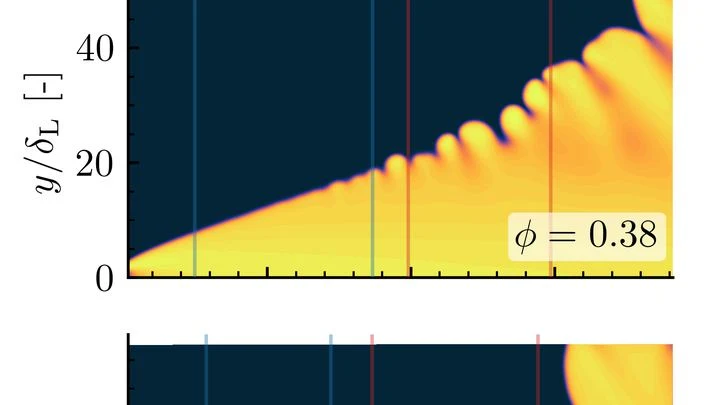
A raindrop falls on glass and flattens into a pancake. Add a bit of polymer to the water, and it becomes elastic, like jelly. You'd think such a jelly would spread differently.
Hooke's law states that the force needed to extend or compress a spring is proportional to the displacement from its equilibrium position.In 1660, Robert Hooke, experimenting with springs for clocks, formulated the rule: 'As the force, so the stretch' — Ut tensio, sic vis. He announced his discovery in 1678 in the form of an anagram ceiiinosssttuv, fearing plagiarism. After deciphering it later, the world learned the law of elasticity. Solids are networks of atoms linked by 'springs' of electromagnetic forces; for small displacements these bonds are linear, giving rise to a restoring force. A tuning fork, a string, a steel bridge in windy weather — all are examples of a harmonic oscillator generated by Hooke's law.
Robert Hooke, an English naturalist and architect, discovered the law of proportionality between force and deformation in 1660 while working on improving spring clocks. However, he did not publish it immediately, fearing competition, and only in 1676 placed an anagram in 'Lectures on the Spring'. The deciphering 'Ut tensio, sic vis' ('As the stretch, so the force') appeared in 1678. Interestingly, Hooke accused Huygens of plagiarizing the clock mechanism, but ultimately the law became his main contribution. Later, Thomas Young and Cauchy generalized the theory of elasticity to continuous media, introducing the concepts of stress and strain.
Hooke's law is the foundation of elasticity theory, used in construction, mechanical engineering, and seismology. It determines the behavior of solids under small loads, allowing calculation of deformations in bridges, skyscrapers, and machine components. Exceeding the yield point leads to plasticity or fracture. At the nanoscale, the discreteness of the atomic structure and quantum effects can modify the linear law.
Car shock absorbers, spring scales, orthopedic mattresses — all use Hooke's law. Even bones and tendons in our body obey it under moderate loads.
The word 'elasticity' doesn't quite capture the essence: elasticity is a property, while Hooke's law is a quantitative measure. Asphalt seems hard, but it also deforms elastically under car wheels — otherwise roads would crumble.
| \Phi | variable | Flux (e.g., particle or energy flux) — flux varies |
| E | variable | Energy — energy joule |
| \Phi_0 | variable | Normalization constant (flux at E = E_0) — flux constant varies |
| E_0 | variable | Reference energy — energy joule |
| \gamma | variable | Spectral index (power-law exponent) — spectral index |