Scientist

Karl Jansky

1905–1950 · Radio astronomy, engineering, physics
American radio engineer and founder of radio astronomy. His accidental discovery of cosmic radio emission in 1931 gave rise to a new way of exploring the Universe.

Biography

Born in 1905 in Norman, Oklahoma. He studied at the University of Wisconsin, earning a bachelor's degree in physics. He worked at Bell Telephone Laboratories, where he was tasked with investigating sources of radio interference. In the course of this work, he discovered a steady signal from the center of the Galaxy. Due to the priority of engineering over science at Bell Labs, he was not allowed to develop the discovery further, and he died young in 1950 without receiving widespread recognition. The unit of spectral flux density is named in his honor.

Key discoveries

💡 Jansky discovered cosmic radio emission while trying to find sources of noise for transatlantic radio communication. He built a rotating antenna, dubbed 'Jansky's merry-go-round', and initially thought he was hearing interference from cars, then from the Sun, until he realized the source moved with sidereal time.
"He said he could not believe that the signals came from beyond Earth, but all evidence indicated that their source is at the center of our Galaxy."
Concepts
cosmic microwave backgroundgalaxyinterstellar mediumradio astronomy
Scientists
Subrahmanyan ChandrasekharCharles TownesRalph AlpherAdam RiessJohn Archibald WheelerWilhelm WienLudwig BoltzmannRobert Woodrow Wilson

Related articles

Lightning in the Heart of a Galaxy
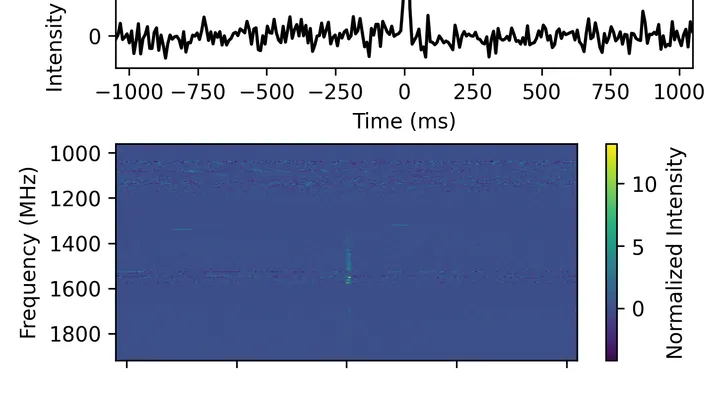
A radio telescope catches a signal lasting a few milliseconds, and in that instant, energy comparable to what the Sun emits over days is released. This is a fast radio burst, a millisecond radio pulse from a distant galaxy. Since their discovery in 2007, astrophysicists have debated what causes them.
Interstellar Visitors: How to Catch a Signal from Alien Technology
In October 2017, the Pan-STARRS telescope in Hawaii spotted an object moving too fast to belong to the solar system. It was 1I/ʻOumuamua, the first interstellar visitor ever recorded by astronomers. Since then, two more have joined it: comet 2I/Borisov and object 3I/ATLAS.
High Energy2025-10-081 minarXiv:2510.07002express
Artificial Intelligence Unravels the Mysteries of Cosmic Radio Bursts
Fast radio bursts are millisecond-long cosmic signals. Previously, searching for them was like blindly tuning a radio dial. The EDEN neural network sees the entire frequency spread and recognizes the burst pattern like a musician reads notes. On source FRB 20121102A, it found 5,927 bursts — three times more than before.
Instrumentation2025-11-291 minarXiv:2512.00492express
Mission: Catch a Guest from Another Star System
The Comet Interceptor mission launches without a target. The spacecraft freezes at a point of space equilibrium, like a fighter jet on combat standby: engine warmed up, but takeoff only on alert.
Machine Learning2026-01-012 minarXiv:2601.00175express
Computer Predicts Cirrhosis Two Years Ahead
The liver is a quiet workhorse. It processes everything we eat and drink, and rarely complains out loud. By the time the first obvious symptoms of cirrhosis appear, the disease has already destroyed a significant portion of the organ. Doctors have long sought a way to see into the liver's future, and a new study offers an unexpected tool — ordinary hospital records.
Exoplanets2026-01-051 minarXiv:2601.02533express
Catching an Interstellar Wanderer with a Solar Sling
Spinning a sling, we whirl a stone. Its speed builds, and if released at the lowest point, it flies farthest. In space, the gravity of the Sun acts as the strap: the probe dives as close to the star as possible, and at the moment of maximum speed, a brief engine thrust, like a yank of the hand, gives it a huge boost.
Galaxies2026-01-062 minarXiv:2601.02849express
The Galaxy's Halo Is Lumpy: A Map from Hundreds of Radio Bursts
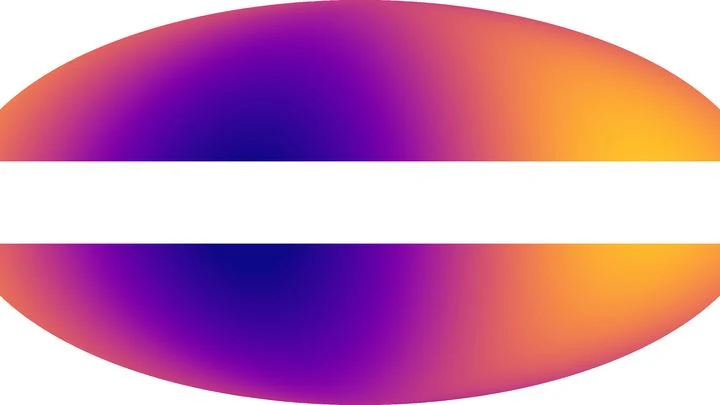
A distant radio signal travels toward us through gas, and the more gas it encounters, the more the signal is 'slowed down.' Astronomers use this to weigh the invisible envelope of our Galaxy: its halo. But if the halo is uneven, like a thick scarf draped over the shoulders, measurements in different directions will differ.
Stellar2026-01-071 minarXiv:2601.03568express
Stellar Prominences Ignite Radio Flares
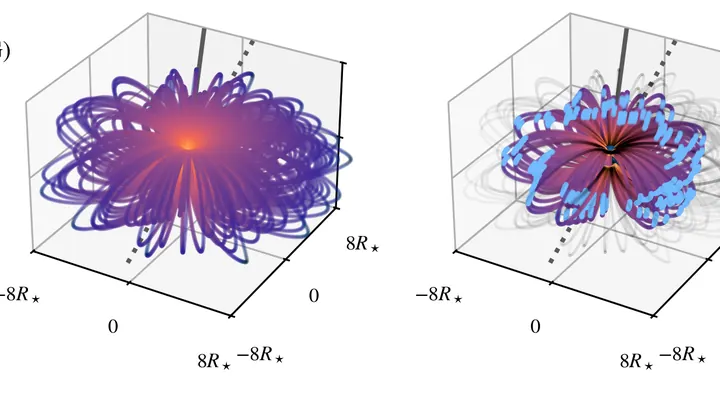
The red dwarf V374 Pegasi is a star one-third the size of the Sun, but with the temperament of a volcano. Every few hours, giant clumps of plasma tear away from its surface, like steam bubbles from a boiling cauldron. These ejections, called prominences, fly off into space and generate bursts of radio waves.
High Energy2026-01-071 minarXiv:2601.03950express
Radio signal from space rang like a bell: rhythmic fading detected
Short, powerful bursts of radio static from deep space have long puzzled scientists. Their source is believed to be the ultra-dense cores of dead stars, where magnetic fields are unimaginably strong.
Exoplanets2026-01-111 minarXiv:2601.06759express
Icy Visitor from Another System
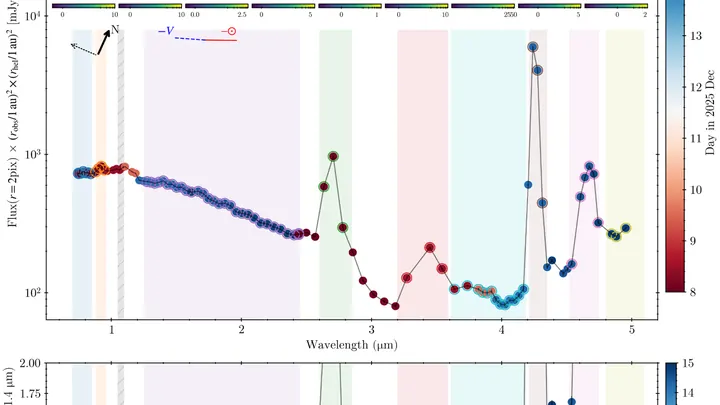
In December 2025, the SPHEREx telescope, using spectroscopy (breaking light into chemical 'fingerprints'), re-examined object ISO 3I/ATLAS — a wanderer from another star system.
Medical Physics2026-01-141 minarXiv:2601.09235express
Digital Twins Teach the CT Scanner
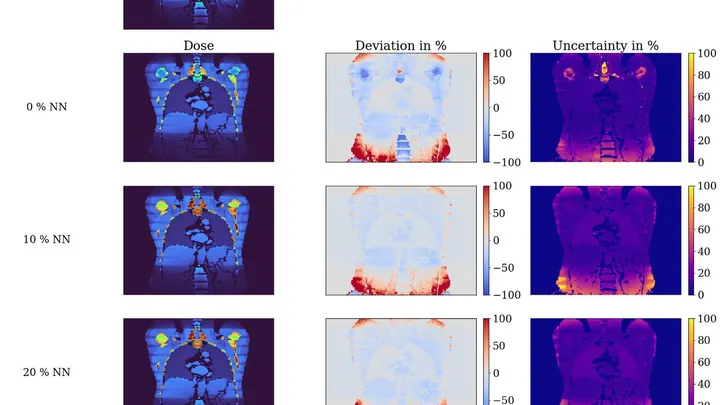
Computed tomography is like an X-ray that takes hundreds of images from different angles and stitches them into a 3D picture of the body. But each image delivers a small dose of radiation, and doctors need to know how much each organ receives. Currently, this is often estimated roughly using average tables rather than for the specific patient.
q-bio.GN2026-01-142 minarXiv:2601.09758express
How to Tell a Technical Glitch from a Real Disease
Genetic diagnostics is like comparing two photos taken with different cameras. If one camera slightly shifts the colors, the image will show "defects" that don't exist in reality.
Galaxies2026-01-152 minarXiv:2601.10514express
Fossil Stars Found in Dwarf Galaxy
In the Large Magellanic Cloud, a galaxy that orbits our Milky Way, astronomers have caught five stars that look like fossils from the very distant past. They contain almost no metals, only one-hundredth to one-thousandth of what the Sun has, but they have tens of times more carbon.
High Energy2026-01-171 minarXiv:2601.11950express
Mysterious Flare from a Distant Galaxy
For twelve years, astronomers at the LPA radio telescope in Pushchino have been listening to the same patch of sky — the direction of the galaxy 3C 33. In that time, they caught just six short radio signals, each lasting from one to four minutes.
Biological Physics2026-01-212 minarXiv:2601.15106express
How a cell decides whether to survive radiation
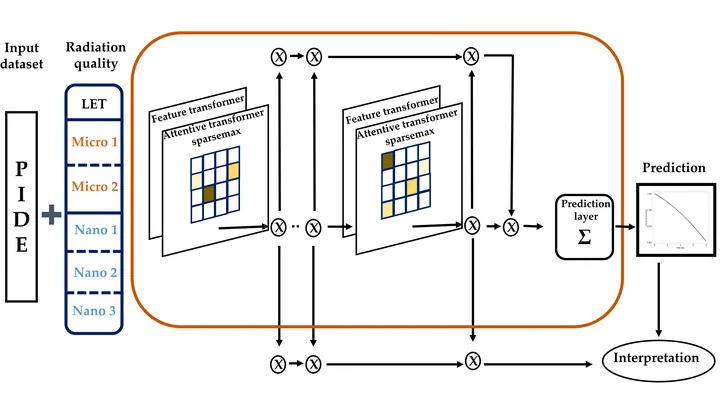
A cell hit by a proton beam is like a city after a pinpoint bombing: some blocks are leveled, others just have broken windows. Whether the city survives depends on which buildings are hit and how the strikes are distributed.
Medical Physics2026-01-231 minarXiv:2601.17165express
Testing X-rays with sound
A doctor looks at a breast image to find a suspicious lump. If the picture is beautiful and smooth, but the lump has vanished from it, such an image is of little use. This is exactly the problem faced by researchers who developed a new way to test software for photoacoustic tomography.
High Energy2026-01-282 minarXiv:2601.20143express
Night Watchman for Cosmic Flashes
At night, while most people sleep, the giant dish of the Green Bank radio telescope in West Virginia keeps listening to the sky. Over 24,186 hours, that's nearly three years of continuous observation, it caught 50 pulsars and three fast radio bursts.
High Energy2026-01-292 minarXiv:2601.21870express
A Radio Burst That Shouldn't Have Repeated
The night sky is occasionally pierced by short radio waves, like flashes from distant lighthouses. Most are barely noticeable, but sometimes a signal arrives so strong it outshines all others. It was just such a burst, named FRB 20250316A, that the Canadian radio telescope CHIME caught. It was so bright that astronomers decided to check just how likely such an event really is.
q-bio.MN2026-01-311 minarXiv:2602.00586express
Teaching a Neural Network to Read Textbooks
Proteins in a cell communicate like people in a bustling city: some pass signals, others put on the brakes, and still others just hang around. A graph neural network sees the map of these connections, who's linked to whom, but to it, they're just lines.
Stellar2026-02-012 minarXiv:2602.01117express
A Christmas Tree on the Sun: How a Flare Paints a Pattern in Radio Waves
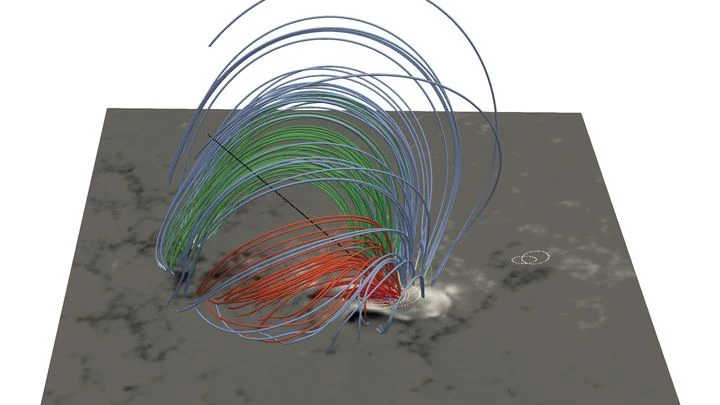
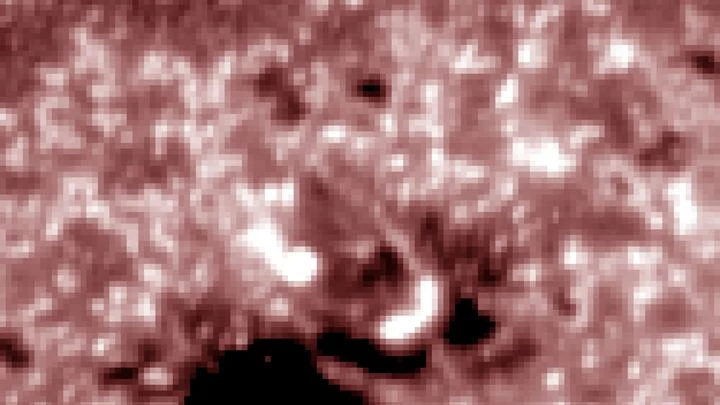
On December 31, 2023, the Sun unleashed a flare of the highest class — one that releases the energy of billions of atomic bombs in just a few minutes. Along with it, a huge prominence, a cloud of superheated gas, tore away from the surface and shot outward at nearly 3000 kilometers per second.
HEP Experiment2026-02-031 minarXiv:2602.03818express
How to Hear the Cosmos Through the Noise
Cosmic particles with energies millions of times greater than anything our accelerators can produce slam into the atmosphere and create a shower of secondary particles. This shower emits radio waves that antennas on the ground pick up. But the signal is weak: it's swamped by the radio noise of our galaxy and the receivers' own noise.
Exoplanets2026-02-042 minarXiv:2602.04806express
How Stars Kick Out Their Guests
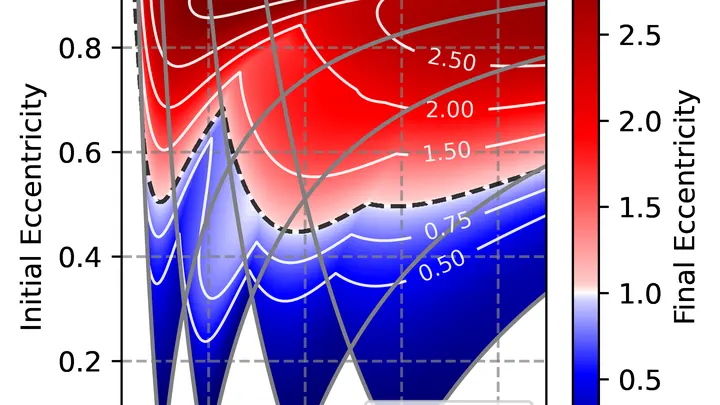
Interstellar wanderers are rocks and icy chunks that have broken free from their home planetary systems and now drift through the Galaxy. The first such visitor, 'Oumuamua, zipped past the Sun in 2017, followed by Comet Borisov and the ATLAS object. Where do they come from?
Stellar2026-02-051 minarXiv:2602.05282express
MeerKAT's Radio Ear Hears the Whisper of Solar Flares
A solar flare is like thunder on a clear day: a short but powerful burst of energy. The MeerKAT radio telescope in South Africa caught one such M1.3-class flare and examined it with unprecedented clarity. Ordinary instruments see either bright details or faint ones, but not both at once.
Galaxies2026-02-051 minarXiv:2602.05296express
How a Dwarf Galaxy Shook the Milky Way
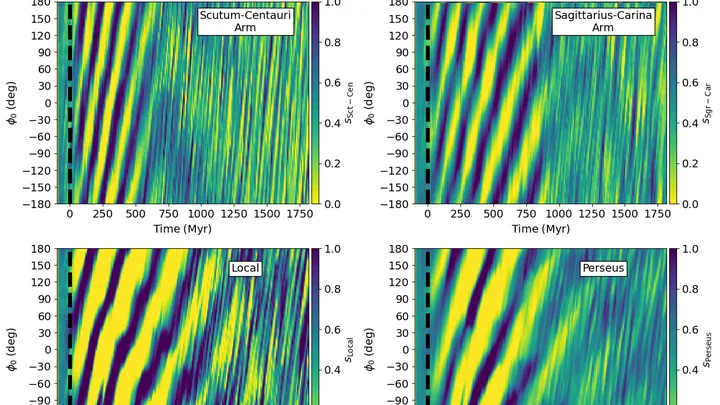
The Sagittarius galaxy plunged into the disk of the Milky Way and passed through again and again, like a stone thrown into a still pond. Each strike left ripples: waves and warps in the star field.
High Energy2026-02-051 minarXiv:2602.05601express
Blazar Flares: How to Tell Particle Accelerators Apart
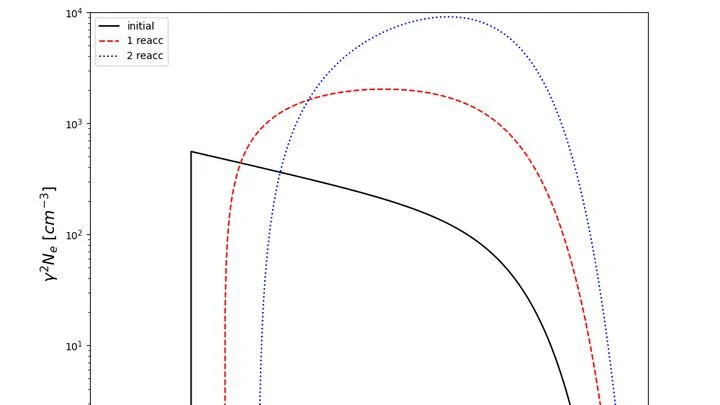
A blazar is a distant galaxy with a plasma jet shooting from its center, aimed almost directly at us. Inside this jet, particles are accelerated to near-light speeds and emit powerful radiation.
Medical Physics2026-02-092 minarXiv:2602.18477express
Focusing Microwaves Instead of a Scalpel
In Parkinson's disease, thin wires are implanted into the brain to calm tremors. The surgery is serious, and the wires stay in place for years.
q-bio.BM2026-02-111 minarXiv:2602.10644express
A Tissue Map from Blurry Images
Our body's tissue is like a city: different neighborhoods are home to different cells, each with its own job. To understand how this city is organized, biologists take images showing which genes are active at each spot. But sharp images are expensive, and cheap ones come out blurry, like a photo of a city from high above, where individual buildings are hard to make out.
q-bio.QM2026-02-131 minarXiv:2602.12730express
How to See the Hidden Shapes of Proteins
Proteins are the molecular machines of life. They fold into complex three-dimensional shapes, like a sheet of paper into origami. But if you fold the paper a bit differently, you get a different figure. Likewise, a protein can take on several forms, and that determines how it works. Usually, scientists compare proteins by their sequences — chains of amino acids.
Medical Physics2026-02-131 minarXiv:2602.12917express
Ultrasound Keeps an Eye on the Spine
Your back hurts, and the doctor asks you to bend forward and backward to see how your vertebrae move. Usually, this means a series of X-rays: they show motion, but only in a plane, like a shadow on a wall. And volumetric methods like CT scans can't keep up with movement. Engineers proposed a different approach: a robot sweeps an ultrasound probe over your back while you bend.
Computer Vision2026-02-141 minarXiv:2602.13712express
AI Finds Worm Eggs in a Drop of Fluid
In a tropical village, a lab technician peers through a microscope eyepiece, hunting for tiny worm eggs in a drop of fluid. The work is monotonous, the eyes tire, and it's easy to miss a parasite. Yet the outcome determines whether a person gets treatment. A new approach hands the search to a neural network that understands both text and images.
Galaxies2026-02-182 minarXiv:2602.16766express
Lonely Dwarfs: How Astronomers Found 44 Isolated Galaxies
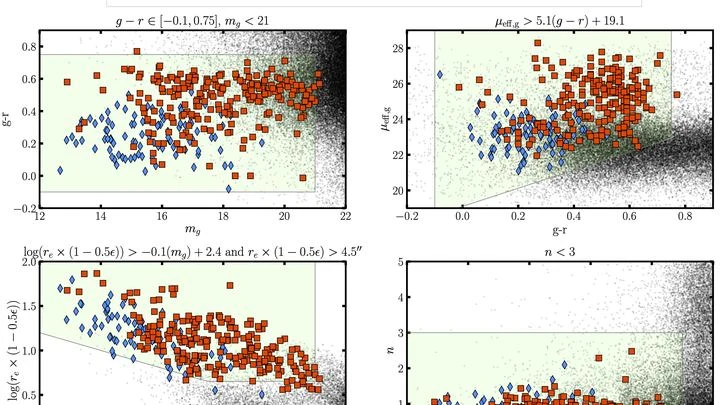
A population census, but instead of houses (galaxies, and instead of residents) stars. Astronomers set out to count the smallest and faintest "homesteads" in our cosmic neighborhood: dwarf galaxies. They are thousands of times fainter than the Milky Way, and spotting them in images is as hard as picking out a firefly in front of a spotlight.
Galaxies2026-02-191 minarXiv:2602.17652express
Tiny Systems on the Edge of the Milky Way
On the outskirts of the Milky Way, tiny stellar systems hide, so faint that even powerful telescopes barely spot them. Until recently, astronomers knew almost nothing about these objects, dubbed ultra-faint compact satellites.
Stellar2026-02-231 minarXiv:2602.19836express
Longer Loop, Slower Flare
A solar flare is like a short circuit in a giant neon sign. Inside the Sun, magnetic fields twist into loops, like rubber bands, and when they reconnect, energy bursts into space. Part of it goes into hard X-rays, produced by particles accelerated to nearly the speed of light.
Stellar2026-02-232 minarXiv:2602.20311express
Stellar Flares Ignite Each Other
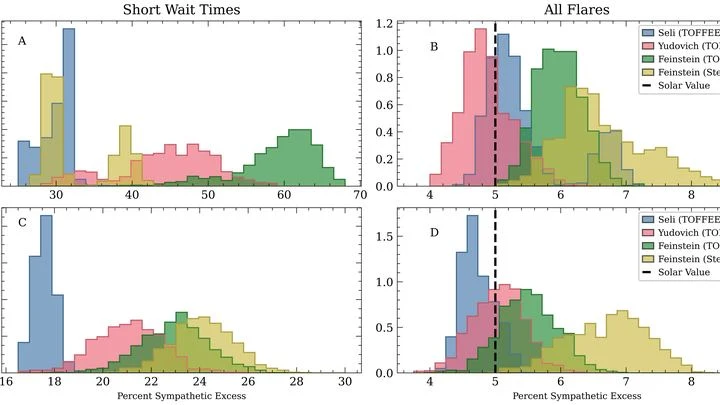
The Sun occasionally produces flares — powerful bursts of energy that last from minutes to hours. Most are random, like raindrops hitting a roof. But sometimes one flare seems to ignite another: the second begins almost immediately after the first, even though they occur in different locations. Astronomers call these sympathetic flares.
Galaxies2026-02-252 minarXiv:2602.21875express
Cosmic Fluff: Galaxies Without Bright Light
In 2015, astronomers were examining the Coma galaxy cluster and noticed something odd: huge, almost invisible "fluff balls." These galaxies are as large as our Milky Way but shine hundreds of times fainter.
High Energy2026-02-251 minarXiv:2602.22309express
Radio Burst Reveals the Secret of a Newborn Supernova
Fast radio bursts are instantaneous radio flashes from deep space. In a thousandth of a second they release as much energy as the Sun emits in a month. One such burst, repeating, allowed scientists to peer into the epicenter of a recent stellar explosion.
Stellar2026-02-271 minarXiv:2602.24250express
Caught in the Act: Solar Storms of the 1940s
In the 1940s, long before modern sensors, instruments on Earth were already catching particles from space. When a powerful flare erupted on the Sun, it ejected a stream of charged particles — solar energetic particles.
Exoplanets2026-02-282 minarXiv:2603.00782express
An Interstellar Visitor: How a Comet Revealed Its Temperament
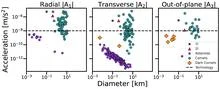
Comet 3I/ATLAS is a rare guest: it came from interstellar space, from another star. As it passed near the Sun, ice on its surface began to sublimate, and gas jets acted like tiny rocket engines. This force, called non-gravitational acceleration, nudges the comet off a purely gravitational trajectory.
q-bio.CB2026-02-281 minarXiv:2603.00834express
How Skin Cells Close a Wound: A Dance of Division and Movement
When you cut your finger, skin cells start working in concert: some divide, others crawl toward the wound, and still others pause. But exactly how a cell decides what to do next depends on its internal "schedule"—the cell cycle.