Bart Ripperda

6 articles · 30 co-authors · latest: 2026-07-17
12,076 citations · h-index 35 · 134 papersData: Semantic Scholar

We have retold 6 papers by this author. 1 of them with a full read. most often about: black hole, dark matter, Accretion disk. 30 co-authors across our retellings.

Links in the knowledge graph
High Energy2026-01-012 minarXiv:2601.00394express
A Black Hole's Shadow Betrays Its Spin
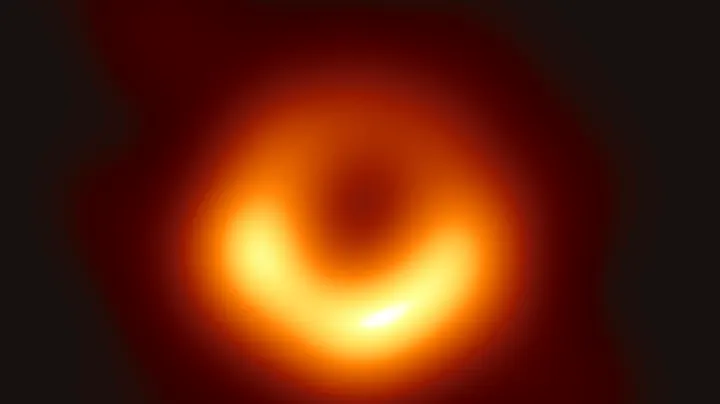
In 2019, astronomers unveiled the first-ever image of a black hole's shadow — a dark void encircled by a lopsided orange ring. This is the supermassive black hole at the heart of galaxy M87, 55 million light-years away. The ring isn't just glowing: one side is noticeably brighter than the other, like a campfire burning unevenly, with flames leaping higher on one side.
High Energy2026-01-191 minarXiv:2601.13356express
The Shadow of a Black Hole and Its Invisible Tail
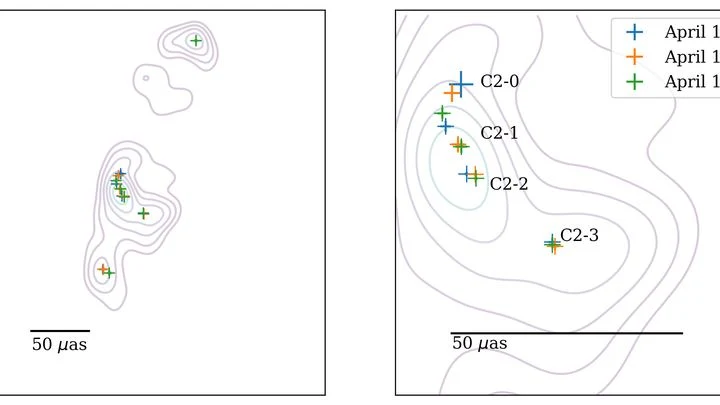
Radio telescopes scattered across the globe pick up waves from distant black holes. But two telescopes placed almost side by side see only a blurry blob — fine details are beyond them. Usually, such pairs are considered useless and discarded. But that's a mistake: even a blurry blob holds clues.
High Energy2026-04-082 minarXiv:2604.07431express
A Compass in the Heart of the Milky Way
A radio telescope picks up a signal from the center of the Milky Way. The source MAXI J1744-294 flares in X-rays and radio waves, but where it actually resides is a mystery. It could be near the black hole, or it could just lie along the same line of sight, thousands of light-years away.
Galaxies2026-04-111 minarXiv:2604.10287express
The Heart of the Milky Way Flickers in Polarized Light
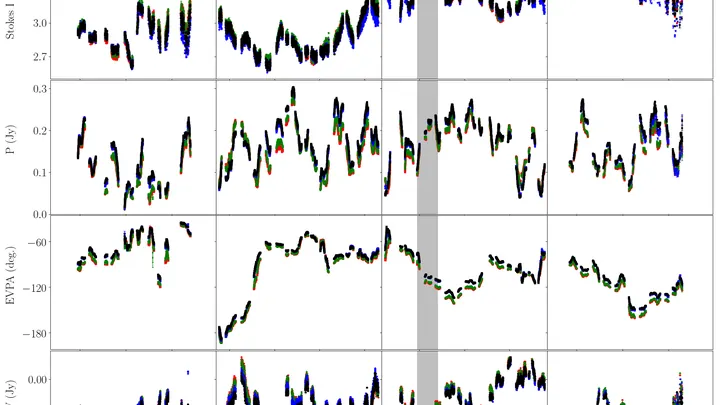
At the center of the Milky Way lies the supermassive black hole Sagittarius A*. It is four million times more massive than the Sun, but by cosmic standards it behaves quietly: it only occasionally flares up when it swallows a clump of gas.
Fluid Dynamics2026-04-293 minarXiv:2604.27088express
How to Make a Waterfall and a Wave Get Along
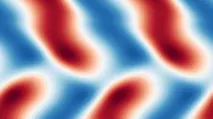
A boiling pot, a gust of wind, a wisp of smoke from a campfire — all obey equations that mathematicians call 'nonlinear and dissipative.' In plain terms, energy is lost to friction, and parts of the flow influence each other so strongly that predicting the motion ahead of time is a task on the edge of feasibility.
Galaxies2026-07-173 minarXiv:2607.16104