Where Electrons Hide: A Puzzle in a Crystal ✛
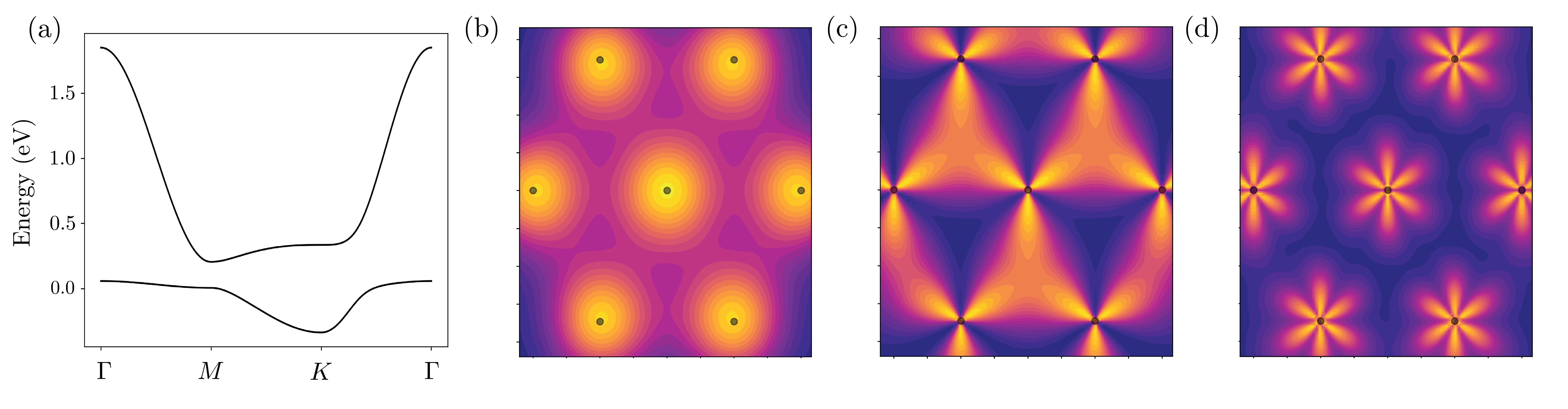
Usually electrons in crystals, like honey in a honeycomb, cluster around atoms. But in tungsten diselenide — a layered material, resembling a honeycomb of carbon — the picture is different. Physicists used spectroscopy — a method that, like a supersensitive probe, feels the electron clouds. To mark the positions of atoms, they added a few 'foreign' atoms to the lattice, and then measured where electrons feel more 'comfortable' at different energies.
It turned out: at low energies, electrons crowd not on atoms, but in the voids between them — as if the honey had leaked out of the cells. At slightly higher energy, they, on the contrary, return to the atoms. And the transition occurs abruptly, like a switch click, rather than a smooth flow.
This is not just a fun phenomenon. The twisted states of electrons are resistant to interference, which opens the way to reliable quantum computers.
The most amazing part: electrons move from atoms to voids not gradually, but in a leap, like a switch between two realities.