Sunlight replaces lasers: quantum imaging without complex optics ✛
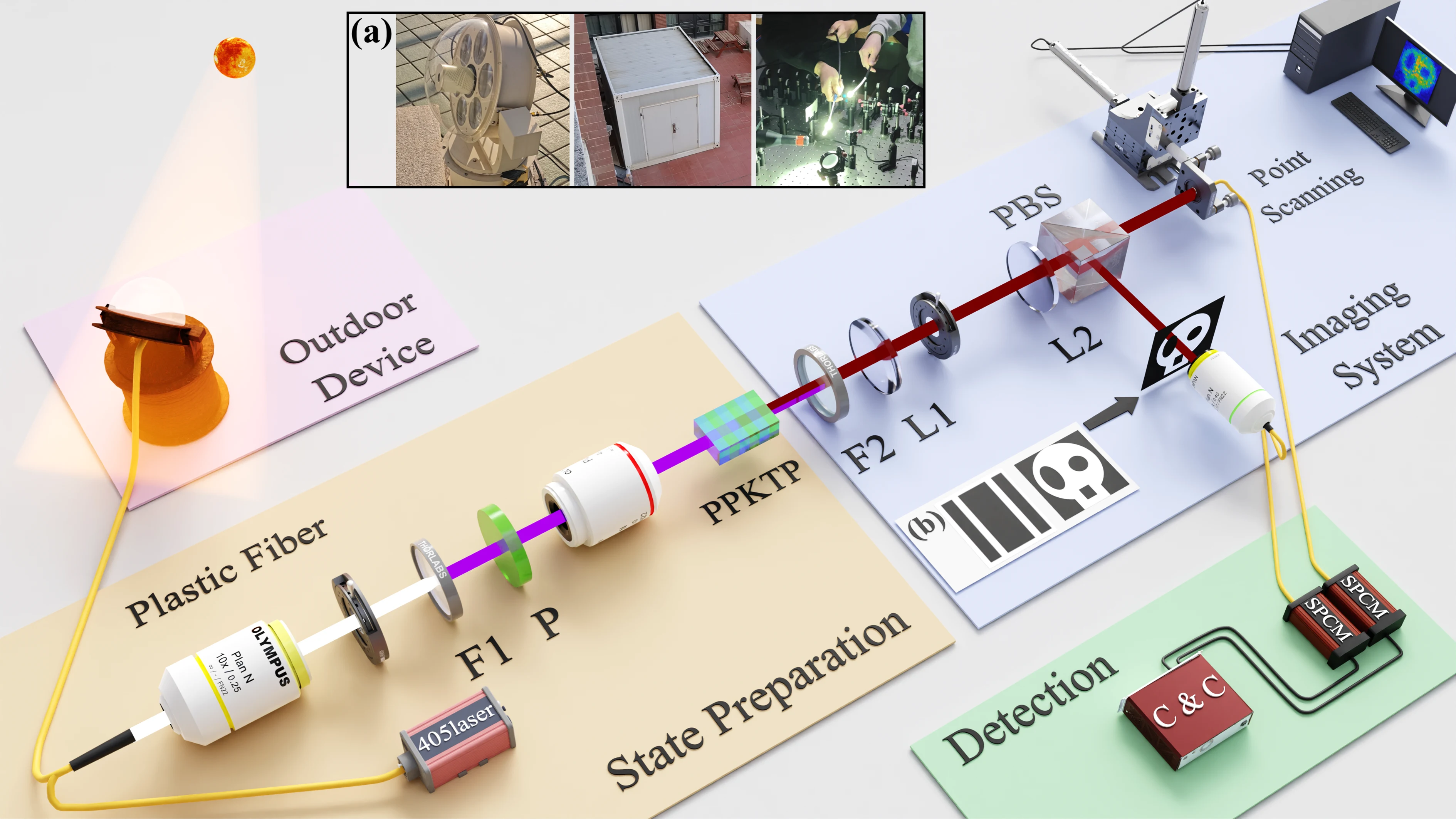
In the experiment, sunlight was passed through a special crystal that acts like a change machine: each photon splits into two entangled halves, like a coin cut in two. Flip one half in Paris — the other in Moscow instantly shows the same face. This synchronization is the essence of quantum entanglement. In the pair, one photon illuminates the object, while the other captures the reflection, forming a clear image even in fog or underwater. Previously, such imaging required lasers — now, daylight is enough.
This discovery slashes costs and enables compact quantum cameras for satellites that run on nothing but local starlight. Ground-based instruments will be able to perform photometric reconnaissance without bulky optics, analyzing objects by spectrum even at night.
A pair of entangled photons is like two halves of the same coin: flip one, and the other instantly lands on the same side, even if they're thousands of kilometers apart.
Sci-fi writers predicted sensors powered by distant starlight that could see through asteroid fields. Today's experiment is the first step toward such devices.