Light Gets Even Lighter: New Upper Limit on Photon Mass express
Fast radio bursts are brilliant cosmic flashes that, like a starting signal, set off a race of radio waves across the universe. Astronomers used them as a natural laboratory to test whether the photon, the quantum of light and the carrier particle of the electromagnetic interaction, has mass. If the photon did have mass, then according to theory, the speed of light in a vacuum would no longer be a universal constant but would depend on its color: blue rays, like heavier runners, would lag behind red ones. However, observations of the arrival times of pulses at different frequencies show that any delay is fully explained by the resistance of intergalactic hydrogen — a tenuous gas that slightly slows waves due to interactions with free electrons. In other words, the dispersion of the radio signal fits entirely within known plasma physics, leaving no room for a hypothetical "color" difference in speeds.
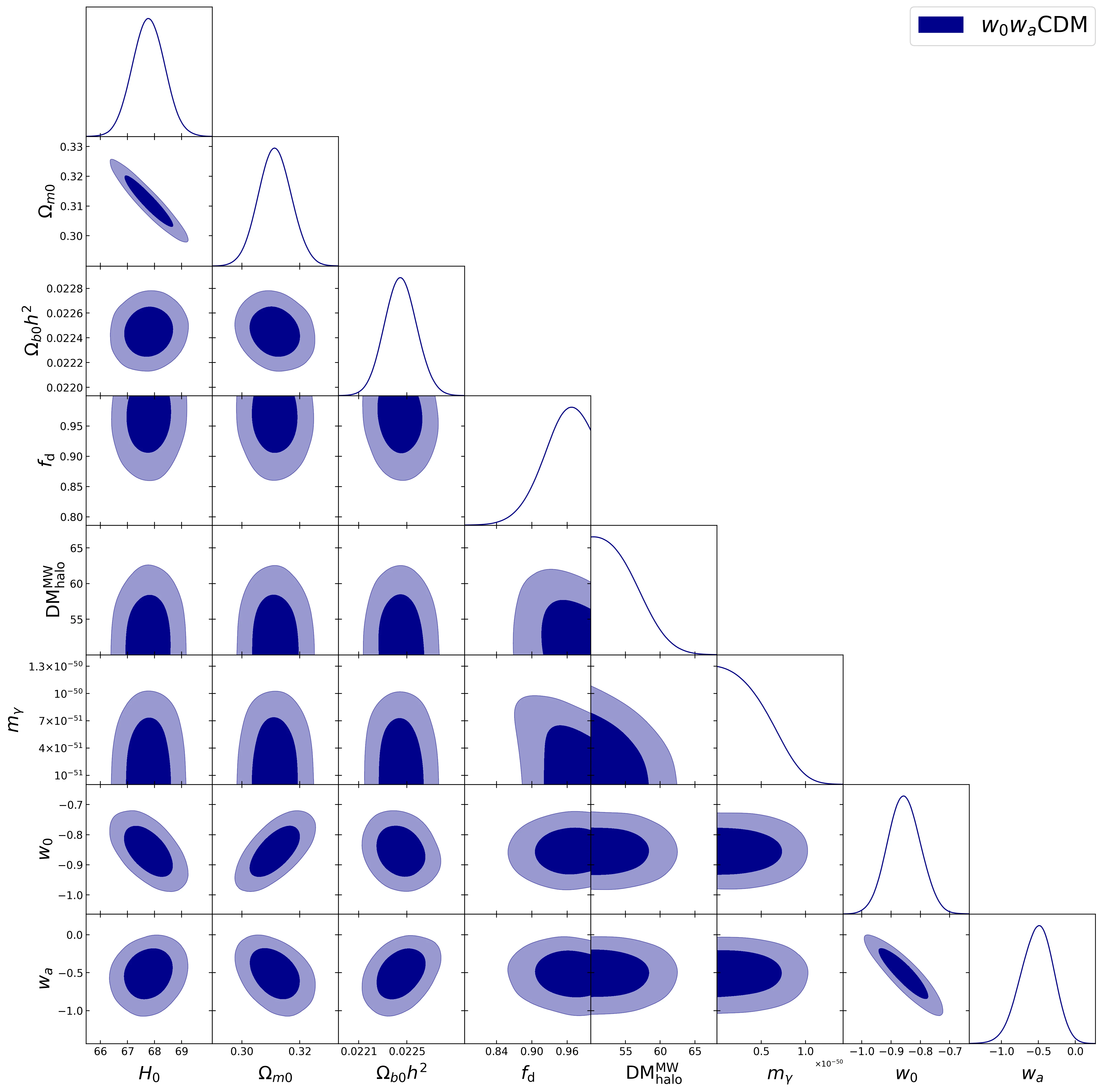
The researchers considered various scenarios of the expansion of the universe, including the influence of dark energy — the mysterious substance accelerating this expansion, and based on the analysis of delays, they set a new upper limit: the mass of the photon is less than 5×10⁻⁵¹ kg. This is billions of times smaller than the mass of the lightest known particle. The precision of the method is staggering: a distant blue light would arrive just one second ahead of red, and this tiny shift would have been noticed by modern radio telescopes, but it is absent. The runner analogy simplifies the picture: in reality, it's not about "heaviness" in the everyday sense, but about a nonzero rest mass introducing a frequency-dependent correction to the dispersion relation.
This result strengthens the foundation of physics laid by Albert Einstein: light remains the fastest and most massless racer, and the special theory of relativity with its postulate of the constancy of the speed of light gains yet another observational confirmation.
If the photon had such a mass, then over the distance to the Andromeda galaxy, a blue ray would arrive at the finish line a trillionth of a second late.