Cosmic Kitchen: How Carbon and Oxygen Shape the Look of Disks express
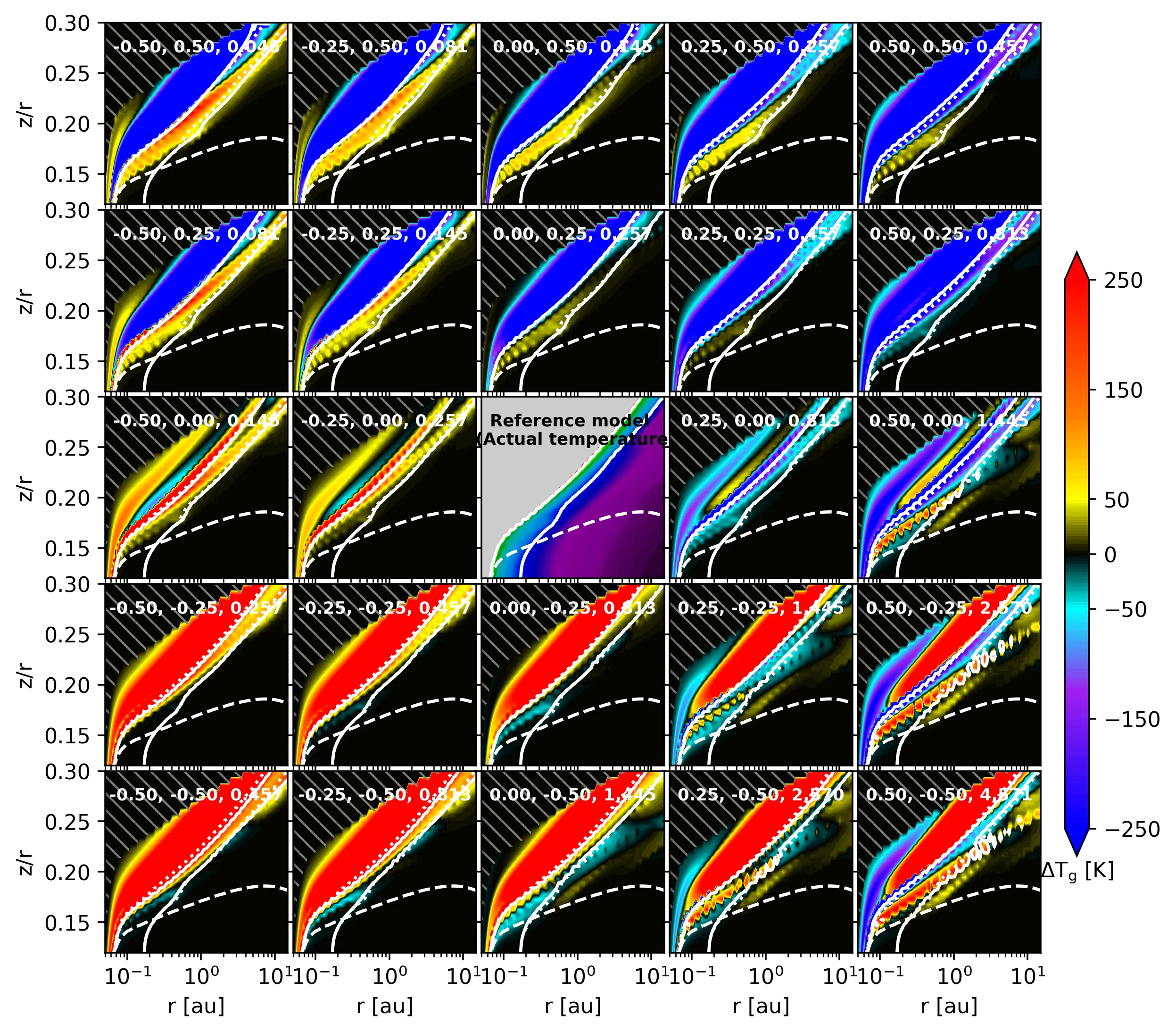
When a chef prepares a dish, not only the proportions of ingredients matter but also their total amount. Two pies with the same sugar-to-flour ratio but made from different batch sizes will turn out differently. So it is with disks around young stars: carbon and oxygen are the key 'spices,' and their absolute amounts change the look of the cosmic 'kitchen' no less than their ratio.
Astronomers modeled 25 variations of such disks, changing the carbon and oxygen content. It turned out that the infrared emission of molecules — for example, water, carbon dioxide, and acetylene — can differ by more than a factor of ten even when the C/O ratio is the same. The reason is that the total amount of elements determines where in the disk molecules get heated and start to shine.
The scientists found convenient 'light cues': the brightness ratio of carbon dioxide to water indicates the carbon abundance, while the ratio of water to acetylene indicates the oxygen abundance. Combining these two cues allows us to recover the C/O ratio itself. This works even if the disk's structure is only roughly known.
Recent observations by the James Webb Space Telescope confirm that disks around young T Tauri stars indeed have different compositions. Perhaps the transport of matter within the disk and gaps in it mix the 'ingredients,' creating a unique recipe for each future planetary system.
In one of the modeled disks, acetylene turned out to be ten times more abundant than in another, even though the carbon-to-oxygen ratio was the same — simply the total amount of elements differed.