Ewine F. van Dishoeck

4 articles · 30 co-authors · latest: 2026-04-13
14,583 citations · h-index 66 · 309 papersData: Semantic Scholar

We have retold 4 papers by this author. most often about: organic molecules in space, comet, protoplanetary_disc. 30 co-authors across our retellings.

Links in the knowledge graph
Exoplanets2026-01-151 minarXiv:2601.10631express
Organic Chemistry Around a Young Planet
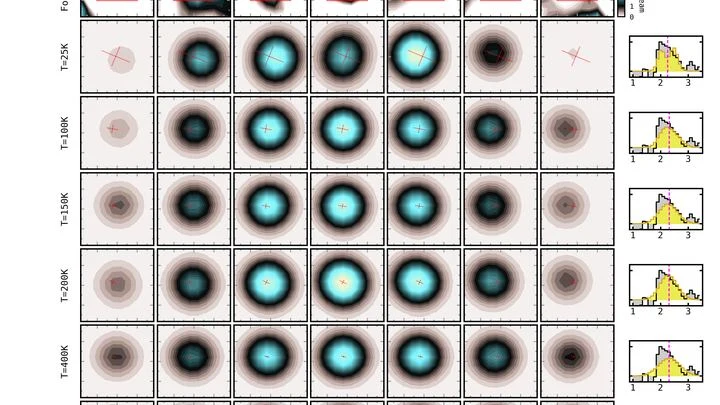
Around the star HD 163296, 330 light-years away, a dense ring of gas and dust is swirling. Astronomers have spotted a small but bright patch of hydrogen cyanide and ethynyl molecules within it. It hangs at a distance of 88 astronomical units from the star — farther than Pluto is from the Sun. The heat from a forming planet hidden in that patch melts the icy dust.
Exoplanets2026-01-302 minarXiv:2601.23069express
The Carbon Diet of Young Stars
Young stars are surrounded by disks of gas and dust, like construction sites for future planets. From this material, rocky worlds and gas giants will eventually assemble. So the chemical composition of the disk directly determines what the planets will be like.
Exoplanets2026-02-171 minarXiv:2602.16030express
Cosmic Kitchen: How Carbon and Oxygen Shape the Look of Disks
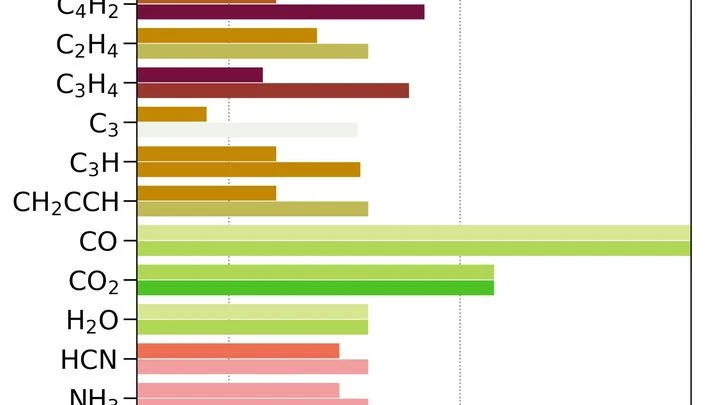
When a chef prepares a dish, not only the proportions of ingredients matter but also their total amount. Two pies with the same sugar-to-flour ratio but made from different batch sizes will turn out differently. So it is with disks around young stars: carbon and oxygen are the key 'spices,' and their absolute amounts change the look of the cosmic 'kitchen' no less than their ratio.
Stellar2026-04-131 minarXiv:2604.11904express
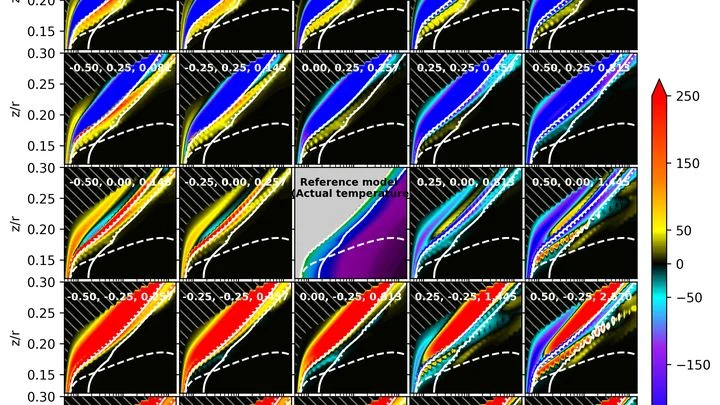
Stellar Wind Kicks Up Dust
A newborn star is like a kitchen mixer: it whips up the surrounding cloud, and splatters fly in all directions. Only instead of batter, it's gas and dust. Previously, astronomers had only seen gas jets, and dust was considered too fragile: the shock wave should shatter dust grains into atoms.