Two Restless Planets: Light but Different Inside express
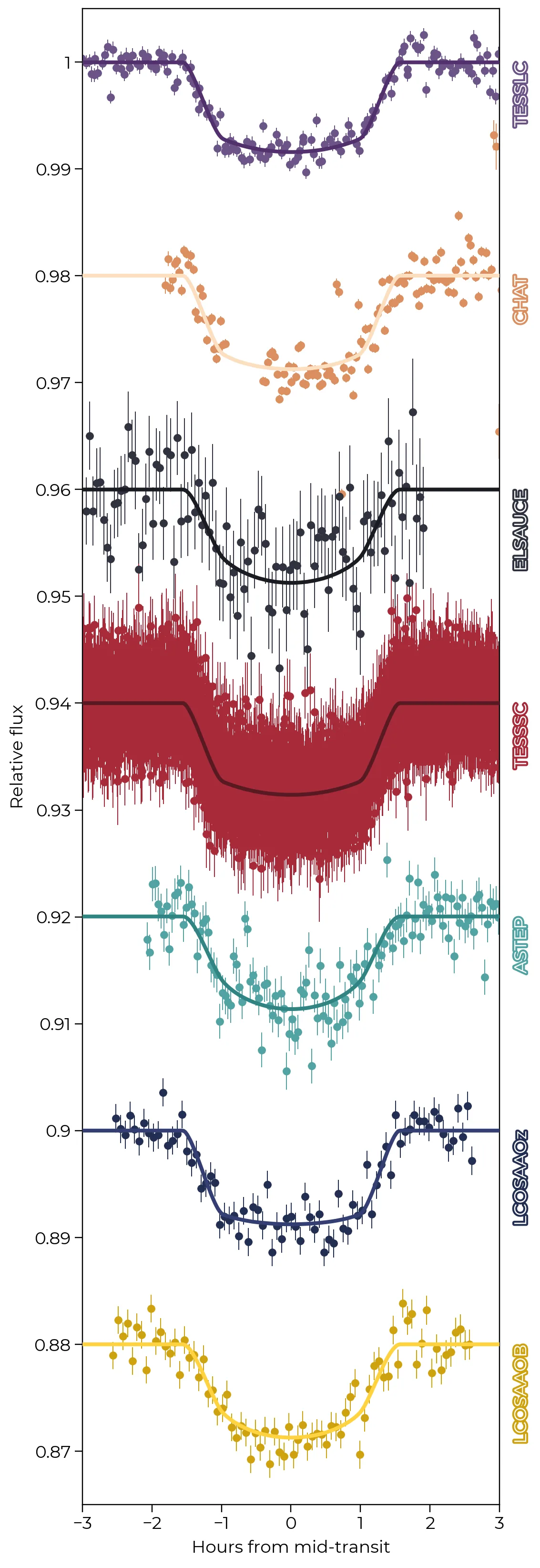
NASA's TESS space telescope monitors thousands of stars, catching the moment when a planet crosses its star's disk — the star's light dims slightly. That's how astronomers spotted two planets orbiting stars similar to our Sun. One, TOI-883 b, completes an orbit in ten days; the other, TOI-899 b, takes nearly thirteen. Both are hot: their temperatures reach about 800 degrees Celsius, like a ceramic kiln.
Ground-based telescopes then took over, measuring how each planet's gravity makes its star wobble — a method akin to a heavy child on a swing making the whole frame vibrate. It turns out both planets are lighter than Saturn: one weighs as much as 39 Earths, the other 68. But here's the twist: despite nearly identical masses and similar host stars, the planets differ in size. The first is just over half of Jupiter's radius, while the second is nearly Jupiter-sized. That means their interiors have different compositions.
Such a difference under similar birth conditions is puzzling. Maybe the planets formed in different parts of the protoplanetary disk, or one suffered a collision that reshaped its interior. Now both planets serve as excellent laboratories: their atmospheres can be studied as they transit their stars, and the gas composition may reveal where and how they formed.
Original abstract
as written by the authors arXiv:2602.16646
Context. Characterization of warm giants is crucial to constrain giant planet formation and evolution. Measuring the mass and radius of these planets, combined with their moderated irradiation, allows us to estimate their planetary bulk composition, which is a key quantity to comprehend giant planet formation and structure. Aims. We present the discovery of two transiting warm giant planets orbiting solar-type stars from the Transiting Exoplanet Survey Satellite (TESS), which were characterized by further spectroscopic and photometric ground-based observations. Methods. We performed a joint analysis of photometric data with radial velocities to confirm and characterize TOI-883 b and TOI-899 b, two sub-Saturns orbiting solar-like stars. Results. TOI-883 b and TOI-899 b have masses of $$0.123 \pm 0.012$$ $$M_J$$ and $$0.213 \pm 0.024$$ $$M_J$$, radius of $$0.604 \pm 0.028$$ $$R_J$$ and $$0.991 \pm 0.044$$ $$R_J$$, periods of $$10.06$$ d and $$12.85$$ d and equilibrium temperature of $$1086 \pm 19$$ K and $$1040 \pm 19$$ K, respectively. Conclusions. While having similar masses, orbital periods and stellar host properties, these planets seem to have different internal compositions, which could point to distinct formation histories. Both planets are suitable targets for atmospheric studies to further constrain formation scenarios of planets in the Neptune-Saturn mass range
At about 800°C, lead melts and glass begins to soften: that's the temperature on these planets.