Magnetic Field Splits a Transition in an Alloy express
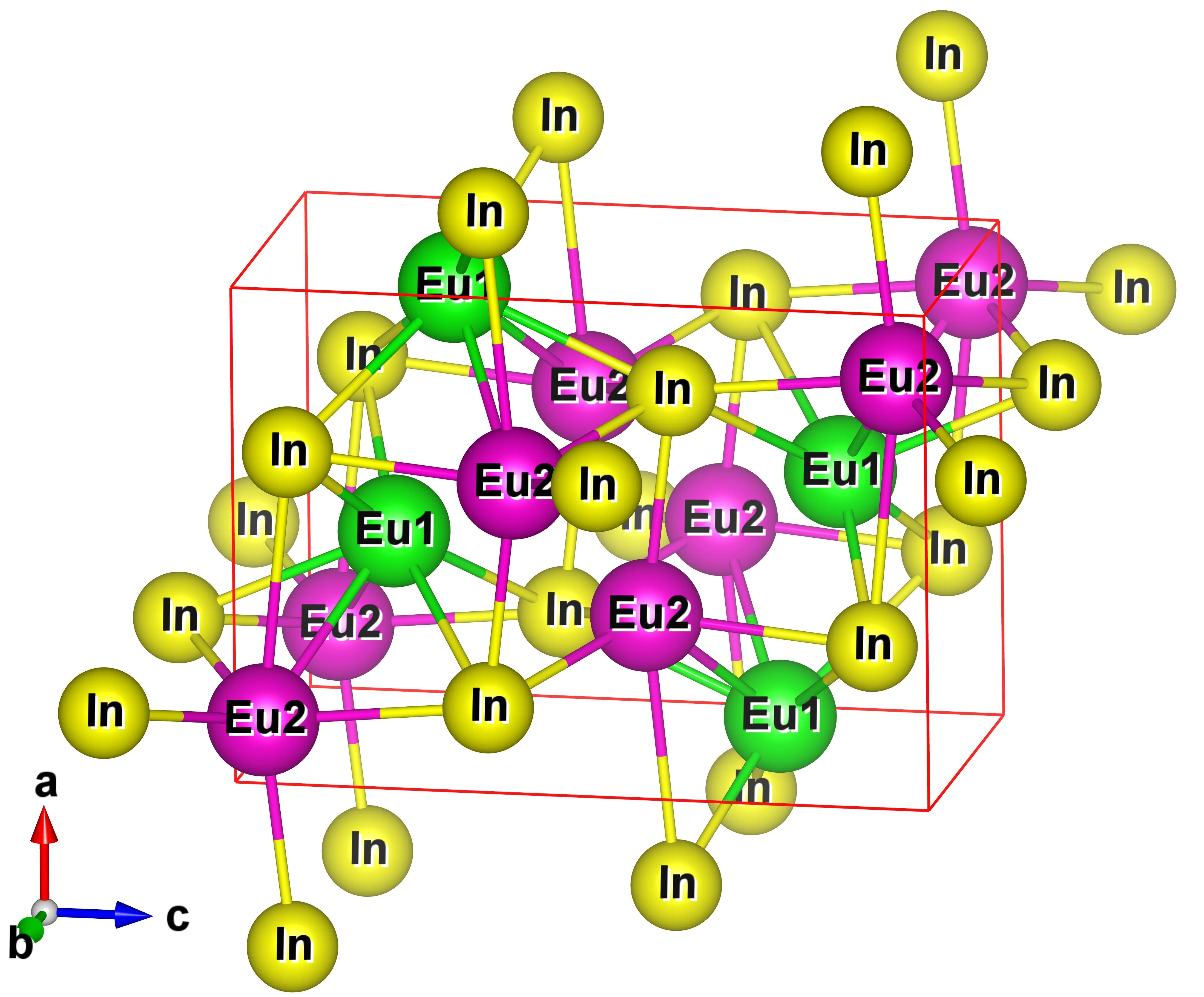
A piece of europium-indium alloy, when cooled in a magnetic field, behaves like water that does not freeze all at once but first in one corner of the glass, then in another. At a temperature of about 16 kelvins (minus 257 degrees Celsius), this material abruptly loses its magnetic properties, but a strong field of about 25,000 oersteds splits the single jump into two successive steps.
Heat capacity measurements showed that instead of one sharp peak at zero field, two smaller peaks appear. The transition occurs in two stages: first one region of the crystal rearranges, then another. X-ray analysis of the local environment of europium atoms revealed no changes — atoms do not shift, only their magnetic order changes. Therefore, scientists attribute the two-step behavior to the magnetic field, not to a rearrangement of the crystal lattice.
Such a two-step transition is important for magnetic cooling: if a material changes its magnetic entropy in two stages, heat removal can be controlled more precisely. The Eu₂In alloy is a rare example where a field does not erase the sharpness of the transition but merely splits it, and this paves the way for tuning magnetic refrigerators.
At 16 kelvins, the europium-indium alloy is colder than the surface of Pluto, but its magnetic transition can still be 'stretched' into two steps with a field of just 25,000 oersteds — about 50 times stronger than the magnet on a refrigerator door.