Islands of Order in Chaos: Quantum Scars of Boson Stars ✛ ✎ ✦
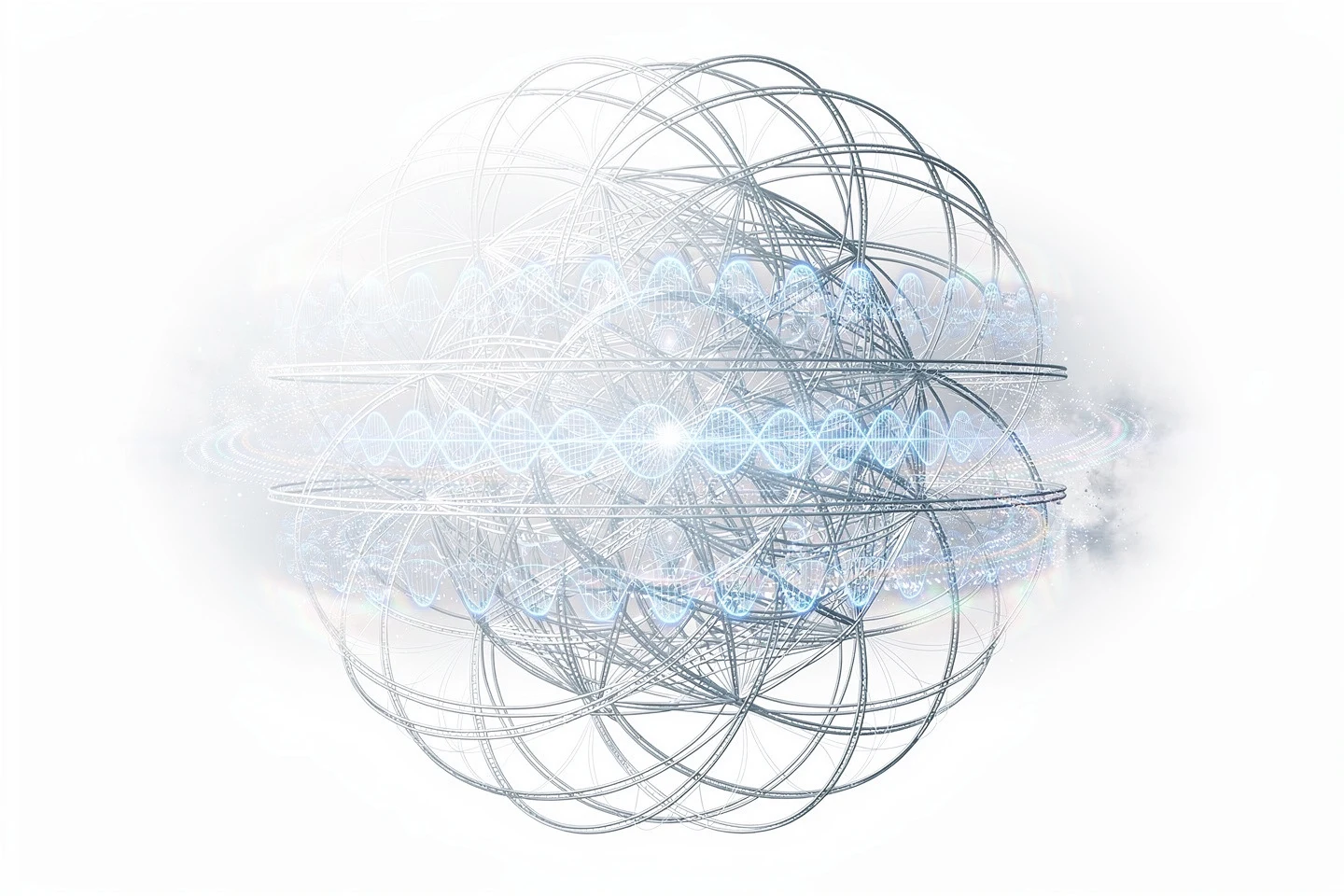
In a noisy crowd of chaotic moving people, you sometimes see a group of dancers performing coordinated moves. In the world of elementary particles, such 'islands of order' are called quantum scars. Boson stars, ultra-dense clumps of ultra-light particles, behave exactly like that. Unlike black holes, they lack a horizon but strongly curve space (spacetime curvature). Their entanglement and entropy are almost 70% lower than those of a black hole of the same mass: Bekenstein and Hawking proved that black holes have colossal entropy, while in these stars it's slashed. Quantum states aren't smeared out but gathered into a few combinations. Internal complexity (quantum information) pulses like an echo, stretched by time dilation. A twist: boson stars can take the shape of rings or spirals, resembling miniature galaxies. If such objects exist, their gravity bends light from distant sources, betraying their presence. At the core lies a quantum field (scalar) that forms a stable energy clump. Roger Penrose showed that matter collapse can freeze before reaching a singularity, and boson stars are an example. These scarred objects are key to how information survives at the junction of gravity and quantum.
If boson stars exist, they could be detected by the bending of light, like cosmic lenses made of dark matter.
In 'Interstellar,' a black hole sucks in the heroes. A boson star would let them pass right through and push them back out — almost like a portal without a dead end.