Dark Matter Lighter: Tiny Black Holes Ignite Stars ✛ ✎ ✦
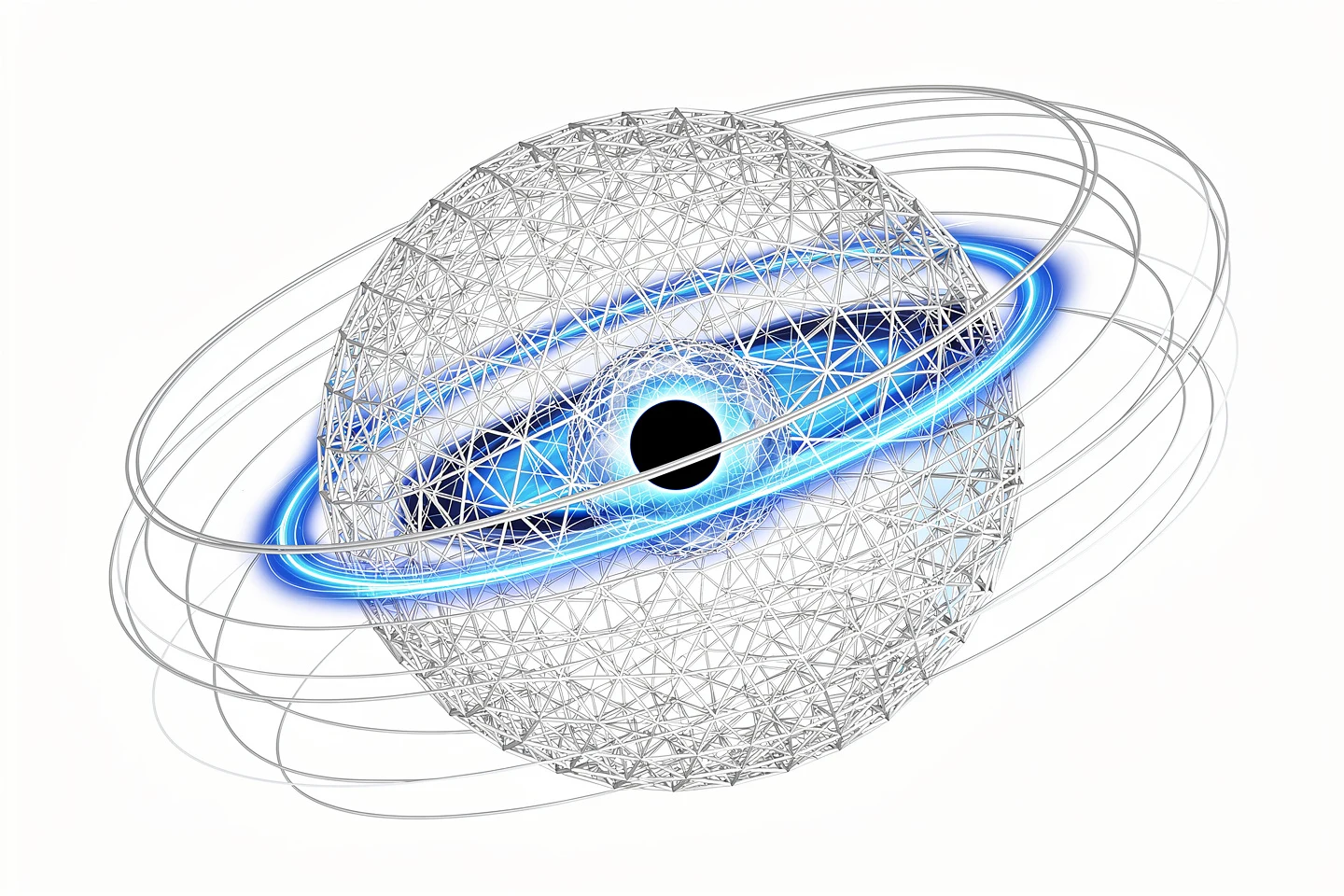
A white dwarf is a dead star the size of Earth, but crushed to a density of a ton per cubic centimeter. In essence, it's a cosmic powder keg: the temperature and pressure in the core are enormous, but just shy of the explosion threshold. All it takes is a tiny black hole, a relic from the Big Bang era, to punch through it, causing gravitational collapse to trigger a chain reaction. A Type Ia supernova ignites. The hole itself remains intact, like a bullet piercing gunpowder.
Such holes, predicted by Hawking, could be the very dark matter that binds galaxies with an invisible framework. By igniting white dwarfs, they enrich the cosmos with carbon and oxygen. But the main surprise is elsewhere: Type Ia supernovae serve as 'standard candles' for measuring the speed of the universe's expansion. If some of them were lit not because of a star's overflow (the Chandrasekhar limit), but from a hole's impact, their spectral fingerprint changes. This scrambles the dark energy maps, and demands a revision of the calculations for which Riess won the Nobel Prize.
A micro black hole, igniting a white dwarf, remains unharmed and ready to blow up another star, like a reusable match.