How a Black Hole Cracks a Cosmic Whip ✛ ✦
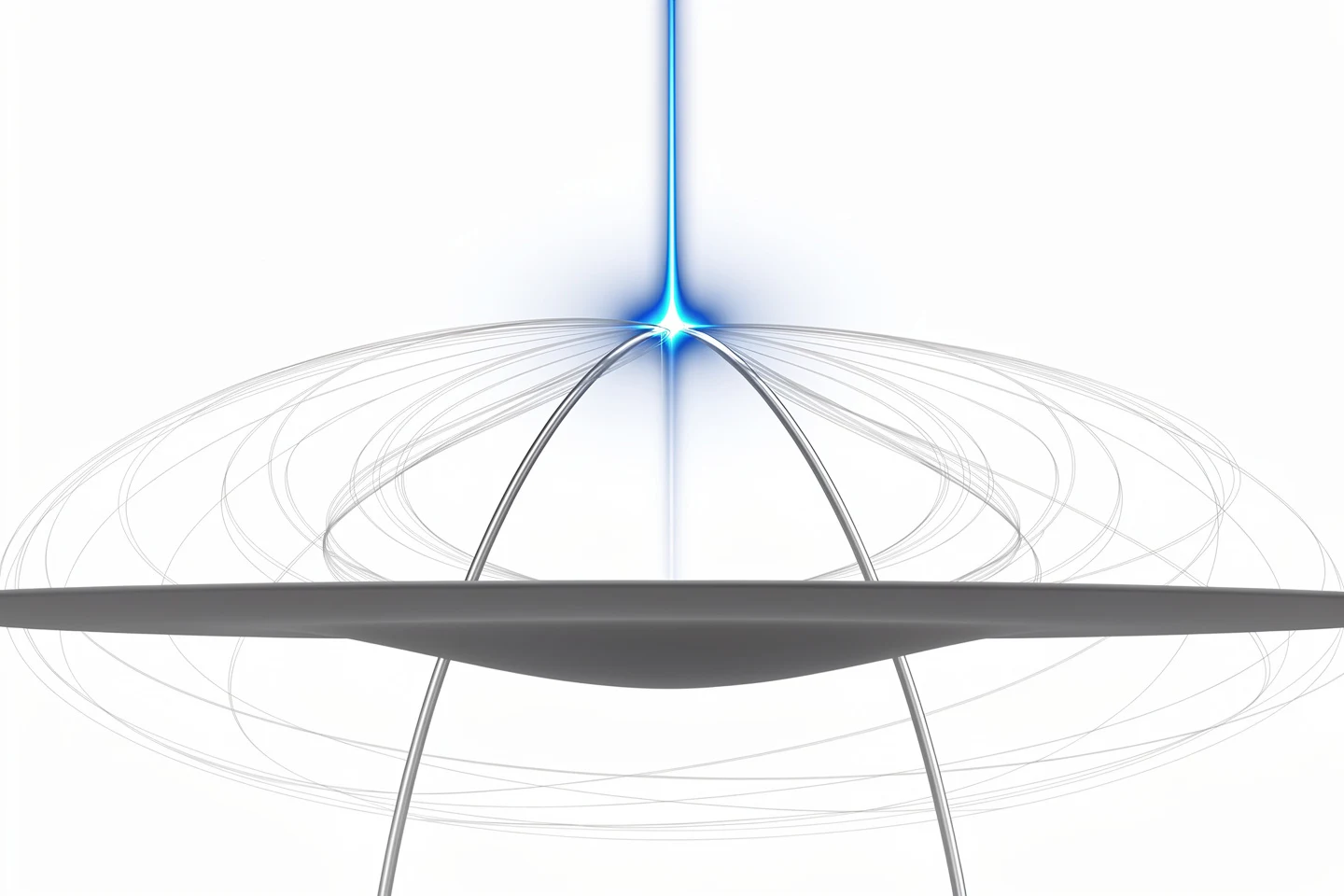
The crack of a whip heats the air because the tip accelerates faster than sound. Similarly, a black hole 'cracks' magnetic fields: they tear and reconnect, heating up the surrounding superheated gas.
In galaxy NGC 3783, the XRISM and XMM-Newton satellites caught an X-ray flare from the active nucleus, where a black hole is surrounded by an accretion disk. The hard X-rays arrived before the soft ones — the same Neupert effect seen on the Sun. Simultaneously, an outflow was ejected at 20% the speed of light. From its energy, they calculated the magnetic field at the very edge of the abyss: over 10,000 gauss, thousands of times stronger than in the interiors of dead stars. Such ejections, like jets, can sweep the galaxy clear of gas.
Now astronomers are directly measuring magnetic fields right up against the event horizon. Further radio observations and spectroscopy will allow testing the heating theories of Rashid Sunyaev, as well as the ideas of Roger Penrose and Kip Thorne on extracting energy from black hole rotation.
The Neupert effect was discovered on the Sun in 1968 and long thought to be exclusively solar. Now it has been found in a supermassive black hole, confirming the unity of physical laws across the universe.