The Neupert Effect in the Corona of an Active Galactic Nucleus: First Direct Detection of Magnetic Reconnection ✛ ✦
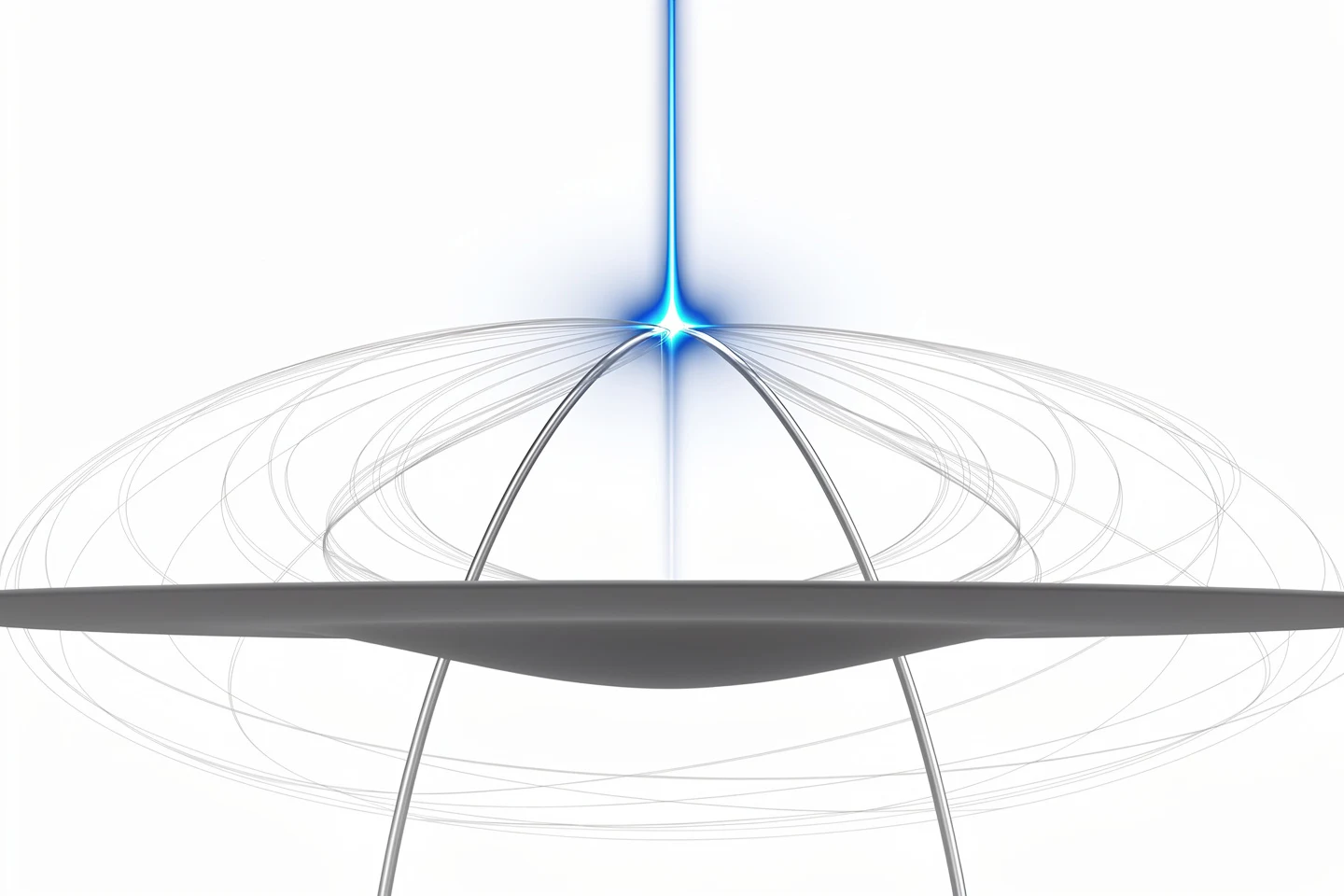
Context
The coronae of active galactic nuclei and stars share common features: they are orders of magnitude hotter than the underlying photosphere and accretion disk and exhibit rapid variability. The solar corona is heated by magnetic reconnection, and it has long been hypothesized that a similar mechanism should operate in accretion disks around supermassive black holes; however, direct observational evidence was lacking. Magnetic reconnection in disks is a key process capable of explaining heating, launching jets and outflows, and even facilitating black hole growth. Therefore, obtaining its observational confirmation is a fundamental step in understanding accretion physics.
Methods
Data from a ten-day campaign in July 2024 involving the XRISM, XMM-Newton, NuSTAR, Swift, and other satellites were used. Light curves were extracted in the soft (0.4–2.0 keV) and hard (7.2–12.0 keV) X-ray bands using the XRISM/Xtend and XMM-Newton/EPIC-PN cameras; cross-calibration was performed to exclude instrumental effects, and iron lines (6.0–7.2 keV) were excluded from the hard band. Properties of the ultra-fast outflow (UFO) were extracted from high-resolution X-ray spectra. The optimal energy boundaries for the Neupert effect were determined by analyzing the ratio of light curves in various slices. The significance of the correlation was assessed with a t-test corrected for time series autocorrelation. Spatial scales were calculated from time lags assuming particle motion at sub-light speed.
Results
A single flare (No. 2) was detected, in which hard X-rays preceded soft by about 30 thousand seconds, and the correlation between the hard light curve and the derivative of the soft one is statistically significant (p = 0.002). Other flares during the observation period did not show the effect. The optimal energy boundaries—1.2–2.0 keV (soft) and 7.2–12.0 keV (hard)—indicate the characteristic energies of non-thermal electrons and heated plasma, respectively. The maximum lag gives an upper limit on the height of the magnetic loop of 30 gravitational radii (about 1.2×$10^{14}$ cm). An ultra-fast outflow (UFO) with a velocity of 0.2c was observed simultaneously with the flare. From the kinetic energy of the outflow, using the law of conservation of energy, a lower limit on the magnetic field strength B > 1.3×$10^4$ G (with 10% efficiency—up to 4×$10^4$ G) was obtained. From the equation of motion based on the law of conservation of momentum, the instantaneous field during reconnection is found to be about 500 G. The ultraviolet light curve lags by ~60 ks, corresponding to a distance to the illuminated accretion disk of ~400 gravitational radii.
Implications
The discovery proves that heating of AGN coronae and the solar corona has a common nature—magnetic reconnection. It links together X-ray flares, the launch of ultra-fast outflows, and particle acceleration, showing that outflows are extragalactic analogs of coronal mass ejections. For the first time, a direct method for measuring magnetic fields near the event horizon of a black hole becomes available. As demonstrated by Rashid Sunyaev's work on Comptonization, X-ray spectroscopy probes the inner regions of the accretion flow, and the Neupert effect becomes an additional diagnostic tool. The result also strengthens the hypothesis that jets may be powered by energy released during reconnection.
Future development
Future X-ray missions (Athena, LEM) and systematic campaigns with XRISM will allow us to gather statistics on the Neupert effect in AGN and study its dependence on black hole parameters. Simultaneous radio- and X-ray observations may reveal a correlation similar to solar radio bursts, uncovering the distribution of non-thermal particles. Numerical modeling incorporating observational constraints will refine the three-dimensional structure of magnetic fields near black holes. Theories developed by Kip Thorne predict complex field dynamics in the ergosphere, which can be tested by such flares.
Impact
The result will impact accretion theory, high-energy astrophysics, plasma physics, and the interpretation of multiwavelength variability in active nuclei. It is also important for cosmology when assessing feedback from AGN and the growth of supermassive black holes.
Next steps
Conduct a systematic search for the Neupert effect in NICER archives and future XRISM observations of other AGN. Refine particle acceleration at the reconnection site using polarimetric measurements with IXPE.
Key open problems
The research is linked to the problem of heating accretion disk coronae and particle acceleration in astrophysical plasma. It touches on the extraction of rotational energy from black holes: the process predicted by Roger Penrose may use magnetic fields to transfer energy to matter and radiation. Strong fields (up to 10^4 G) force us to reconsider the mechanisms of jet collimation and outflow launching—one of the key mysteries of relativistic astrophysics.
The knowledge machine's view
This section is addressed to the author of the paper and their colleagues. Neighbouring works were found by meaning-based search across our archive, not by word overlap. We do not review: we show the field around the work.
What the work does
For the first time, the Neupert effect has been directly observed in the corona of an active galactic nucleus: hard X-ray emission from a flare precedes the soft X-rays, and the correlation between the hard light curve and the derivative of the soft one is statistically significant. Using data from a ten-day campaign with XRISM, XMM-Newton, NuSTAR, and Swift, a single flare with a delay of ~30,000 seconds was identified, yielding an upper limit on the magnetic loop height of 30 gravitational radii. Simultaneous observation of an ultrafast outflow allowed an estimate of the lower limit on the magnetic field strength, B > 1.3×10^4 G.
Where its strength is
The strength of this work lies in the direct observational evidence for magnetic reconnection in AGN, which had previously only been inferred by analogy with solar flares. The fortunate combination of multiwavelength data and temporal analysis made it possible not only to confirm the mechanism but also to estimate the physical parameters of the reconnection.
Where it could go next
- It might be interesting to see how the magnetic field twist affects the efficiency of reconnection in AGN coronae — there is an analysis nearby about magnetic vortices in sunspots.based on: Twisted Crown: How a Magnetic Vortex Rewrites Sunspots arXiv:2607.28089v1
- There is also a study on twisted solar loops, where magnetic explosions are linked to helicity accumulation; this could suggest which field configurations in the disk are more likely to produce flares with the Neupert effect.based on: Twisted Solar Loop Reveals the Secret of Magnetic Explosions arXiv:2606.13953
- Since the ultrafast outflow during the flare may accelerate particles, it is worth comparing with work on neutrinos from black hole coronae — perhaps such events are sources of high-energy neutrinos.based on: Ghost Neutrinos: Born in the Coronas of Black Holes arXiv:2601.01533v2
Worth trying
- Check whether the Neupert effect appears in other flares from this object, using longer time series or archival data.
- Search for a correlation between the twist of the magnetic field (estimated from polarization or variability) and the occurrence of flares with a hard precursor.
- Estimate the possible neutrino flux from such flares, using the reconnection parameters from this work, and compare with the sensitivity of neutrino telescopes.
Why this may matter
Direct confirmation of magnetic reconnection in AGN opens the way to a unified description of coronal heating and outflow launching in accretion systems across different scales. This could serve as a bridge between the physics of solar flares and high-energy processes in the vicinity of supermassive black holes.
Nearby works in our archive
- Twisted Crown: How a Magnetic Vortex Rewrites Sunspotssimilarity 0.64
- Twisted Solar Loop Reveals the Secret of Magnetic Explosionssimilarity 0.63
- Black Holes as Ghost Particle Acceleratorssimilarity 0.61
- How Cold Clouds Survive in the Fire of the Sunsimilarity 0.59
- Cosmic Jet Slams into a Cloudsimilarity 0.59
- Neutron Stars as Dark Matter Detectorssimilarity 0.59
- Ghost Neutrinos: Born in the Coronas of Black Holessimilarity 0.59
The closest work in the archive sits at 0.64 by meaning — the usual level for our corpus.
Original abstract
as written by the authors arXiv:2606.25636
The X-ray source in AGN is commonly referred to as the corona by analogy to stellar coronae. The similarities between the two suggest that the heating mechanism of AGN coronae is magnetic reconnection -- as in cool stars -- but this has not yet been directly observed. This work presents the first observational evidence for a magnetic reconnection flare in an AGN corona. We report on a flare in NGC 3783, which was observed with XRISM/Xtend and XMM-Newton/EPIC-PN exhibiting distinct temporal evolution in soft ($$<2.0\,$$keV) and hard ($$>2.0\,$$keV) X-rays. An Ultra-Fast Outflow (UFO) was detected during the event. The flare features the Neupert effect -- a temporal signature of the hard light curve correlating with the time derivative of the soft light curve, which shows that the flare is powered by magnetic reconnection, The Neupert effect is widely observed in the Sun, with Coronal Mass Ejections (CMEs) playing a role analogous to the UFO. We derive an upper limit of $$30 \, R_g$$ on the height of the magnetic loop from which the flare originates. Using the UFO's measured properties to characterize the magnetic field, we obtain $$B > 1.3 \times 10^4\,$$G for the field annihilated during the flare from total energy considerations, and $$B \approx 500\,$$G for the momentary magnetic field during reconnection from a dynamical consideration.
The Neupert effect was discovered in 1968 on the Sun and was long considered an exclusively solar phenomenon until it was detected on cool stars. Now it has been found in the vicinity of a supermassive black hole, confirming the universality of magnetic reconnection in cosmic plasma.
Key numbers
- Delay of hard X-rays relative to soft: ~30 ks
- Upper limit of magnetic loop height: 30 R_g (1.2×1014 cm)
- Lower limit of magnetic field: >1.3×10⁴ G
- Velocity of ultra-fast outflow: 0.2c
- UV delay: ~60 ks