How to Catch an Invisible Electron express
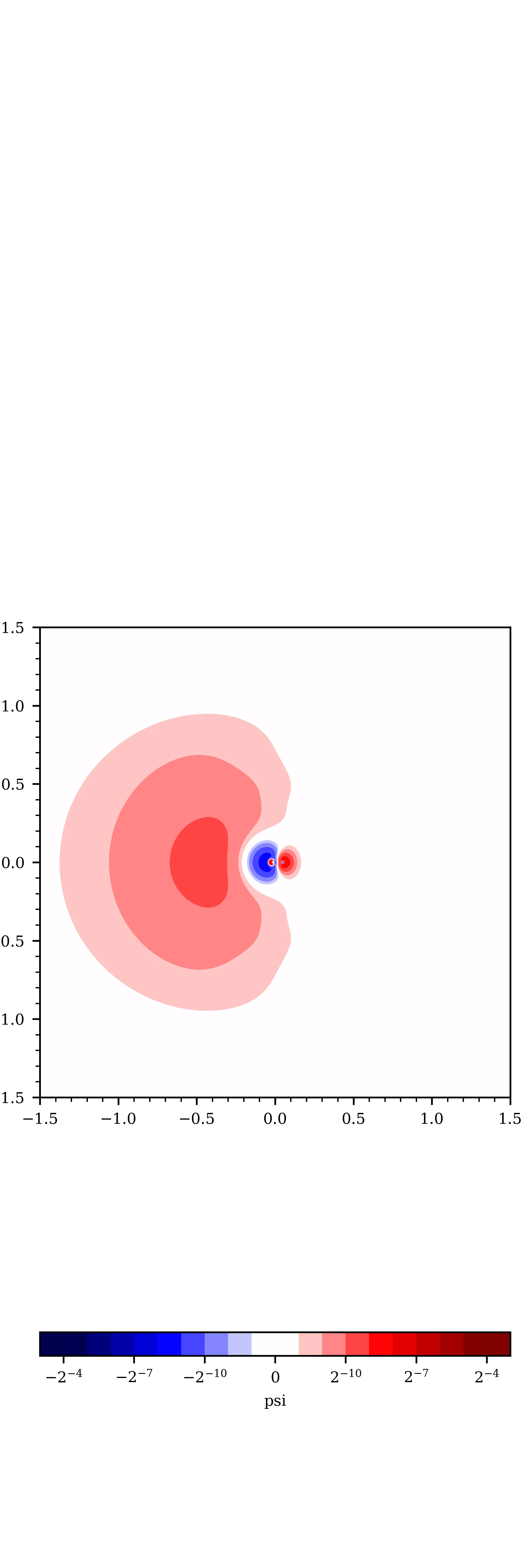
An extra electron in a molecule is like a passenger barely hanging onto the step of a departing train. Such a 'passenger' turns the particle into an anion — a negative ion. Studying it is tough: the bond is weak, the electron cloud is diffuse, and any jolt can knock the electron off.
A team of researchers took on diatomic anions of metals — alkali (lithium, sodium, potassium, rubidium, cesium, francium) and alkaline-earth (beryllium, magnesium, calcium, strontium, barium, radium). That's 57 molecules in total. Using powerful computational methods, they built potential energy curves — graphs showing how energy changes as atoms approach or move apart. Then they calculated electric dipole moments and polarizabilities — a molecule's ability to deform under an electric field.
But the real surprise was in the excited states. Some of them turned out to cross with the ground state of the neutral molecule. It's as if the train's step momentarily lined up with the platform — making it easier for the electron to hop on or off. Such crossings can enhance resonant electron capture by the neutral molecule and the subsequent decay of the anion. This discovery could be useful in experiments with mixtures of ultracold molecules and Rydberg atoms — atoms with an electron that has wandered very far away.
Alkali metal anions are unstable on their own — the extra electron is held only by a weak interaction. Even room temperature is enough to 'shake it off'.