Antibodies are glycoproteins of the immunoglobulin superfamily, produced by plasma cells (activated B-lymphocytes). Each antibody consists of two heavy and two light chains linked by disulfide bonds, and has a variable region for antigen recognition and a constant region that determines effector functions. There are five classes: IgM, IgG, IgA, IgE, IgD. Binding to an antigen can directly block infectivity, as well as opsonize the pathogen, activate complement and natural killer cells (antibody-dependent cellular cytotoxicity). Monoclonal antibodies are a key tool in biotechnology and medicine.
History
Antibody-based immunity was discovered by Emil von Behring and Shibasaburo Kitasato in 1890 with the demonstration of passive immunization against diphtheria toxin using serum. In 1959, Gerald Edelman and Rodney Porter independently determined the structure of antibodies, for which they received the Nobel Prize. The invention of monoclonal antibody technology by César Milstein and Georges Köhler in 1975 opened the era of therapeutic antibodies.
How it works
Antigen recognition is based on non-covalent interactions (hydrogen bonds, electrostatic, hydrophobic) between the hypervariable regions (CDRs) of the antibody and the antigenic epitope. Binding alters the antibody's conformation, and through the Fc fragment effector mechanisms are initiated: complement-dependent cytolysis (C1q is recruited to the Fc, triggering the cascade), antibody-dependent cellular cytotoxicity (FcγRIII on NK cells), opsonization of phagocytes. Different isotypes perform specialized functions: IgG is the main one in blood, IgA in mucous membranes, IgE in allergies and parasites. The principle of genetic recombination and selection underlies adaptive recognition.
In practice
Antibodies are used in therapy (e.g., against COVID-19), in diagnostic tests (pregnancy tests), and in scientific experiments to detect proteins.
Fun fact
The human body can produce more than a billion different antibodies, although the number of genes is relatively small — diversity is achieved through the shuffling of genetic segments.
After a big police raid in a city, a few criminals remain. Some hide in dark alleys, others slowly gather strength for a new job. The police need not only to catch them now but also to prevent them from taking over the streets again. This is roughly how blood cancer treatment with hunter cells works.
These cells are created from the patient's own immune cells.
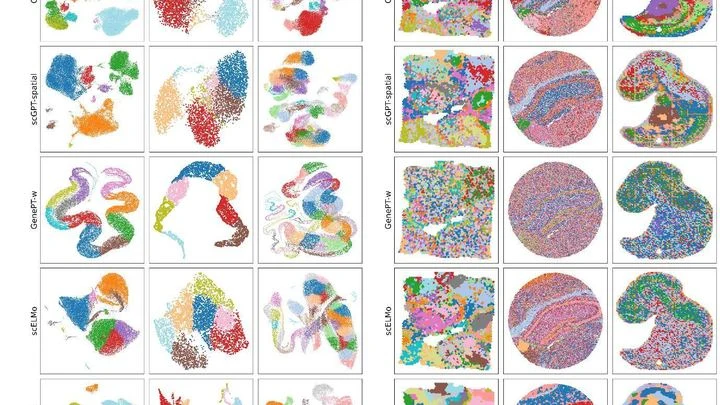
Biologists are increasingly trusting computers to read the "user manuals" of living cells. Six recent AI models (Nicheformer, CellPLM, scGPT-spatial, GenePT, scELMo, and Novae) are like six translators working from different dialects of the same cellular language.
Neural networks trained on genetic text can 'read' the DNA of bacteria. Scientists took the powerful Evo 2 model and added a tiny, tunable sensor, a genetic probe, without touching the model itself. The probe picks up signals associated with dangerous genes, like antibiotic resistance.
The immune system is like a tireless editor, revising antibody drafts to make them stickier to viruses and bacteria. This process is called antibody maturation: random typos (mutations) arise in the genes, and natural selection keeps those that improve target capture.
A bunch of keys lies on the table: each opens only one lock. In living cells, nanobodies often play the role of such keys: tiny antibody fragments that stick to strictly defined proteins. They can be used to deliver a drug exactly to a diseased cell or to block a harmful process.
Mold on bread: a spot today, half a loaf tomorrow. That's roughly how amyloid-beta spreads through the brain — a sticky protein that clumps up in Alzheimer's disease and disrupts neuron function.
When a virus enters the body or a cancer cell appears, T cells, the immune system's fighters, take the stage. Each T cell has its own receptor, a lock-like molecule that searches for the right key: a piece of protein (peptide) on the surface of the diseased cell. If the key fits, the T cell activates and destroys the enemy.
In a hospital, blood from a finger prick usually goes to the lab, and the result comes back the next day. The new method promises to cut that wait to a few minutes. Instead of catching light reflected off a sample, it reads the electrical voltage that arises at the boundary between two media, like the faint tingle you feel when you touch a battery with wet fingers.
An antibody is a protein that catches viruses and bacteria. When an enemy enters the body, immune cells start trying out different antibody variants, as if testing different keys against a lock. Beneficial changes are kept, harmful ones are discarded. Over a few weeks, this process yields an antibody that fits its target perfectly.
A graphene transistor works like a microscopic switch: a molecule lands on its surface, and the current changes. But a bare graphene surface catches nothing. You need a "bait"—antibodies that recognize only viral proteins.
After an injection under the skin, a drug doesn't just spread out like ink in water. Antibody molecules carry an electric charge, and that charge makes them interact with surrounding tissues — much like a magnet attracts or repels iron filings.