EEG seizure detection is a method for identifying abnormal electrical activity in the brain indicative of epileptic seizures using electroencephalography.
Electroencephalogram (EEG) records the total electrical activity of brain neurons using electrodes on the scalp. An epileptic seizure manifests as abnormal synchronous discharges, which on EEG look like sharp bursts (spikes) and slow waves. Detection algorithms analyze the multichannel signal, extracting characteristic patterns whose frequency and shape differ from background activity.
History
The first automatic seizure detectors appeared in the 1970s and were based on simple threshold rules for amplitude and duration. In the 1990s, frequency analysis methods and neural networks began to be used. With the growth of computing power and the availability of large labeled databases (e.g., the Temple University Hospital project) in the 2010s, there was a leap to deep learning, allowing performance on par with expert clinicians.
How it works
The system receives a multichannel EEG signal (usually 16-64 leads), digitized at 200-500 Hz. Preprocessing algorithms remove artifacts (filtering, independent component analysis). Then either predefined features are extracted (e.g., power spectral density in delta, theta, alpha, beta, gamma bands, fractal dimension, synchronization), or the signal is directly fed into a neural network. The classifier outputs the probability of a seizure for a sliding window (typically 2-10 seconds). At the postprocessing stage, smoothing and thresholding are applied to eliminate false positives. Some systems use transfer learning to adapt to a specific patient.
In practice
Helps doctors detect epilepsy faster by analyzing long EEG recordings; used in wearable devices for seizure prediction.
Fun fact
Some algorithms can predict a seizure minutes before it starts by analyzing gradual changes in EEG that are invisible to the naked eye.
At night, the bedroom hosts an orchestra, with breathing as the soloist. Under the sheet lies a mat with 512 sensors, each capturing the slightest body movements. When breathing stops for ten seconds, the orchestra falls silent. The challenge is to hear that silence.
Previously, it was unclear which notes in this music matter most.
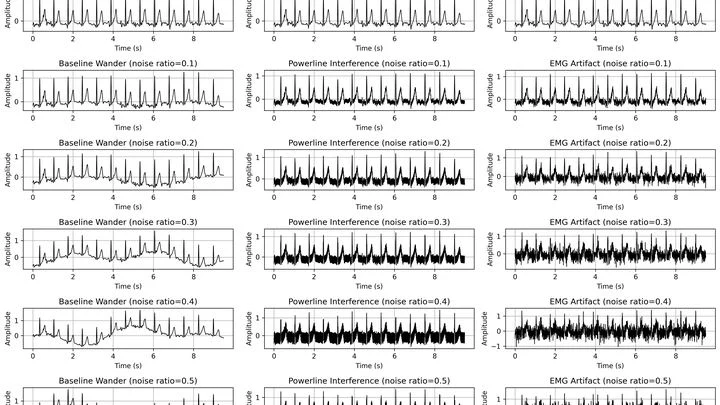
An electrocardiogram is like a recording of a conversation where the heart whispers and a construction site roars in the background. Atrial fibrillation, where the atria quiver instead of contracting, changes that whisper almost imperceptibly.
An electrocardiogram is like a recording of a conversation where the heart whispers and a construction site roars in the background. Atrial fibrillation, where the atria quiver instead of contracting, changes that whisper almost imperceptibly.
The eye's vascular network is not just a peripheral part of the circulatory system; it is a 'mirror' of the brain's hemodynamics, anatomically and functionally connected to it.
A doctor places a stethoscope on the chest and listens: lub-dub, lub-dub. The rhythm is there, but how do you measure it when it's noisy around and the patient can't lie still? Conventional devices look for sharp peaks in the heartbeat recording, like catching hammer blows. But if the hammer hits a pillow instead of an anvil, the peaks blur and the device gets lost.
CORAL, the new method, works differently.
Blood vessel cells were seeded onto a transparent film just 700 nanometers thick — a hundred times thinner than a human hair. Flat electrodes are hidden beneath the film. They send a weak alternating current and listen as the resistance changes.
A magnetoencephalograph, a helmet-like device with hundreds of sensors, picks up the weak magnetic fields generated by active neurons. When a person listens to speech, these signals contain imprints of the heard words. But extracting them is tricky: signals from thousands of sources merge into a tangled mess.
One hundred milliseconds. In that time, after a lightning strike or a short circuit, the power system either returns to normal operation or loses stability. A new-generation Neural Network Oscillations learns to sense this moment, like an experienced tightrope walker anticipating a gust of wind.
An electroencephalogram (EEG) is like having a bunch of microphones placed all over your head. Each of these “microphones”—a sensor — listens in on the electrical chatter of neurons. But sometimes one of them peels off, gets noisy, or records interference instead of a signal.
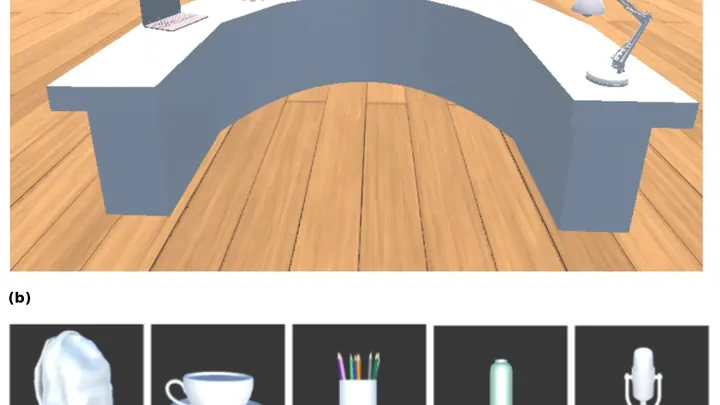
An eye prosthesis sends the brain not a photograph but a sparse pattern of bright dots — phosphenes. To make out a cup or keys in this flickering noise, a person has to move their head like a flashlight in the dark, piecing together the object's outline bit by bit. It's a slow process, like assembling a puzzle where most pieces have been thrown away.
Every time a child with cerebral palsy is about to move their leg, a distinctive electrical blip appears in the brain — a slow voltage shift. Scientists call it a movement-related potential. A brain-computer interface (a system that reads intentions from brain signals) can pick up this blip and turn it into a command for a training device.
To find an epileptic seizure in brain activity recordings, scientists used an approach akin to picking out sharp sounds in a noisy room: instead of deciphering the entire chorus of brainwaves (EEG), they isolated only the strongest spikes.
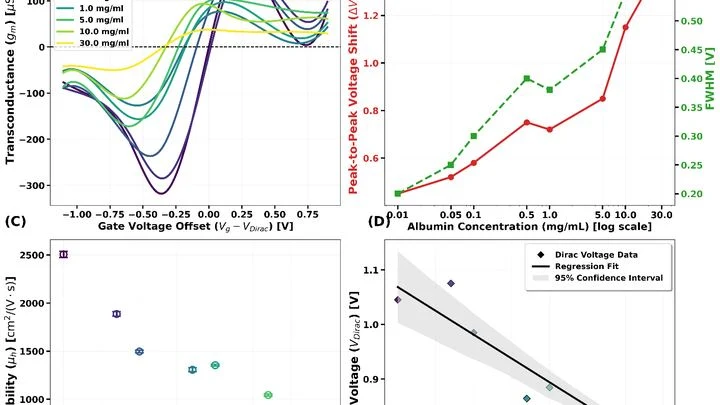
In a drop of blood float millions of albumin molecules — the main transport protein. Its level drops in kidney and liver diseases, so doctors need a fast and accurate way to measure it. Engineers have proposed a detector the size of a dust particle: a graphene transistor that works directly in liquid.
Graphene is a sheet of carbon one atom thick.
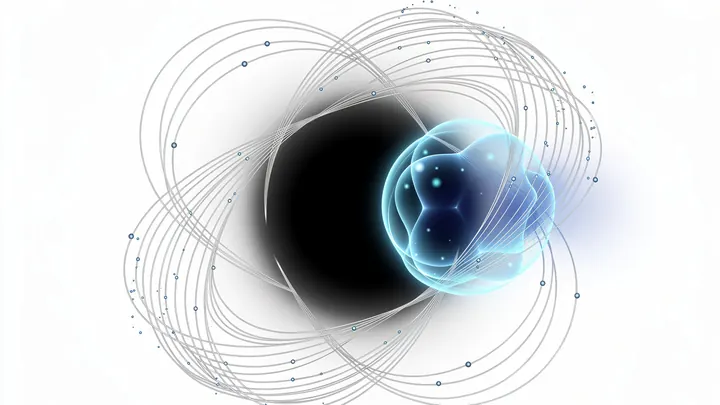
A black hole is not a frozen void, but a living magnetic engine. Its 'heart'—the accretion disk, pulsates: inhale, matter spirals into the funnel, exhale — magnetic reconnection tears the field lines, and plasma shoots away from the horizon.
A translator gets distracted by every rustle in the hall, and a one-hour meeting stretches into two. That's how the standard method of locating an epileptic focus works: it waits for loud phrases — the moments when a seizure flares up in the brain.
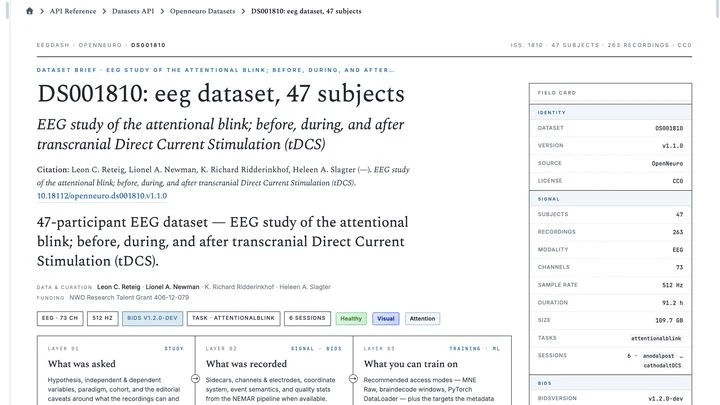
The open archives OpenNeuro and NEMAR hold 791 recordings of the brain's electrical activity from nearly forty thousand people. In total, that's 86,051 hours of signals — roughly ten years of continuous listening. Previously, to take even one such recording off the shelf, you had to write thousands of lines of code: download, unzip, fix format errors, and slice it into chunks of the desired length.
When the conductor leaves the orchestra, the musicians keep playing from memory for a while. But without a unified rhythm, each one starts to speed up or slow down on their own, and the harmonious symphony turns into disjointed noise. According to new research, the brain and heart behave much the same way in the last hours of a person's life.
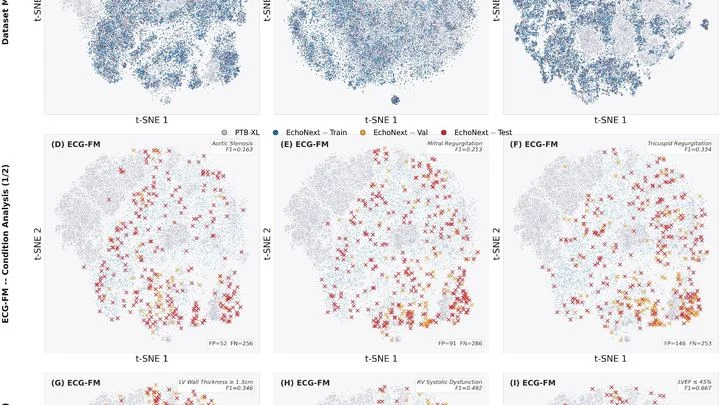
The heart beats like a drum in the next room: from the rhythm and the dullness of the thump, an experienced physician can guess whether there’s an enlarged chamber, a thickened wall, or a valve flapping out of sync. But to see it for sure, the patient lies on a couch while a probe glides across the chest — echocardiography (heart ultrasound).
When a soccer player heads the ball, the brain inside the skull jiggles slightly, like jelly in a sealed jar. A single impact leaves no trace, but hundreds repeat over the years. Doctors struggle to tell when these jolts start to cause harm: standard brain scans look normal, and the person may feel perfectly healthy.
Scientists have found another way to peek into such a brain.
A person hears a ringing that isn't there. The doctor asks them to describe it — loudness, pitch, persistence. But it's subjective: one might say "like a mosquito," another "like steam from a kettle." We need a way to see tinnitus directly, in the brain itself.
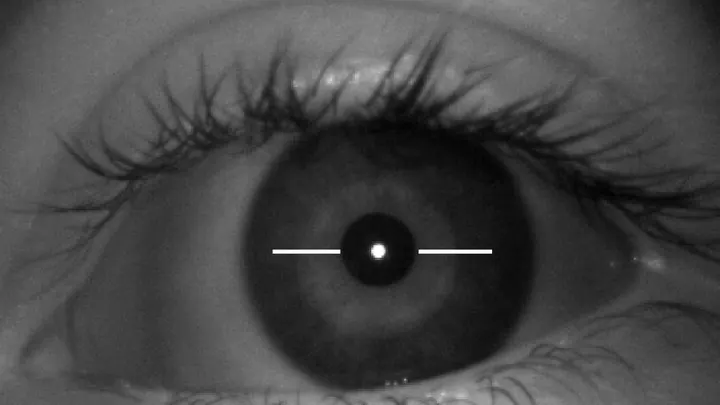
A flashlight shines into the eye, and the retina responds with electrical impulses, like an echo, but not of sound, of light. This echo can be recorded, and it reveals not only how the eye is working but also how the brain is. After all, the retina is a piece of the brain that has been pushed out to the periphery.
A neuron that has just calmed down is like a pianist lifting their hands from the keys. But inside, silent work continues: tiny pumps push chloride ions outward, returning the instrument to a state of readiness. If the pumps fall behind, chloride builds up, and then an inhibitory signal meant to quiet the cell suddenly starts exciting it.
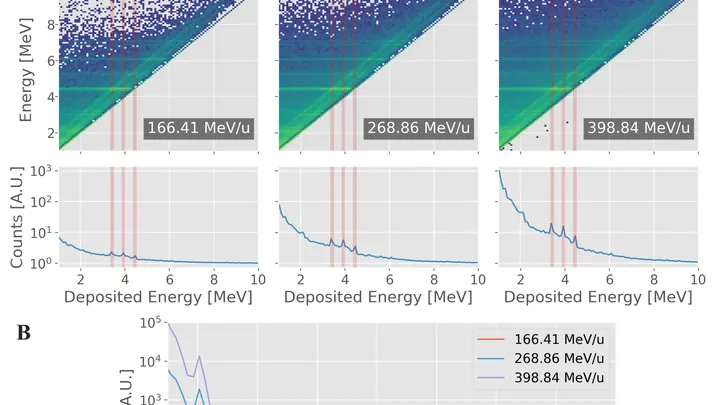
When a carbon ion beam enters the body, it doesn't release energy all at once but rather at the end of its path, like a runner who gives their all on the final stretch. Doctors need to know this finish point to avoid damaging healthy tissue. But how can you look inside the body without making an incision?
The heart beats steadily, then slips into arrhythmia. The climate holds its familiar rhythm for decades, then shifts to a new state over a single summer. Such regime shifts are like a flick of a switch, but in real data we see only a noisy one-dimensional signal in which the moment of the break is hidden.
When medications fail to control epilepsy, doctors may suggest surgery: removing the brain region where seizures originate. But predicting whether it will help a particular person is tricky. Pre-surgery MRI scans show only the current state, not how the brain will change after the intervention.
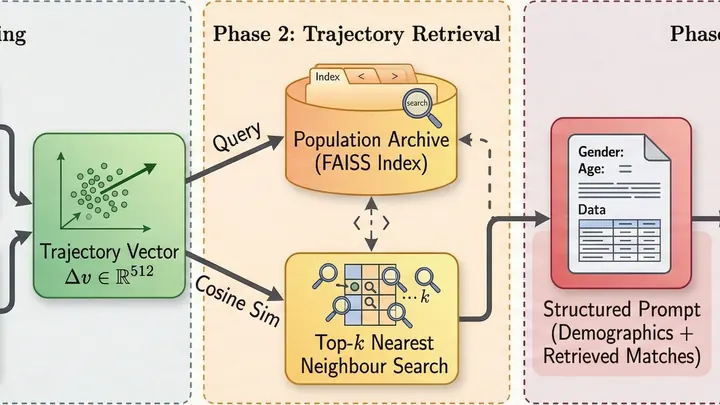
The new approach works like a librarian searching for similar medical histories.
A person looks at flashing letters on a screen, and a computer guesses which one they chose by a burst of brain activity. It's like an interpreter who catches not words but the brain's electrical signals. But different people's brains 'speak' with an accent: one person's signal is bright and clear, another's is quiet and smeared.
An ordinary antenna picks up radio waves, but there are fields it barely feels. We're talking about slow electric fields: those that change once a second or less. For them, physicists built a sensor from a beam of rubidium atoms.
At night in a dark room, the human body emits a barely perceptible glow. This light is so faint that only highly sensitive detectors can catch it. Some researchers thought this glow from the head could tell us about brain activity — no scanners or wires needed.
But when put to the test, the story changed.
In a hospital, blood from a finger prick usually goes to the lab, and the result comes back the next day. The new method promises to cut that wait to a few minutes. Instead of catching light reflected off a sample, it reads the electrical voltage that arises at the boundary between two media, like the faint tingle you feel when you touch a battery with wet fingers.
A stroke hits suddenly, but before the strike, the brain sends quiet signals. Blood vessels stop smoothly regulating blood flow, like a thermostat that starts overheating or overcooling a room without reason. This imbalance is invisible on ordinary wearables, but it can be caught by listening to several body rhythms at once.
You sleep, but your heart keeps telling stories. The rhythm of beats, the pauses between them, the respiratory waves — all shift from one sleep stage to the next. In a sleep lab, this is read from a host of sensors on the head, face, legs, and chest. It's cumbersome, expensive, and not something you can do at home.
Potassium in the blood is like salt in a soup: just a bit too much, and the heart starts to falter. Doctors usually monitor this mineral with blood draws from a vein, but for people with kidney disease or a weak heart, frequent lab visits become a ordeal.
A patient with schizophrenia comes in for a procedure that feels like a mild tingling in the ear. The doctor switches on a small electrical stimulator attached to the earlobe, and after a few weeks, some people find their apathy and withdrawal receding, while others see no change at all. Until now, predicting this was impossible.
A resting brain is not silent: its regions talk to each other, and these conversations can be eavesdropped on with a scanner. Usually, scientists track signal strength — how loudly each area 'sounds.' But a conversation also has rhythm: some areas light up simultaneously, others with a delay.
A star like the Sun doesn't just shine: it hums quietly. Inside, plasma churns, and these motions make the surface rise and fall rhythmically. Catching such a tremor from Earth is nearly impossible: it gets lost in the noise of the atmosphere and the instrument itself. That's why astronomers listen to stars from space, where it's quieter.
Depression is sometimes sought in the brain's electrical waves. The logic is simple: if a disease has stages (acute, maintenance, recovery) then the signals should change gradually, like volume when you turn a knob. Researchers took EEG recordings from 74 people: 24 in the acute phase, 23 in the maintenance phase, and 27 healthy.
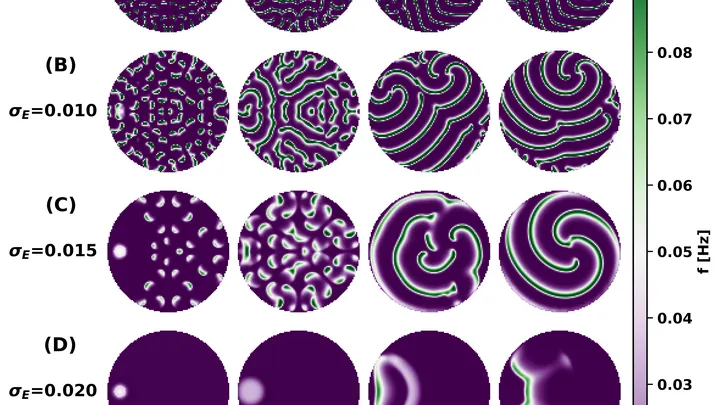
The heart doesn't contract all at once but as a wave: an electrical signal travels through the muscle, and behind it, like ripples spreading on water, a contraction rolls through. In arrhythmia, this wave goes awry: it stalls in one spot, loops in another, and the pump starts working in a disorganized way.
An electrocardiogram is like a recording of an engine's hum: an experienced mechanic can hear when something's off. A heart ultrasound shows the engine itself from the inside, but the machine is pricey and specialists are scarce.
An electrocardiogram is like a long strip of paper on which the heart leaves its signature. A doctor studies it to catch rhythm disturbances, but when the recording lasts for days, the strip stretches for miles. The eye tires, attention wanders, and rare but dangerous irregularities can slip by.
AI-HEART works like a tireless assistant that scans the entire strip without a break.
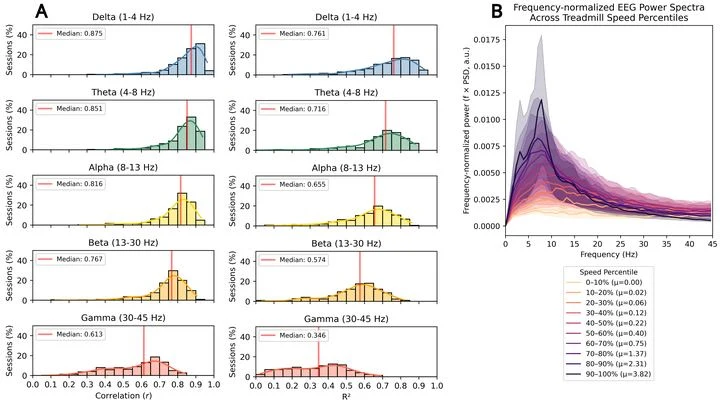
A rat runs down a track — not because a motor forces it, but because it feels like it. On its skull sits a grid of 32 tiny sensors, like a swim cap with wires. The sensors pick up the faint electrical waves emitted by the brain. Previously, to find out how fast an animal was running, you had to implant electrodes directly into the brain.