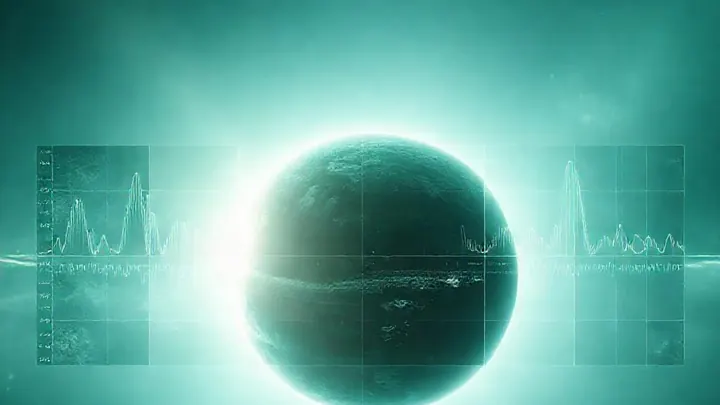
Blind analysis is a methodological safeguard used in experimental science to prevent the researcher's expectations from influencing the outcome of the analysis. The idea is to fix the entire analysis protocol — including all data-processing steps, statistical tests, and selection criteria — before examining the actual data. This prevents the common pitfall of 'p-hacking' or unconsciously tweaking the analysis until a desired result emerges.
History
The technique was first formalized in particle physics, notably by the BaBar collaboration in the late 1990s, and has since spread to other fields.
How it works
In practice, the researcher designs the full analysis plan in advance, often with the help of a colleague who does not know the true answer. The actual data is then 'blinded' — for example, by adding a random offset to the key measurement or by hiding the labels of the experimental groups. The analysis is run on the blinded data, and only after the analysis is complete and the results are recorded is the blinding removed. This ensures that the final result is not influenced by the researcher's prior beliefs or hopes.
In practice
It is used in high-energy physics experiments (e.g., at CERN), clinical trials, and psychology to ensure that results are not biased by the experimenter's expectations.
Fun fact
In some blind analyses, the data is 'hidden' by adding a secret random number to all measurements; the analysis is done on the shifted data, and only at the very end is the shift subtracted to reveal the true result.
A glucose meter that doesn't prick your finger but just looks at your wrist: that's the dream for millions of people with diabetes. It's the promise of algorithms that extract glucose levels from the ordinary pulse signal, the photoplethysmogram (the same one that measures heart rate in smartwatches).
In 2019, the world saw the first image of a black hole's shadow — an orange doughnut on a black background, becoming a symbol of scientific progress. But this image wasn't captured by a camera: it was born from mathematical alchemy, where data from eight radio telescopes, which gathered only crumbs of signal, merged into a single picture.
Diabetes is a constant reminder of needles. To check glycated hemoglobin (HbA1c — a blood protein that reflects average sugar over three months), you need regular blood draws from a vein. It's unpleasant, requires a lab, and takes time. And if you live far from a city, every test becomes a major expedition.
The new iGLU 5.0 device changes the game.
A person looks at a door lock and sees a keyhole. They know that a key is inserted and turned. But if instead of a keyhole there's a touch panel, the familiar frame breaks. The person doesn't just make a mistake: they realize that the usual approach won't work and can say, "There's no place for a key here; a different approach is needed."
Such an honest stop with an explanation is rare for machines.
Quantum computers in the cloud are like a post office: you send a letter, and someone else reads the address and the contents. In ordinary computing, the server sees your data and algorithm. Blind quantum computing is an unopenable envelope: the server does the work but doesn't know what it's doing.
The hunt for life on distant planets is like diagnosing a rare disease with a test of unknown accuracy. A single positive result means nothing: maybe it's a glitch? We search the atmospheres of exoplanets (worlds around other stars) for traces of water and other compounds, but any signal could be a false alarm.
Astronomers occasionally spot interstellar objects — rocky chunks or comets from other star systems. Most look ordinary, but some puzzle us with their shape, speed, or shine. To stop guessing, scientists applied the Loeb scale: from 0 (plain rock) to 5 (technosignature — an artificial signal from space).
You can edit a cell perfectly, and it still turns out useless. The gene is fixed exactly as planned, yet the cell behaves unpredictably: it drifts, changes fate, loses safety. It's like fixing one gear in a watch, but the watch still runs wrong because the whole mechanism is out of sync.
Previously, a cell was viewed as a list of independent parts.