Earth's Gravitational Lens: Hunting Axions in the Focus of Spacetime express
Dark matter is the invisible scaffold of the Universe, revealing itself only through gravity. Vera Rubin, studying the rotation of galaxies, found that stars at the periphery move too fast, as if held by an unseen mass. This became compelling evidence for the existence of dark matter, yet its particles still elude direct detection.
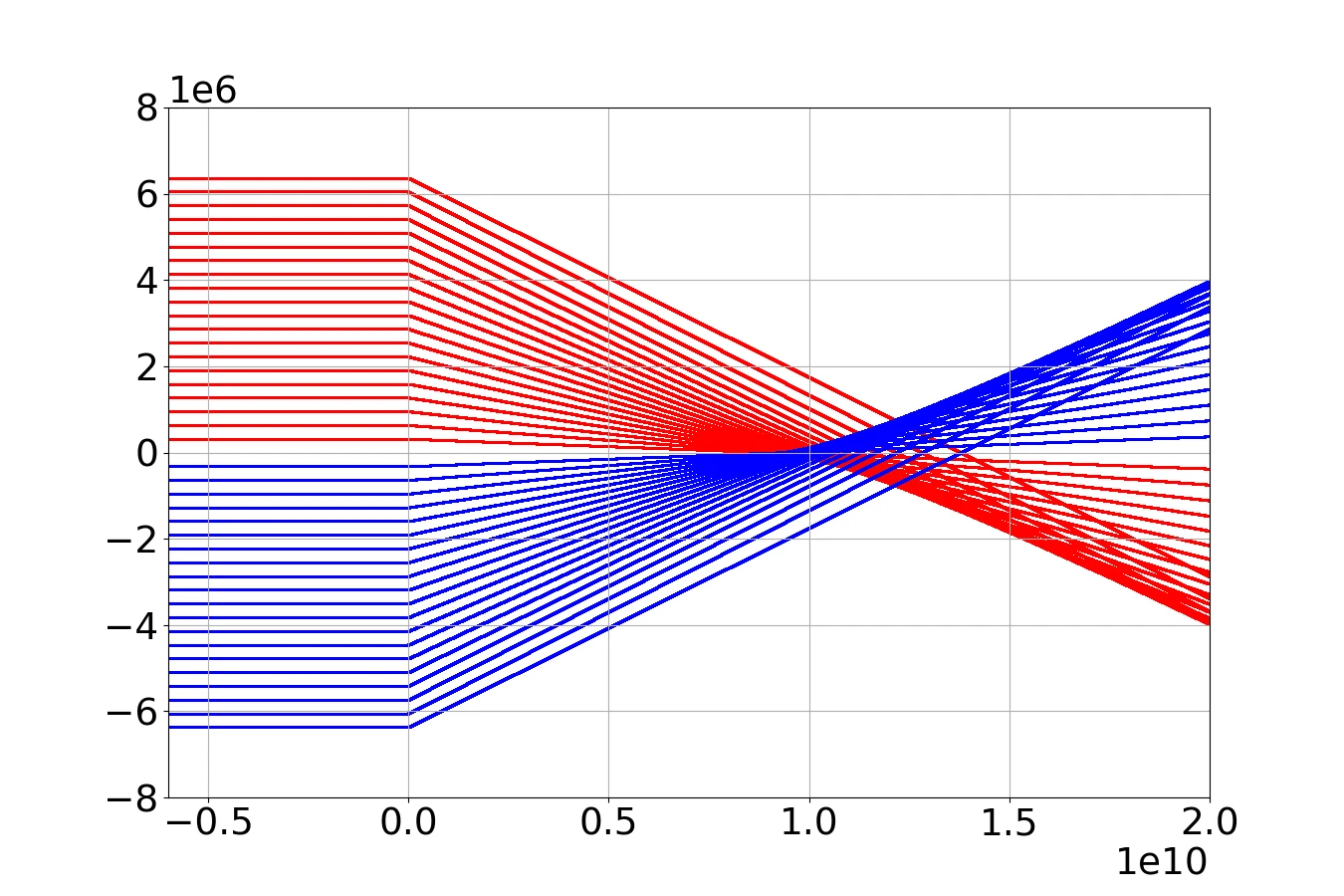
The new approach turns Earth itself into a giant gravitational lens. According to general relativity, a massive body, as Einstein showed, warps spacetime, causing passing rays to bend. Just as a glass lens focuses light to a point, our planet's gravity focuses passing dark matter particles into an extremely small region — a point located beyond Pluto's orbit. Its cross-section is comparable to a football field, which is astonishingly small on cosmic scales.
A powerful laser beam is aimed at this point. If dark matter consists of axions, ultra-light particles predicted beyond the Standard Model of particle physics, then under the intense electromagnetic field of the laser, axions can momentarily convert into photons and reflect light back. Imagine a laser acting like a match, igniting invisible gunpowder, and the flash of this 'combustion' can be registered by sensitive detectors.
Calculations show that for typical particle speeds around 520 km/s, Earth's gravitational focus forms at a distance of 9–14 billion meters from the planet. The method's sensitivity is so high that a signal born in this tiny region could be detected even from the opposite edge of the Galaxy, like hearing a whisper across the ocean. This approach paves the way for a space observatory for direct detection of dark matter, with our planet as a key element of an optical system on a universal scale.
The distance to Earth's gravitational focus is roughly the distance light travels in half a minute — farther than Pluto, but still within our Solar System.