Mars Radio Signal Probes the Sun's Corona express
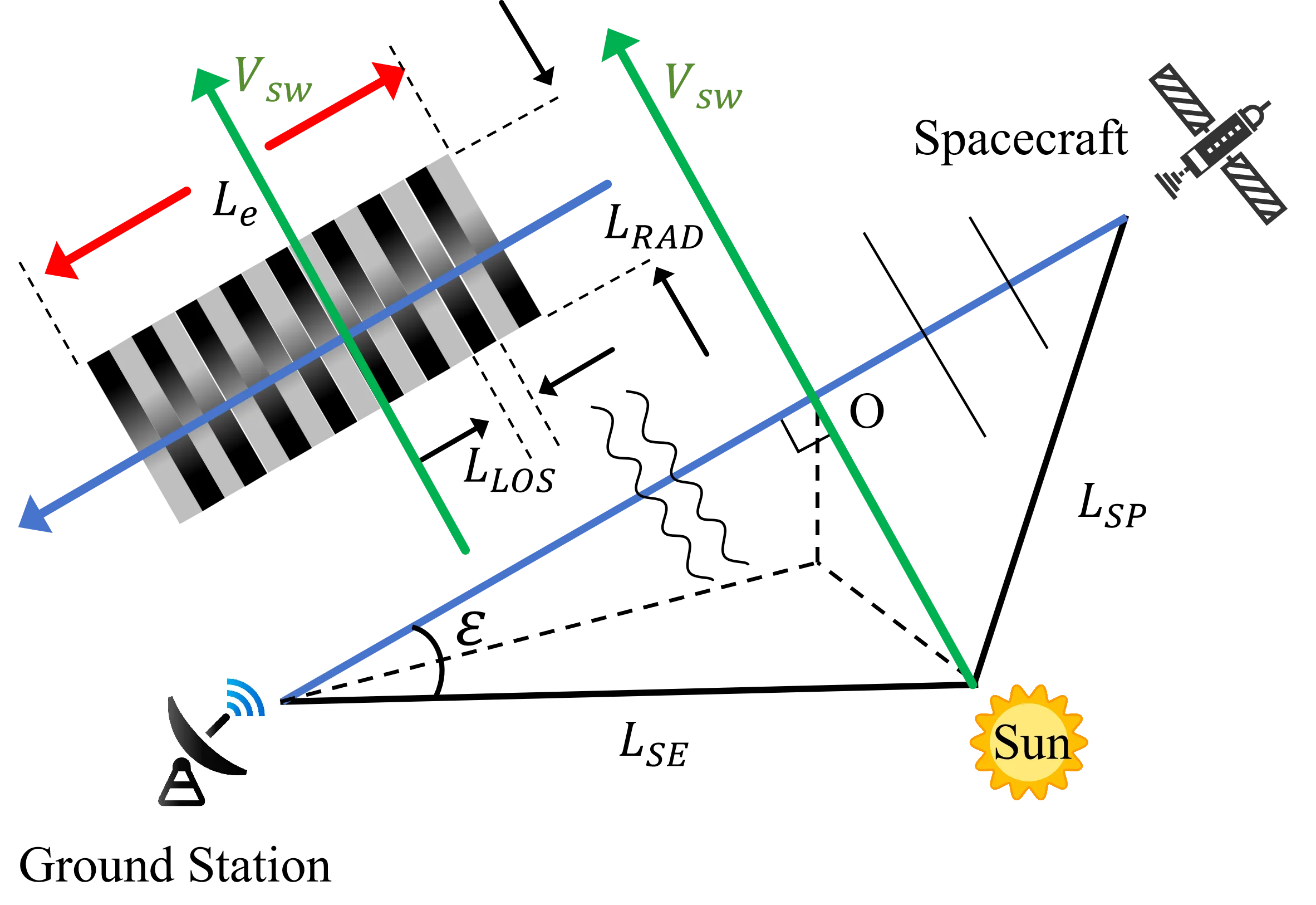
A radio signal travels from Mars to Earth, but on the way it has to push through the invisible "wind" of charged particles blowing from the Sun. This wind, like ripples on water, slightly distorts radio waves. In October 2021, China's Tianwen-1 probe found itself behind the Sun, and its signal passed just 4.5 solar radii from our star — where the wind is especially dense. A ground antenna in Wuchin (70 meters across) caught these distortions, and scientists were able to "feel out" the solar corona with them.
It turned out that the radio signal's flicker, like the shimmer of air over hot asphalt, intensifies when the beam passes closer to the Sun. On October 5, 13, and 15, instruments recorded particularly strong spikes. Comparing these with images from the SOHO and SDO spacecraft, researchers saw that each spike coincided with the birth of bright structures in the corona: giant streamers, fast wind flows, or mass ejections.
Now astronomers can use any probe passing near the Sun as a free space weather sensor. No need to launch dedicated spacecraft, just "listen" to the radio signal distortions and use them to pinpoint where on the Sun a storm was born. It's like knowing from the flicker of a shadow on the wall that the wind has picked up outside.
Radio waves from the Tianwen-1 probe took about 20 minutes to reach Earth, but the solar wind shifted their frequency so subtly that the shift had to be measured in millionths of a hertz.