Simple

Light Echo Flips Chemistry ⚡ экспресс

Original: "Engineering molecular potential energy surfaces using magnetic cavity quantum electrodynamics"
arXiv:2604.20969 · 2026-04-22 · CC BY 4.0 · ⏱ 1 min · Chemical Physics Optics Quantum Physics
In a mirror trap, light echo reshapes molecules, making them generate magnetic fields and ring currents.
Abstract

Imagine a magnetic "room" that flips the usual properties of molecules. Scientists have shown that strong coupling with a magnetic field can make ordinary hydrogen unstable, while in ring-shaped molecules that usually bend, exotic states with ordered magnetic currents emerge instead. The more molecules in this "room", the stronger the effect. Could such "magnetic alchemy" lead to materials with unusual properties?

Links in the knowledge graph 1

In an empty hall, sound bounces between walls, turning into a booming echo.

An optical cavity is the same echo chamber, just for light. Here, trapped photons shake molecules so violently that the usual rules of chemistry go out the window.

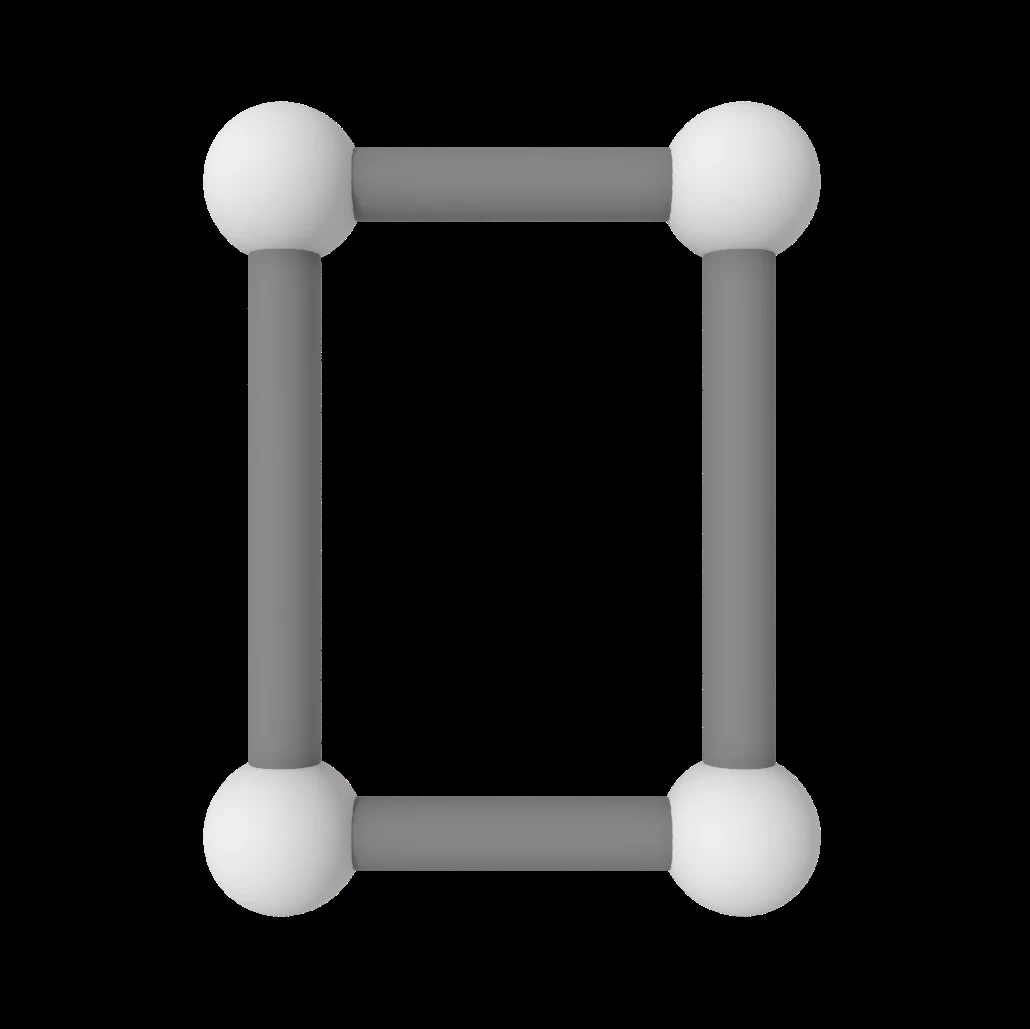
For hydrogen (H₂), stability and excitation swap roles, as if the seesaw has flipped. Ring-shaped molecules like H₄ or C₄H₄ (carbon and hydrogen) usually bend to survive. But the echo chamber straightens them out to perfect symmetry.

In exchange, a perpetual motion of electrons springs up around the ring — the molecule becomes a magnet with a field like a tiny electromagnet, and this current never fades.

The more molecules inside, the stronger the effect — the crowd doesn't dampen the anomaly, it fuels it.

Spectroscopy — analyzing the outgoing light — lets us see these metamorphoses. So light echo teaches us to sculpt molecules with unimaginable properties — from ultrasensitive sensors to world-changing materials.

🎯 Without the echo chamber, H₄ or C₄H₄ rings distort chaotically. Inside, they freeze into a perfect shape, and a current runs endlessly around them — you get a magnet with no wires or batteries.

🎬 Like sci-fi force fields, light echo reassembles molecules to order — birthing materials with unprecedented traits.

Scientists
Christian DopplerD. B. McLaughlinDidier QuelozMichel MayorR. A. RossiterCharles-Augustin de Coulomb
Tags
hydrogen carbon spectroscopy
Laws
Doppler effectCoulomb's lawMaxwell's equationsPlanck's lawPlanck–Einstein relationWien's displacement law
Original: arXiv:2604.20969 · CC BY 4.0 · bridge42worlds