A Trap for Dark Matter Particles express
Dark matter has eluded direct observation so far, even though its gravity holds galaxies together. One hypothesis: it’s made of axions — ultra-light particles predicted by theory.
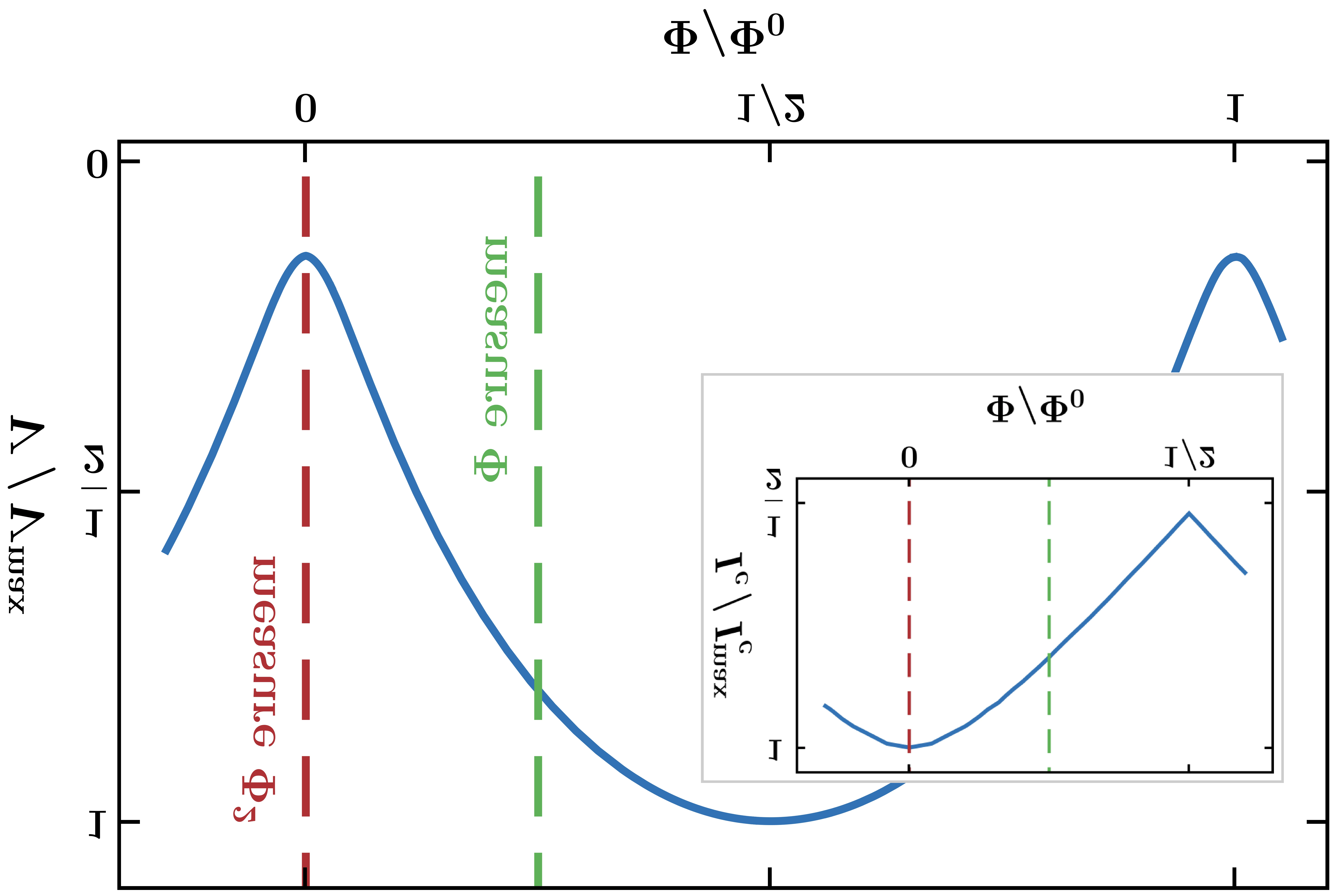
The new method employs a quantum magnetic sensor (SQUID) that feels the slightest field changes, like an antenna tuned to cosmic whispers. To weed out interference, the field is modulated in a specific way: then the axion signal appears as a barely noticeable ripple against the noise. But the real genius is the enormous search bandwidth. The device scans a huge frequency interval, covering possible axion masses across a factor of 10¹⁵: that’s like looking for a needle not in a haystack, but throughout the entire Solar System. For comparison, a typical radio receiver spans a range of only a millionfold. This approach turns the detector into a kind of dark-matter spectroscope, analyzing not light but magnetic vibrations. The expected sensitivity is orders of magnitude better than current experiments and is nearly independent of the axion mass. The setup can also search for other candidates, such as dark photons.
Original abstract
as written by the authors arXiv:2605.11078
We propose a novel broadband strategy to search for axions by leveraging observables controlled by the axion field squared. We present a practical implementation of this concept for probing the axion--photon coupling. This is done by operating a dc SQUID at the flux sweet spot, where the voltage depends quadratically on the magnetic flux, and using lock-in modulation to evade low-frequency noise. The proposed setup is ultra-broadband, spanning over 15 orders of magnitude in axion mass, with further expansion of the mass range possible. The projected sensitivity is $$|g_{a\gamma\gamma}| \gtrsim 10^{-16} \text{ GeV}^{-1}$$, orders of magnitude better than current bounds, and largely independent of axion mass. We discuss the sources of systematic background and a nulling technique to reduce them to an acceptable level. We also discuss how our strategy could be adapted to probe the axion-fermion coupling, as well as to detect other dark matter candidates such as dark photons.
Axions are so light that their mass is trillions of times less than an electron’s. But if they fill the Universe, their collective weight neatly explains why galaxies spin faster than they should.