Radio Sky Recon: Hunting Aliens and Dark Matter ✛ ✎ ✦
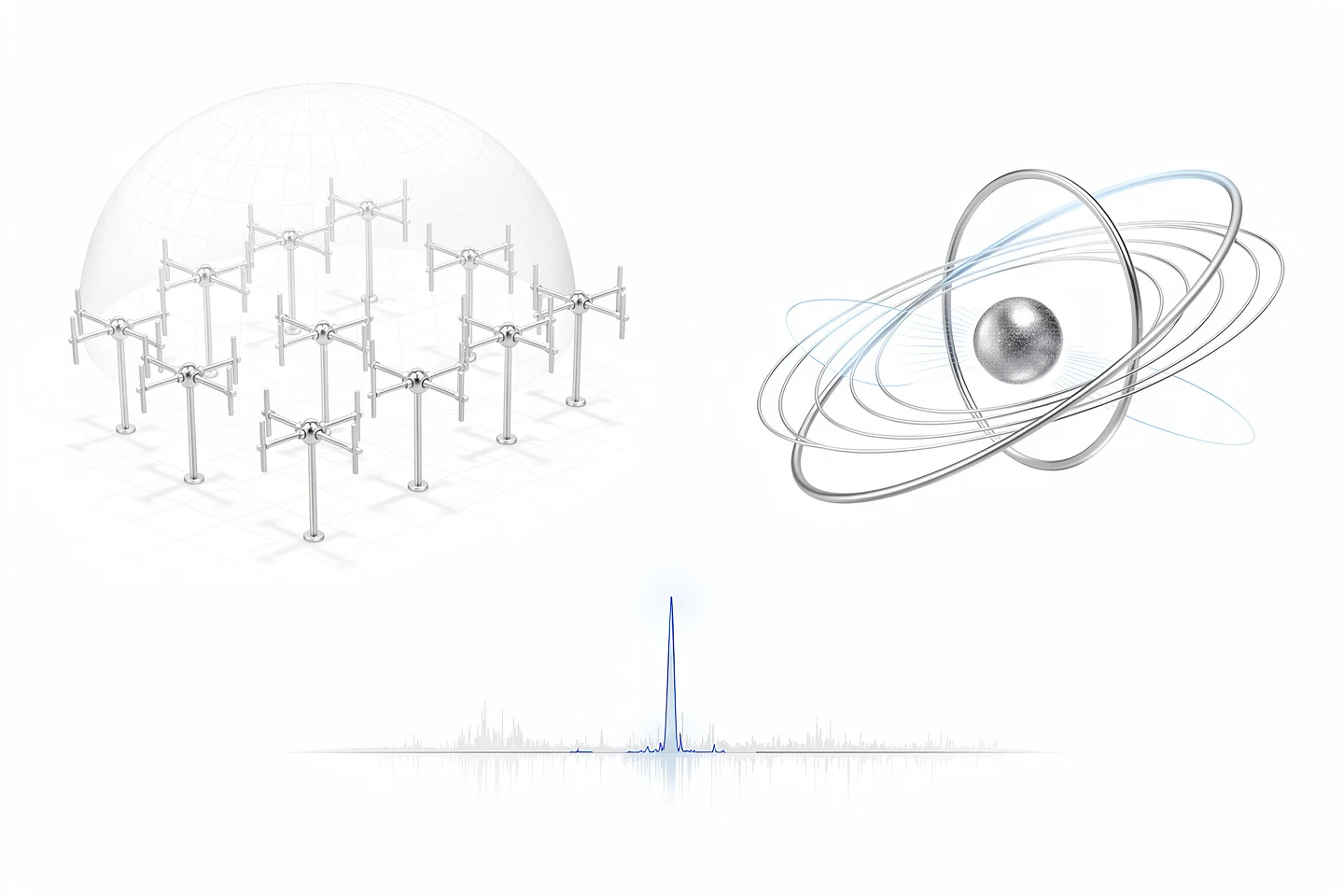
Astronomers swept the entire sky with the radio telescope, like tuning a giant receiver to a single channel in an airwaves jammed with static. In 30 seconds, the instrument broke down the radio noise into millions of narrow bands, this is spectroscopy, and in each one, it looked for a neat, man-made-like signal from millions of stars, many hosting exoplanets. Not one was found.
But the main result was unexpected: the alien hunt produced the most precise map of radio noise in the Galaxy. Now it’s being used to search for dark matter — the invisible “scaffolding” of the Universe, which, as Vera Rubin showed, holds stars together. Dark matter particles may convert into radio waves near neutron stars — ultra-dense stellar remnants, sometimes visible as pulsars. The discoverer of pulsars, Jocelyn Bell Burnell, proved they are ideal “laboratories.” Now, knowing the noise floor, scientists can more accurately pinpoint signals from dark matter.
This rapid survey will underpin future projects aimed at not only finding extraterrestrial intelligence but also detecting gravitational waves or hydrogen emissions from the first stars.
In 30 seconds, the radio telescope took more pictures than all Instagram users combined in the same time, and not a single one showed an alien.
This work echoes the famous film ‘Contact,’ where scientists similarly listened to radio noise in search of a signal from an extraterrestrial civilization.