Lead's Nuclear Shell Gets Stronger express
At the center of every atom lies a nucleus — a dense ball of protons and neutrons. These particles don't just crowd together randomly; they fill strict energy levels, much like floors in a skyscraper. When a floor is completely filled, the nucleus becomes especially stable — physicists call this a magic number.
The heaviest such number in stable nuclei is 126 neutrons. It makes lead-208 doubly magic and so robust that it serves as the endpoint for many radioactive decay chains. But what happens to this shell if you start removing protons from lead? Does it weaken or, on the contrary, become even stronger? For decades, the answer eluded scientists because the nuclei needed for experiments — platinum-204 and gold-205—are too rare and live only for minutes.
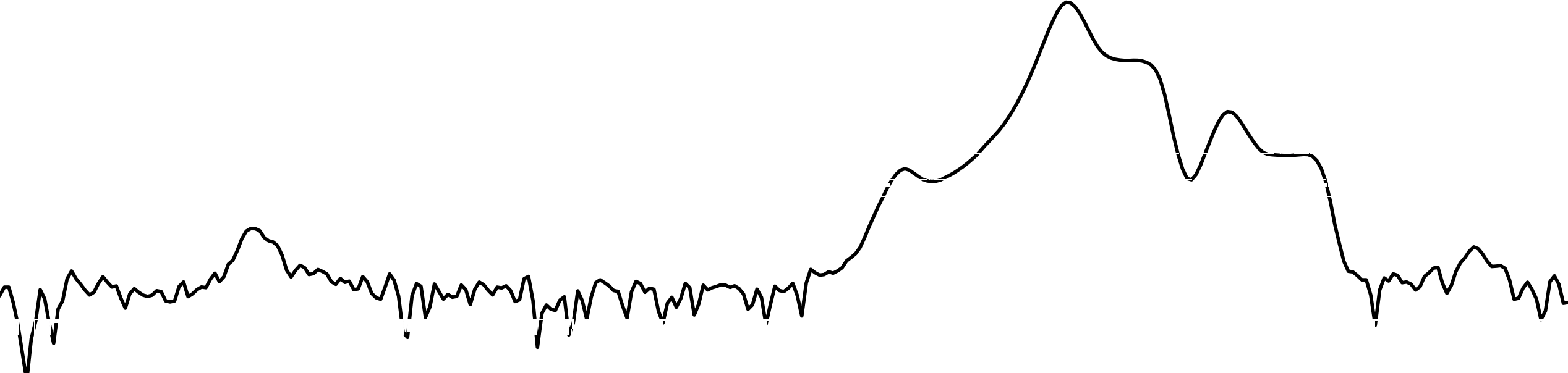
The team from the GSI Helmholtz Centre in Darmstadt tackled the problem with exquisite precision. They accelerated a beam of nuclei in an accelerator, injected it into a storage ring, and measured masses using two different methods simultaneously. The result was stunning: the nuclei platinum-204 and gold-205 turned out to be more robust than extrapolations predicted, by 403 and 464 kiloelectronvolts. It's as if builders expected the upper floors of a skyscraper to be flimsy, but they turned out to be the most reliable in the entire building. Moreover, the interaction between protons and neutrons behaved strangely: when crossing the magic number 126, it split in two — something never seen before.
The new data are not just a line in a reference book. They are a direct calibration for theoretical models that try to understand how gold, platinum, and uranium are born in the Universe. It is precisely in such neutron-rich nuclei that rapid neutron capture occurs — the very r-process that thunders during neutron star mergers. Now physicists have solid ground where there were only guesses before.
The gold-205 nucleus studied in the experiment lives for only 31 seconds — in that time, light can travel from Earth to the Moon and back.
In the novel "The Lead Shoes" by the Strugatsky brothers, a "lead star" is mentioned — now it's clear that its stability could be explained precisely by an enhanced neutron shell.