Flickering Debris: White Dwarf Transits Vanish and Return ✛
Four hours and fifty-eight minutes. With a rhythm like a metronome, something passes in front of the white dwarf ZTF J1944+4557, dimming its light by a third, sometimes almost by half. This white dwarf, the compact remnant of a star after its fuel runs out, lies in the constellation Cygnus, and its pulse is erratic: the transits deepen, then disappear altogether. In 2024, they vanished for seven months, and in March 2025 they returned with the same frequency, as if someone had switched the old mechanism back on.
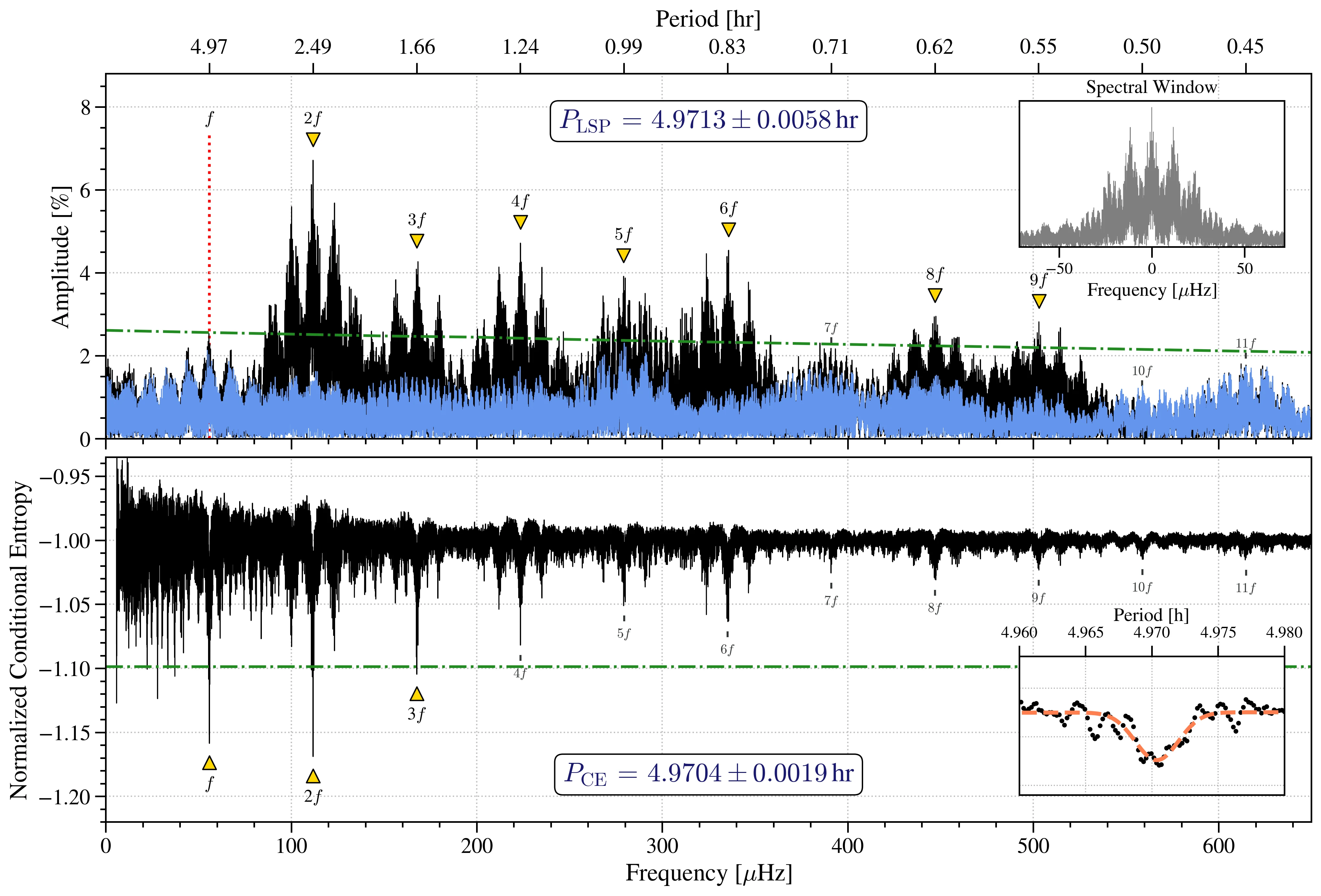
This star is not a lonely beacon but a stage where the final act of a planetary system plays out. When a Sun-like star exhausts its fuel, it sheds its outer layers and collapses into a white dwarf. Planets and asteroids that survive this upheaval find themselves on unstable orbits. Those that venture too close cross the Roche limit, the distance at which tidal forces tear a body apart, and crumble into clouds of dust and gas. Such clouds, orbiting the star, periodically block its light. For ZTF J1944+4557, the debris orbital period is 4.9704 hours, and the semimajor axis is 1.3618 solar radii, which is very close to the Roche limit for a white dwarf of 0.79 solar masses.
For a long time, astronomers knew only one such object: WD 1145+017, discovered in 2015. Its transits were also irregular, but by 2022 they had vanished, and no one saw them return. The new system ZTF J1944+4557 is the second with an orbit at the Roche limit and the first where a full cycle has been observed: disappearance for seven months and resumption with the same period. It is as if an interpreter, distracted by a rustle in the hall, fell silent for a while, then picked up exactly where they left off. This behavior challenges models that predict debris disk replenishment over hundreds of years, not a year or two.
To catch this flicker, astronomers spent more than 123 hours of observing time on four telescopes over 3.3 years. They measured the star's brightness every few seconds, then searched for periodicity without assuming any particular signal shape. It turned out that the dust grains blocking the light do not absorb blue light more than red: the transits are colorless. This means the particles are at least 0.2 micrometers in size; otherwise, shorter wavelengths would scatter more strongly. Moreover, no infrared excess, which would betray a warm dust disk, was found: the upper limit on dust mass is just 4×$10^{15}$ grams, comparable to the mass of a small asteroid.
The story of ZTF J1944+4557 is not merely a curiosity. It shows that debris disks around white dwarfs can lead their own rapid lives, depleting and replenishing over months rather than centuries. Perhaps another body lurks near this white dwarf, occasionally tossing fresh fragments toward the Roche limit. Future surveys, such as the Rubin Observatory and the Roman Space Telescope, will be able to monitor hundreds of such systems and catch the moment when debris resumes its dance. Then we will learn how often dying stars chew up their planets, and what remains afterward.
Transit depths reach 40%, equivalent to an eclipse of nearly half the white dwarf's surface by a debris cloud the size of the Moon.
The idea of disintegrating planetary systems around white dwarfs echoes Arthur C. Clarke's novel 'Rendezvous with Rama', where a giant object passes through the Solar System, leaving traces of destruction.