Glycine Isomer Found in Molecular Cloud Around Protostar express
For nearly half a century, astronomers have been searching for glycine, the simplest amino acid and one of the fundamental building blocks of proteins, in the interstellar medium. However, instead of the expected molecule, they have found methyl carbamate, its structural isomer, in the dense molecular cloud surrounding a newborn star. This compound has the same set of atoms but arranged differently in space. It's like two different models built from the same set of LEGO bricks: the chemical formula is the same, but the properties and role in prebiotic chemistry can differ.
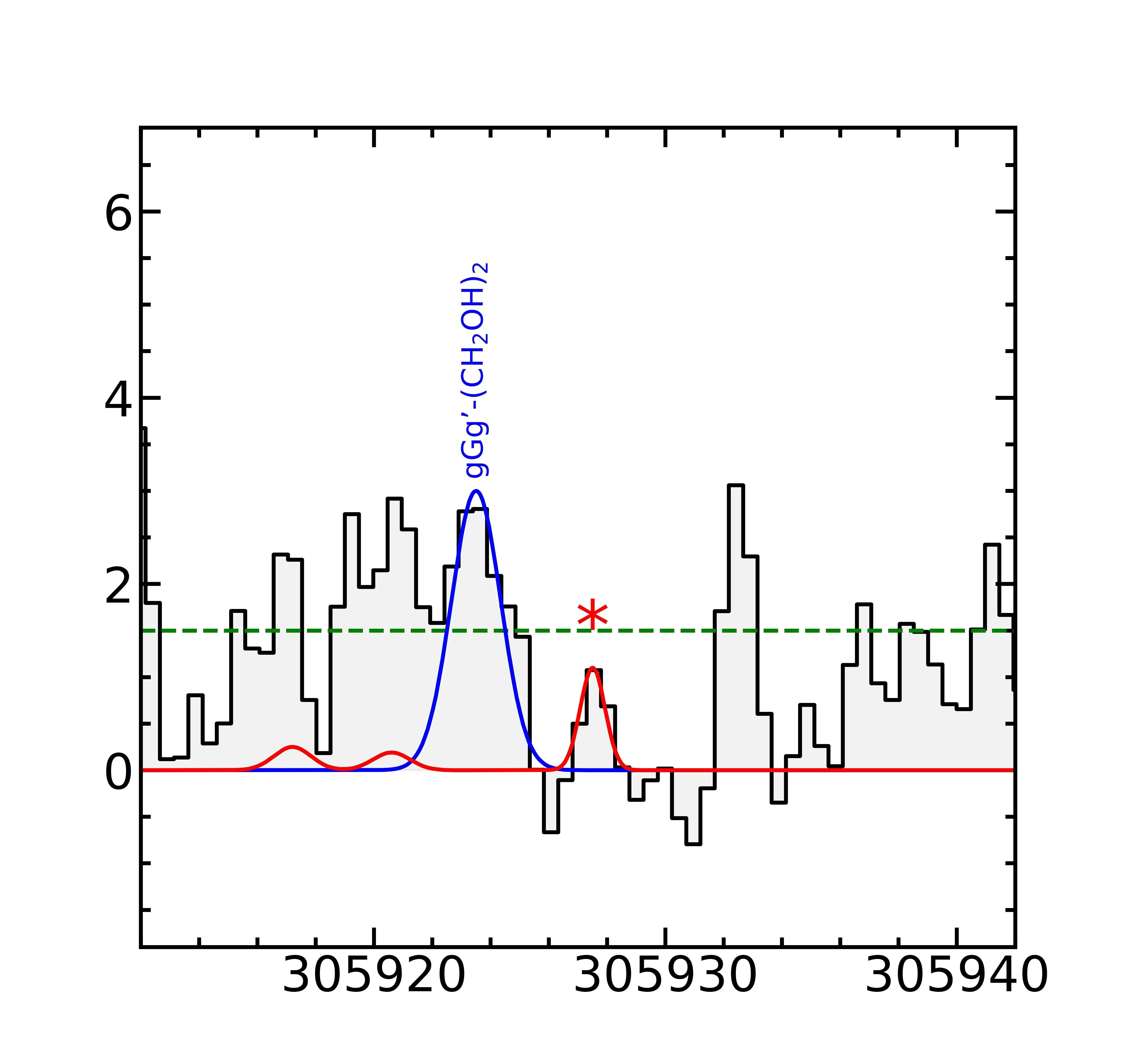
A faint but characteristic "radio fingerprint" of the molecule was captured using the Atacama Large Millimeter/submillimeter Array (ALMA). Radio spectroscopy, a method that identifies molecules in space by their unique emission lines at specific frequencies, revealed that the abundance of methyl carbamate in this cloud is roughly a hundred times higher than the calculated value for a state of stable chemical equilibrium. In other words, molecules there are not just present; they are accumulating much faster than they are being destroyed, indicating non-equilibrium, kinetically controlled processes. It seems that in these cosmic "nurseries," chemical reactions are not proceeding calmly but violently and dynamically — far from thermodynamic equilibrium.
The most likely mechanism for methyl carbamate formation is surface synthesis on microscopic cosmic dust grains covered with icy mantles. On these cold grains, simple carbon-containing fragments such as formaldehyde, ammonia, and methanol condense and react, like pieces of a construction set randomly sticking together in the darkness of the molecular cloud. This analogy captures the stochastic nature of reactant encounters on the surface, although in reality the process is guided not only by random collisions but also by the energetics of intermolecular interactions and the impact of cosmic rays.
Now, by systematically comparing the observed abundance of methyl carbamate and other prebiotic "bricks" in various regions of the Galaxy, astrochemists can reconstruct the evolutionary path from simple molecules to complex organic compounds — the very "bricks of life" that, under suitable conditions, can become precursors to biomolecules.
This same methyl carbamate on Earth serves as a raw material for medicines and... insecticides. So a molecule that helps us understand the origin of life is behind the creation of agents that destroy it.
The idea of panspermia, according to which life can travel on comets, now gains chemical support. Fred Hoyle in his novel "The Black Cloud" already depicted a similar scenario.